Your browser cannot save progress right now. You can still investigate; keep this tab open or enable local storage to save.
This case has been updated. Compatible choices are kept; revisit the evidence before drawing your conclusion.
01 · The briefing
Begin with the question.
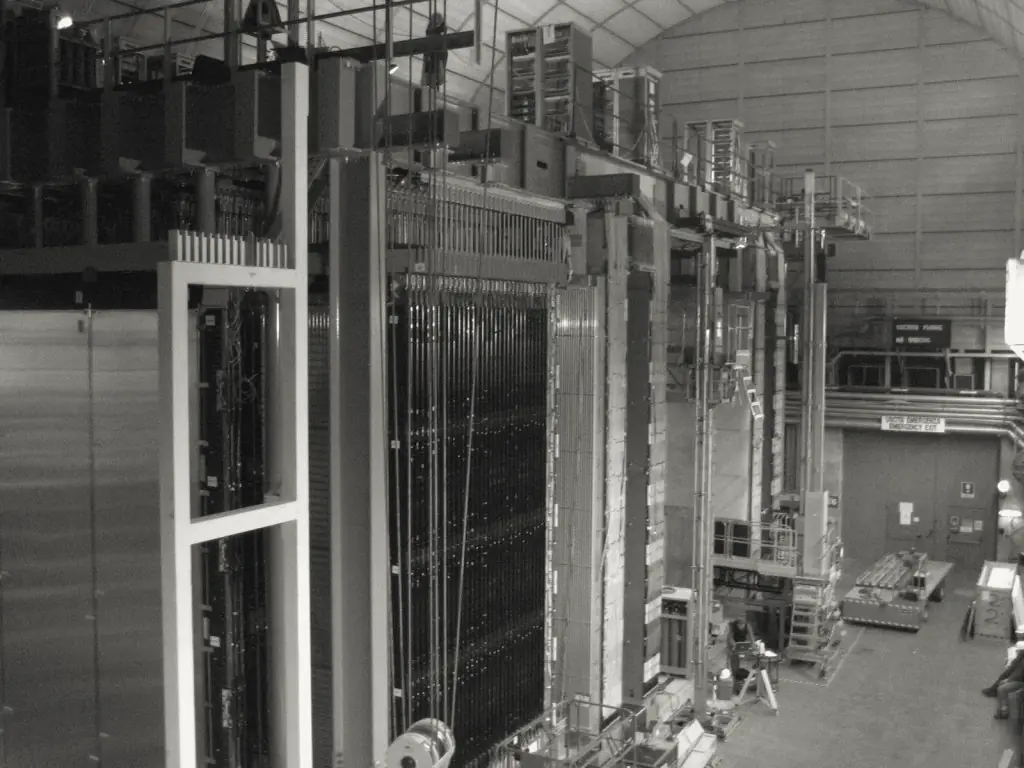
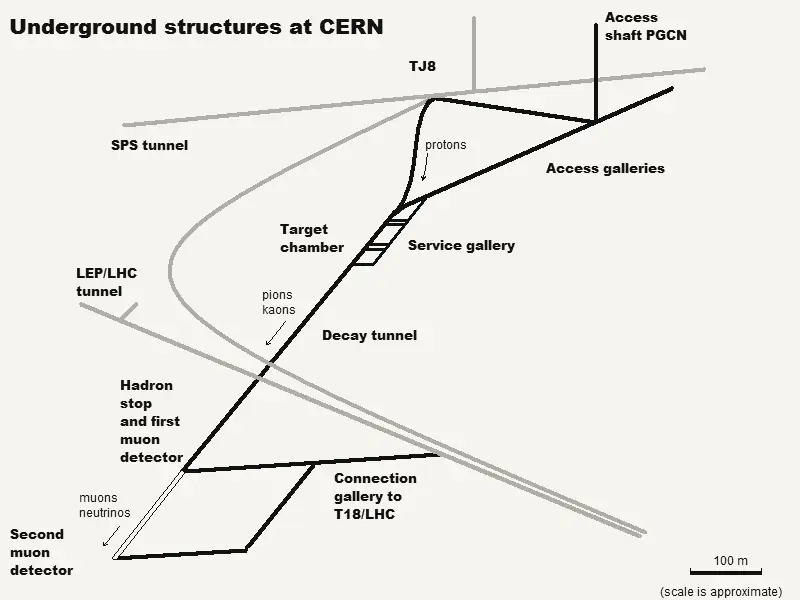
In 2011 the OPERA experiment at the Gran Sasso laboratory in Italy recorded muon neutrinos produced by the CERN accelerator near Geneva, about 730 kilometres away. The protons were delivered in extractions about 10.5 microseconds long, and each neutrino interaction was timed against clocks synchronised by GPS. Using data from 2009 to 2011, the collaboration reported that the neutrinos arrived on average about 60 nanoseconds earlier than light would take over the same distance. That would contradict the speed of light, which special relativity treats as a limit for ordinary particles. The preprint appeared on 22 September 2011, and the result was presented at CERN the next day with an invitation for other groups to examine it. Three explanations deserve a fair hearing. The first is a genuine violation of relativity, which would reshape physics. The second is a statistical fluke that more data would dissolve. The third is an error in the measurement chain, including the timing hardware and the survey that fixed the distance. This investigation asks which evidence separates an instrumental offset from a real speed difference, and what the later measurements can and cannot establish.

The timeline
OPERA posts its preprint reporting that muon neutrinos from CERN arrive about 60 nanoseconds early.
CERN presents the result at a seminar and invites independent scrutiny of the measurement.
A CERN update reports a bunched-beam test with about 20 clean events, which does not change the initial conclusion.
OPERA reports two possible instrumental effects: an oscillator and an optical fibre connector, each of which could shift the result.
The ICARUS detector reports seven beam events with arrival times consistent with the speed of light.
The revised OPERA preprint, version 4, reports a corrected offset of 6.5 nanoseconds, consistent with light speed within its uncertainties.
A researched reconstruction for learning. These reasoning steps simplify a complex record; no score can capture the full history.
02 · The evidence
What does the record show?
Read each exhibit before settling on an explanation. The source links below every exhibit lead to the record behind it.
Exhibits reviewed 0 of 5
The first result
The September 2011 preprint reports an early arrival of 60.7 nanoseconds, with statistical and systematic errors of 6.9 and 7.4 nanoseconds. The authors express this as a relative velocity difference of 2.48 parts in 100,000 above the speed of light, and they call it an anomaly. The abstract by itself does not show whether the timing chain had been fully checked.
Source record s2arxiv.org
An invitation to check
CERN's press release of 23 September 2011 reports that the collaboration had found no instrumental effect that could explain the result, and it invites scrutiny from the wider particle physics community. The November 2011 update describes a test with very short proton pulses, which gave about 20 clean events, and it says the initial conclusion did not change. Both statements request outside checks; neither establishes that the result was correct.
Source record s1web.archive.org
Two candidate faults with opposite effects
The 23 February 2012 update says the collaboration had identified two possible effects. An oscillator that supplied time stamps could have overestimated the flight time, while an optical fibre connector bringing the external GPS signal to the master clock might not have functioned correctly and could have underestimated it. The update says each needed tests with a short pulsed beam before its size could be known.
Source record s1web.archive.org
The corrected chain
The final OPERA paper reports an offset of 6.5 nanoseconds, with a statistical uncertainty of 7.4 nanoseconds and a systematic uncertainty of +8.3/−8.0 nanoseconds. One timing figure shows connectors wrongly screwed in, which add an extra delay of about 74 nanoseconds, a size comparable to the original anomaly. The paper also reports that the master-clock oscillator measured slightly above its specification.
Source record s3arxiv.org
An independent detector
ICARUS, a liquid-argon detector at the same laboratory, recorded seven beam-associated events in the short-pulse beam. Its abstract reports that the arrival times are compatible with all events travelling at the speed of light, which the authors set against the earlier OPERA claim. Seven events is a small sample, so the result constrains the claim without matching OPERA's statistical precision.
Source record s4arxiv.org
03 · Your reasoning
Follow the strongest explanation.

Choose an interpretation, then compare it with the evidence. You can revise your choice. The goal is understanding, not a perfect score.
04 · The findings
The chain behind the outcome.
Your notebook
Case report
Next in science & discovery: The flake that hung halfway
The measurement compared the time at which protons struck a target at CERN with the time at which their neutrinos interacted in the OPERA detector, a path of about 730 kilometres through rock. Any offset in that comparison is a timing error, and nanosecond accuracy requires the GPS links, optical fibres and oscillators at both sites to be known to the same precision. The 2011 result put a surprising offset into that chain, and the collaboration's own later checks showed why the chain was the first place to look. A bunched-beam test in late 2011 kept the early arrival in place, which ruled out one source of error but not the others. In February 2012 the collaboration named two candidate faults with opposite effects: an oscillator that could have made flight times look too long, and an optical connector that could have made them look too short. The final paper, after correcting for these and other inputs, reports an offset of 6.5 nanoseconds with uncertainties of similar size, consistent with the speed of light. ICARUS, which timed its own events in the same beam, reported arrival times compatible with light speed. The episode shows a claim that rested on a delicate measurement chain and was then tested by an independent instrument. It does not show that relativity is beyond testing. It shows that a timing result is only as strong as its calibrations, and that a large effect at the edge of an instrument's precision calls first for checks of the instrument.
Contributing causes and conditions
- A 730-kilometre timing comparison depended on GPS links, optical fibres and oscillators working to nanosecond precision.
- The 2011 analysis produced an early arrival of about 60 nanoseconds, which the collaboration released for scrutiny before the chain was fully resolved.
- An optical connector that was not screwed in correctly and an oscillator outside its specification each shifted the timing, in opposite directions.
- Independent measurements with ICARUS, and the corrected OPERA chain, did not reproduce an early arrival.
OutcomeOPERA neutrino timing anomaly (2011 to 2012)
Take the method with you
- An apparent speed difference is first a test of the measurement chain, because a timing error can look exactly like new physics.
- Independent instruments are most useful when they test the same claim with different hardware and timing.
- A public invitation to scrutinise a result is a method for finding errors, not a guarantee that the result is right.
You can read findings at any time. Exploring every reasoning step marks this case as complete in your notebook.
The open record
Sources & further reading
Read the original record and its scope before relying on a conclusion. Source references support the exhibit summaries; Faultory’s reasoning prompts are editorial reconstructions.
- s1
- s2
- s3
- s4
Written and curated for Faultory by Yunus Emre Vurgun, with AI-assisted research and drafting. Sources and interpretations can need correction. Read our editorial standards or report an issue.
From the journal
Field notes that use this case
 Why replication matters: independent checks before beliefA striking result can come from one instrument, one team or one shared assumption. Learn what replication does, what it cannot do, and how to design it.
 When the instrument is wrong: calibration in six casesPrecise instruments can still mislead. Learn to ask what each measurement was compared against, and whether that comparison was itself checked.
 Units and interfaces: where a correct number goes wrongMany failures happen at boundaries between teams, units and tools. Learn to test each handoff and the meaning of every value that crosses it.
Keep investigating