After reading, you will know how to find the point where a correct-looking value changes meaning across a boundary. You will also know which handoff tests catch that change before it reaches the system.
01A file that parsed perfectly
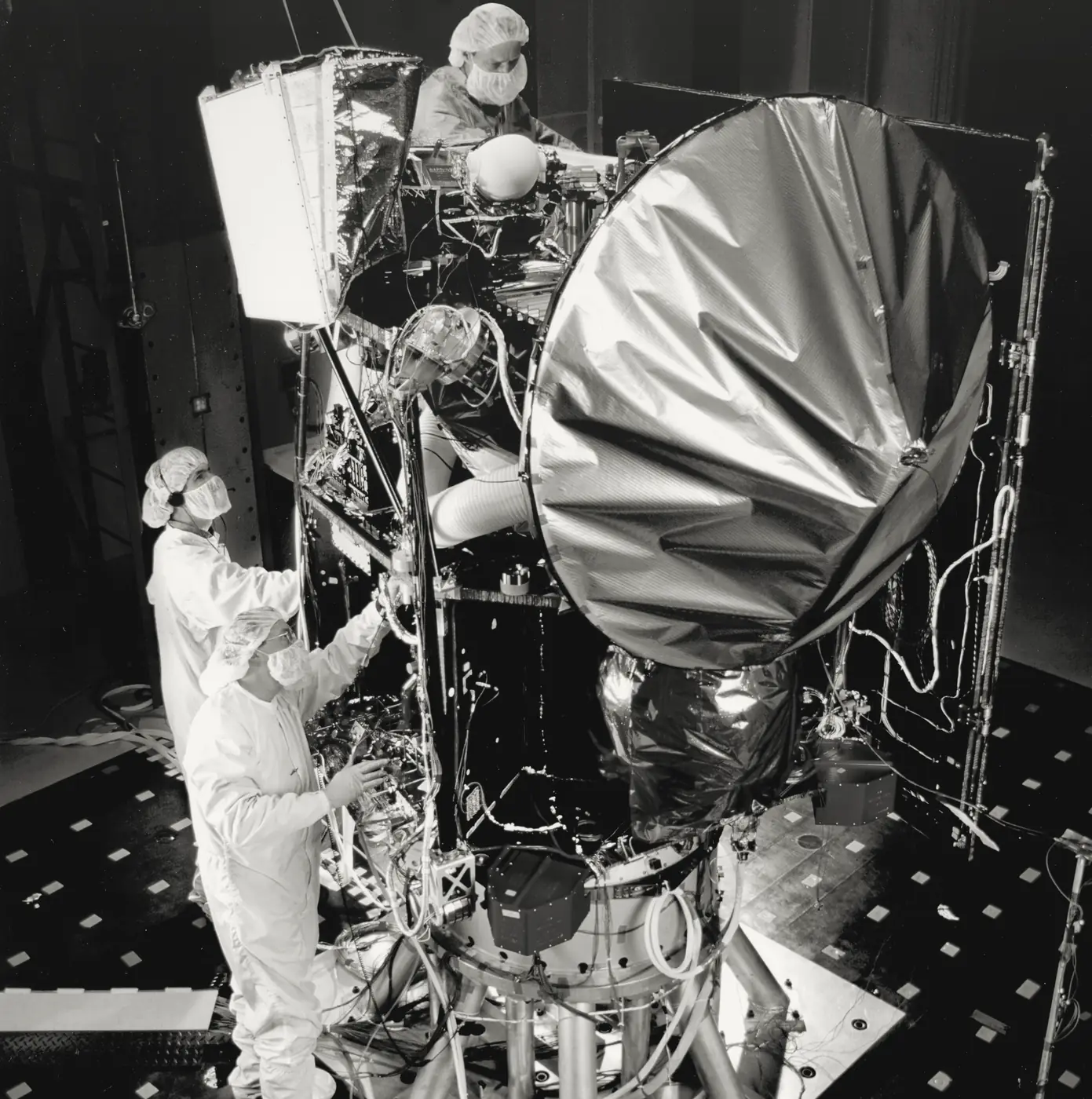
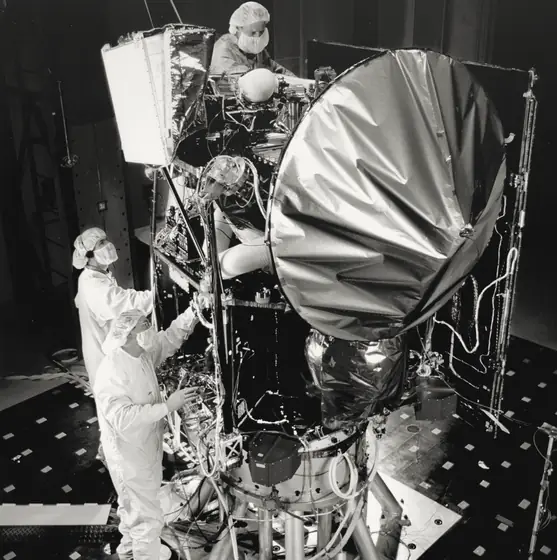
Mars Climate Orbiter was lost during its arrival at Mars in September 1999. The mission investigation traced a navigation error that had accumulated during cruise to a data file supplied from the ground. The file parsed without trouble. Its numbers were not random or visibly corrupt. They simply meant something different to the producer and to the consumer.
The file gave small-force impulse values in pound-force seconds, while the navigation software expected newton-seconds, the units the interface specified. One pound-force is about 4.45 newtons. Reading the number in the wrong unit systematically understated the modeled effect on the trajectory.
A failure of this kind is quiet. Nothing crashes at the handoff. The system keeps working, and the error accumulates until the trajectory no longer matches the plan.
02What an interface contract contains
An interface contract is more than a file format. It specifies units, reference frames, sign conventions, timing and what each value means in the consumer's calculations. Two teams can agree on a file layout and still disagree about the physical quantity inside it.
The investigation identified the failure to use the specified metric units in the ground file as the root cause of the navigation error. It also described weaknesses in team communication, training and verification of interfaces. Fixing one conversion does not repair the structure that allowed the mismatch to persist.
For each boundary, write the units next to the value. Where a number crosses a team or a tool, the handoff should also state the reference system it belongs to.
03Hubble and a ruler inside the test
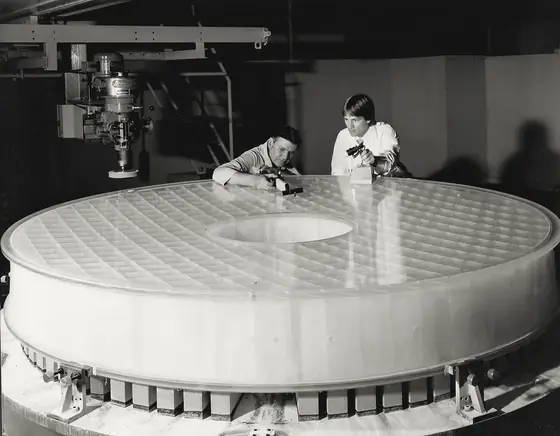
Hubble's primary mirror was ground and polished to a very precise shape, but the shape was wrong. After the telescope was deployed in 1990, its images showed spherical aberration. The investigation traced the mirror's error to the reflective null corrector that had been used to test it.
The null corrector had a lens spacing error of about 1.3 millimeters. That figure describes a spacing inside the test apparatus, not a defect in the mirror. The error in the instrument produced a systematic error in the object being measured, so a precise test confirmed the wrong figure.
The lesson for interfaces is to name what each number measures, where it was measured and under which configuration. A small error inside a measurement chain can become a large error in the thing being manufactured.
Naming matters for quantities that look dimensionless as well. A ratio, a scale factor or a calibration constant has a reference, and a value copied without that reference can be applied to the wrong system. Writing the reference beside the number costs little and prevents a great deal of confusion.
04Voltage across a boundary
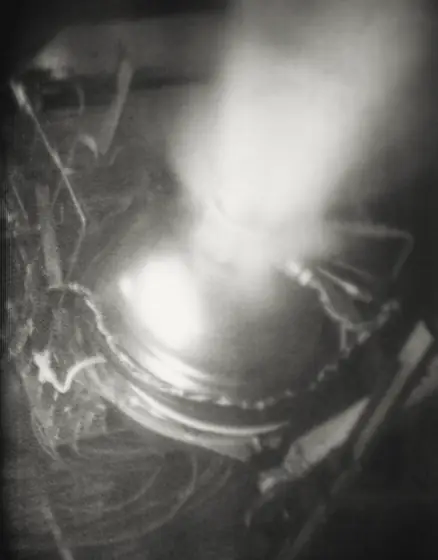
The Apollo 13 oxygen-tank failure of April 1970 has an interface story as well as a thermal one. The tank had been redesigned to run on 65-volt ground power at Kennedy, but the heater thermostatic switches were not upgraded from their original 28-volt rating. Those switches were the boundary that mattered.
A ground procedure used the heaters for an extended period to boil off oxygen that could not be drained normally. Investigators believed the switches were probably damaged and their contacts welded shut, which would let the tank temperature rise past what its gauges could show. The gauges had been designed to read only to about 80 degrees Fahrenheit.
The boundary failed because a specification changed on one side of a system and not on its neighbor. Reviewing an interface means checking both sides of every change.
05Timing across a chain
In 2011 the OPERA collaboration reported measurements of neutrinos from the CNGS beam at CERN, as observed in its detector. The initial result indicated an early arrival relative to the time expected at the speed of light, by 60.7 nanoseconds with the uncertainties quoted alongside. The result depended on a chain of timing equipment, with each step linked to the next by cables and connectors.
In a revised version of the paper, posted in 2012, OPERA reported test configurations in which connectors wrongly screwed in produced an extra delay of about 74 nanoseconds in a signal path. An offset of that order is comparable to the size of the original effect, which is why the check mattered.
Interface problems in timing are especially hard to see because they add delays that look like physics. A systematic offset can be tested by measuring every link in the chain and by checking the reference signal at each end.
06Designing the handoff
Several practical defenses follow. Put units in the data format, not only in the documentation. Require each interface to carry a reference system and a version. Include known-answer tests: a test input whose correct output is computed independently from physics exercises the contract far better than a file that merely parses.
Make discrepancies escalate. The Mars Climate Orbiter investigation described missed opportunities to recognize and resolve trajectory discrepancies. An unexplained difference between predicted and observed behavior should be routed to someone who can resolve it, not filed as administrative noise.
Test the full path, from source to use. A unit converter tested in isolation proves little if the consumer reads its output in a different unit.
07What interfaces cannot prove
A unit check confirms consistency, not correctness. A correct conversion can still sit inside a flawed model. Handoff tests show whether the values mean what the sender intended. They do not show that the physics is complete.
Open questions remain in any interface review. Which handoffs are invisible to the people responsible for them? Which tools transform data without recording their assumptions? For some systems the honest answer is that a boundary remains unknown until a discrepancy exposes it.
That is why unexplained residuals deserve attention. A small mismatch at a boundary is often the first visible sign of a larger misunderstanding.
A useful practice is to keep a short glossary for every interface, listing each quantity, its units, its reference frame and the team that produces it. The glossary does not replace the contract, but it lets reviewers see quickly when two documents use the same name for different quantities.
Terms in this note
- Interface contract
- The agreed specification of what a boundary carries, including units, reference frames, sign conventions and timing. Glossary
- Systematic error
- An error that consistently pushes results in one direction, unlike random scatter that averages out over repeated measurements. Glossary
- Known-answer test
- A test whose correct output is computed independently from physics, so that a wrong interpretation shows up as a mismatch. Glossary
Test the idea
The case files behind this note


The open record
Sources & further reading
- 1
- 2Hubble's mirror flaw
NASA Science
- 3Apollo 13 Accident
NASA National Space Science Data Center
- 4Measurement of the neutrino velocity with the OPERA detector in the CNGS beam (arXiv:1109.4897)
OPERA Collaboration, arXiv
- 5
Written for Faultory by Yunus Emre Vurgun, with AI-assisted research and drafting. Editorial standards · Report an issue.