

Faultory uses historical photographs that are in the public domain or released under Creative Commons licences, obtained through Wikimedia Commons. Each image is served from this site; no image request goes to a third party. Licence status was checked against each file’s Commons record when it was added, and the source page is linked below so you can verify it.
Photographs on investigation pages are toned to the site’s ink-and-paper palette and some figures are cut out from their backgrounds. Those are presentation changes; the original files are unaltered on Commons. Creative Commons Attribution-ShareAlike images remain available under the same licence, including the changed versions shown here.
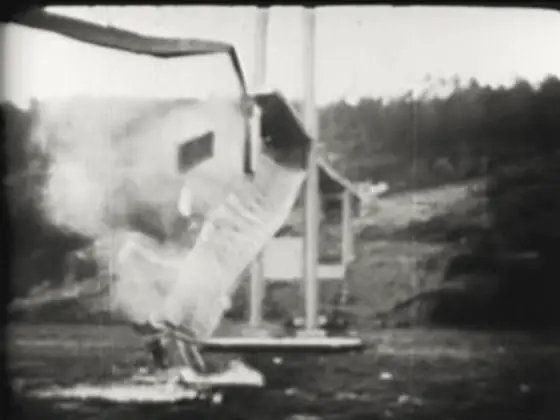
A frame from amateur film of the Tacoma Narrows Bridge on the day its centre span tore apart and fell into the Narrows.
- Author
- Barney Elliot
- Licence
- Public Domain · Wikimedia Commons
- Original
- File:Tacoma Narrows still.png
- Changes
- Cropped, resized and toned to the site palette.
- Used in
- CH 01 Tacoma Narrows Bridge
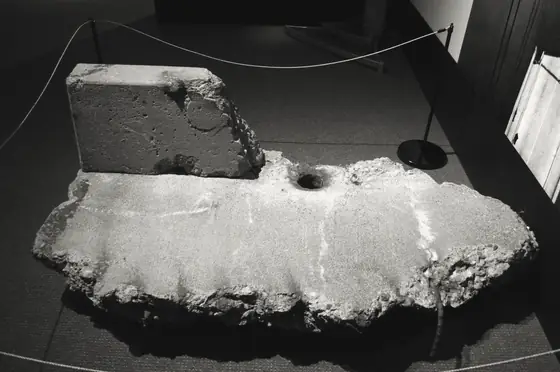
A surviving fragment of the original 1940 Tacoma Narrows Bridge, displayed at the Washington State History Museum.
- Author
- Joe Mabel
- Licence
- CC BY-SA 3.0 · Wikimedia Commons
- Changes
- Cropped, resized and toned to the site palette; background removed for a cut-out figure.
- Used in
- CH 01 Tacoma Narrows Bridge
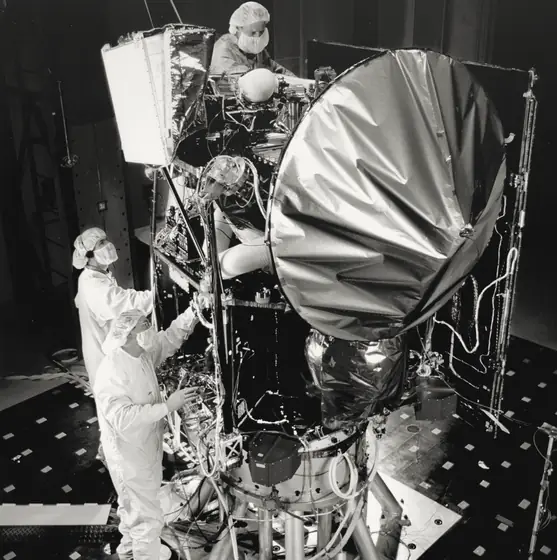
Mars Climate Orbiter during acoustic testing that simulated launch conditions, months before its loss at Mars.
- Author
- NASA
- Licence
- Public domain · Wikimedia Commons
- Changes
- Cropped, resized and toned to the site palette.
- Used in
- CH 02 Mars Climate Orbiter
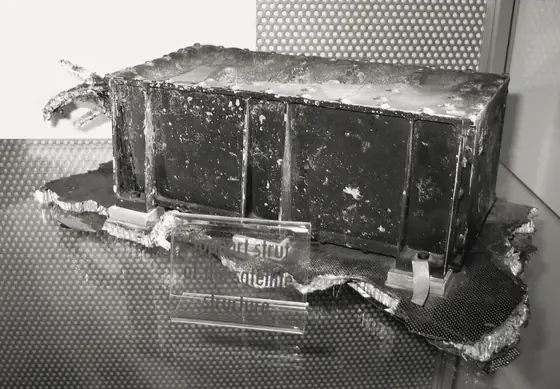
A support strut from the satellite structure, recovered after Ariane flight 501 broke up on 4 June 1996, on display with its label.
- Author
- Deadpan
- Licence
- Public domain · Wikimedia Commons
- Original
- File:Ariane 501 Fragment.jpg
- Changes
- Cropped, resized and toned to the site palette.
- Used in
- CH 03 Ariane 5 Flight 501
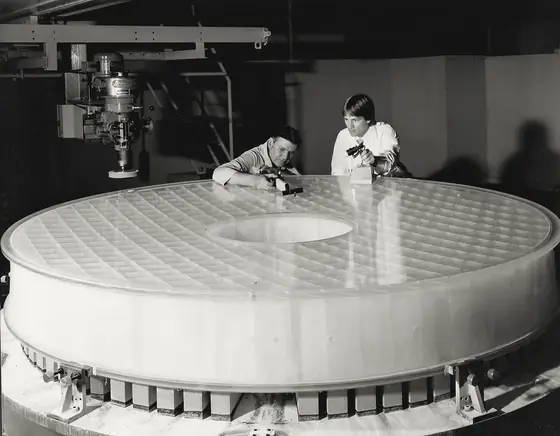
Engineers inspect Hubble’s primary mirror at Perkin-Elmer, where it was ground and polished to a precise but wrong shape.
- Author
- NASA
- Licence
- Public domain · Wikimedia Commons
- Changes
- Cropped, resized and toned to the site palette.
- Used in
- CH 04 Hubble Space Telescope
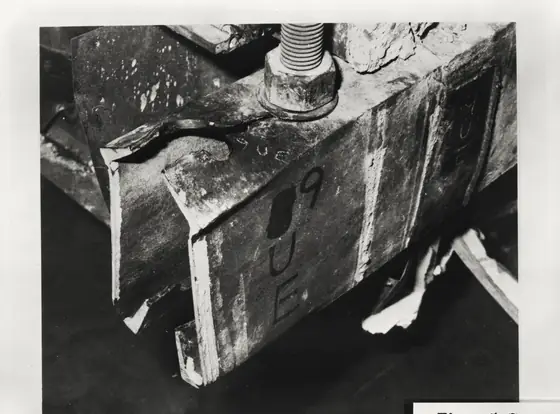
Investigation photograph (Figure 5.7) of a box-beam section from one of the collapsed Hyatt Regency walkways, now held by the US National Archives.
- Author
- Unknown photographer, US National Archives
- Licence
- Public domain · Wikimedia Commons
- Changes
- Cropped, resized and toned to the site palette.
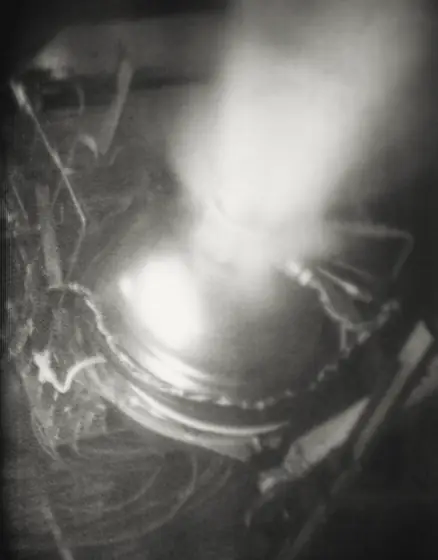
A full-scale test at NASA’s Manned Spacecraft Center reproducing a fire inside an Apollo service module oxygen tank.
- Author
- NASA
- Licence
- Public domain · Wikimedia Commons
- Changes
- Cropped, resized and toned to the site palette.
- Used in
- CH 06 Apollo 13
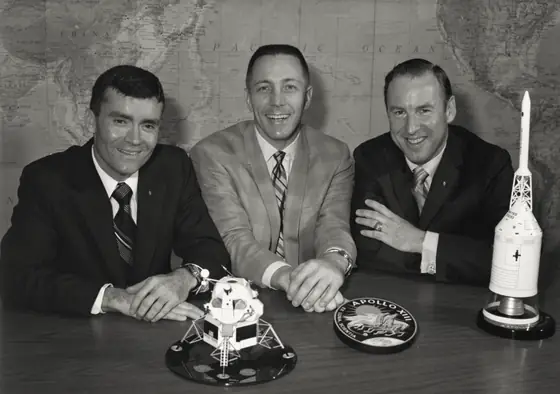
Apollo 13’s crew, Fred Haise, Jack Swigert and Jim Lovell, the day before launch.
- Author
- NASA
- Licence
- Public domain · Wikimedia Commons
- Changes
- Cropped, resized and toned to the site palette; background removed for a cut-out figure.
- Used in
- CH 06 Apollo 13
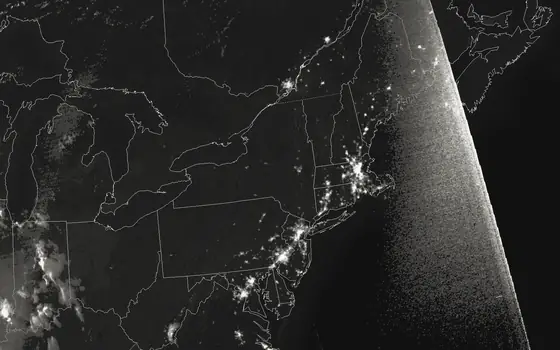
Night lights across the US Northeast and Ontario on the night of the blackout, in a US Air Force DMSP satellite image processed by NOAA.
- Author
- NOAA (US Air Force DMSP data)
- Licence
- Public domain · Wikimedia Commons
- Changes
- Cropped, resized and toned to the site palette.
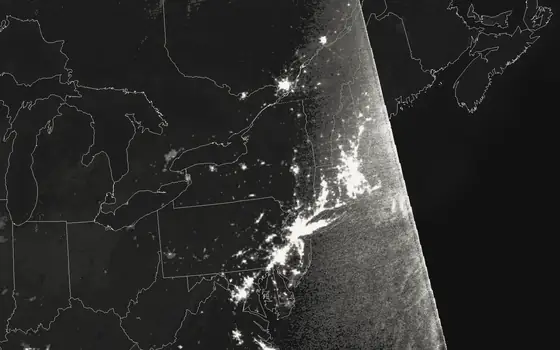
The same satellite view the night before the blackout, for comparison.
- Author
- NOAA (US Air Force DMSP data)
- Licence
- Public domain · Wikimedia Commons
- Changes
- Cropped, resized and toned to the site palette.
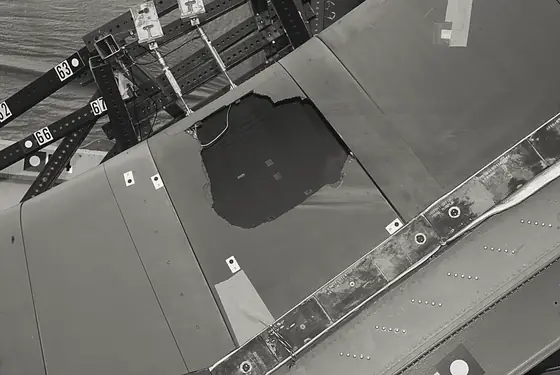
During the accident investigation’s impact tests, a foam block fired at about 850 km/h opened this hole in a reinforced carbon-carbon wing panel.
- Author
- Rick Stiles
- Licence
- Public domain · Wikimedia Commons
- Original
- File:Impact-test.jpg
- Changes
- Cropped, resized and toned to the site palette.
- Used in
- CH 08 Space Shuttle Columbia
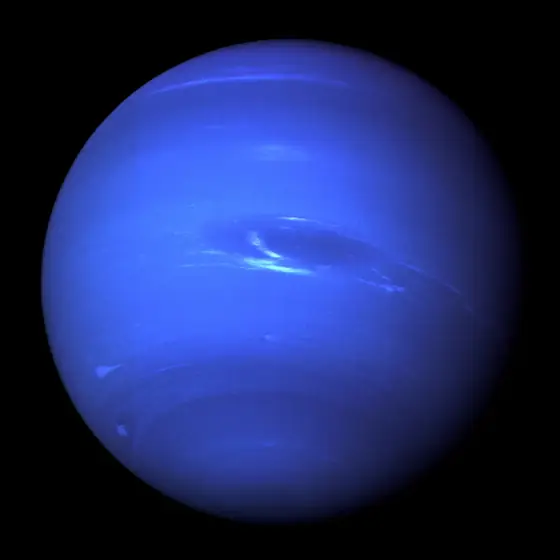
Neptune photographed by Voyager 2 in 1989. In 1846 it was found because Uranus kept drifting from its predicted path.
- Author
- NASA
- Licence
- Public domain · Wikimedia Commons
- Original
- File:Neptune Full.jpg
- Changes
- Cropped, resized and toned to the site palette.
- Used in
- CH 09 Discovery of Neptune
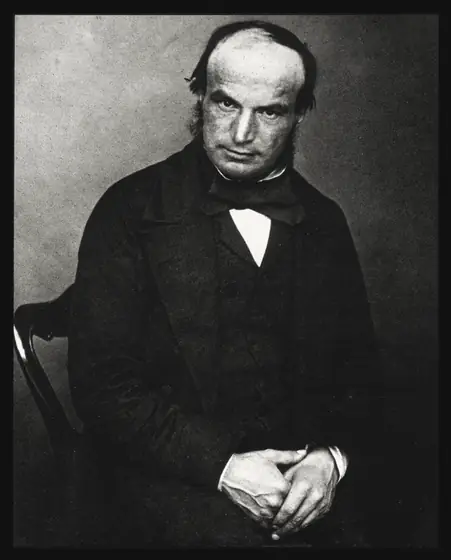
John Couch Adams, about 1870.
- Author
- Unknown photographer
- Licence
- Public domain · Wikimedia Commons
- Changes
- Cropped, resized and toned to the site palette; background removed for a cut-out figure.
- Used in
- CH 09 Discovery of Neptune
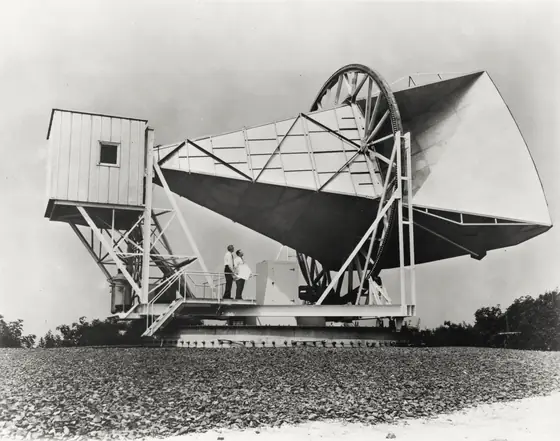
The Holmdel Horn Antenna in New Jersey, the receiver in which Arno Penzias and Robert Wilson met a noise they could not remove.
- Author
- NASA
- Licence
- Public domain · Wikimedia Commons
- Changes
- Cropped, resized and toned to the site palette.
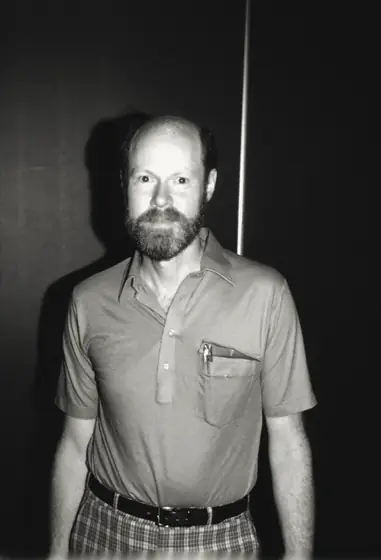
Robert W. Wilson in 1981.
- Author
- Woodruff T. Sullivan III, NRAO/AUI/NSF
- Licence
- CC BY 4.0 · Wikimedia Commons
- Original
- File:Robert W. Wilson, 1981.jpg
- Changes
- Cropped, resized and toned to the site palette; background removed for a cut-out figure.
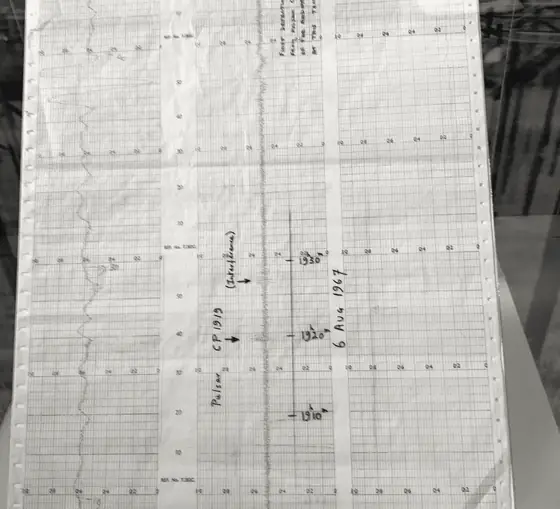
The chart Jocelyn Bell Burnell examined in August 1967, with the trace of the first identified pulsar.
- Author
- Billthom
- Licence
- CC BY-SA 4.0 · Wikimedia Commons
- Changes
- Cropped, resized and toned to the site palette.
- Used in
- CH 11 Discovery of pulsars
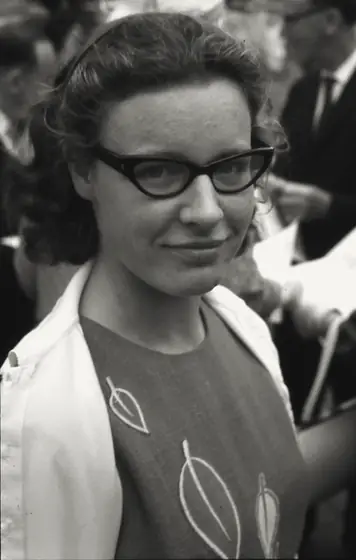
Jocelyn Bell in 1967.
- Author
- Roger W Haworth
- Licence
- CC BY-SA 2.0 · Wikimedia Commons
- Changes
- Cropped, resized and toned to the site palette; background removed for a cut-out figure.
- Used in
- CH 11 Discovery of pulsars
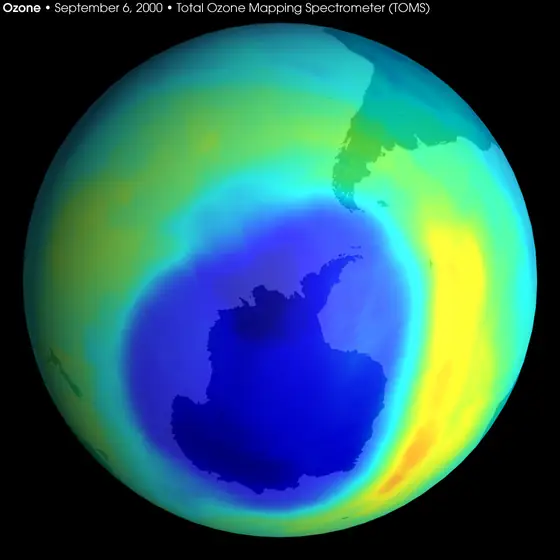
The Antarctic ozone hole in September 2000, the largest area of thinning recorded up to then, mapped by NASA’s Total Ozone Mapping Spectrometer.
- Author
- NASA
- Licence
- Public domain · Wikimedia Commons
- Changes
- Cropped, resized and toned to the site palette.
- Used in
- CH 12 Antarctic ozone hole
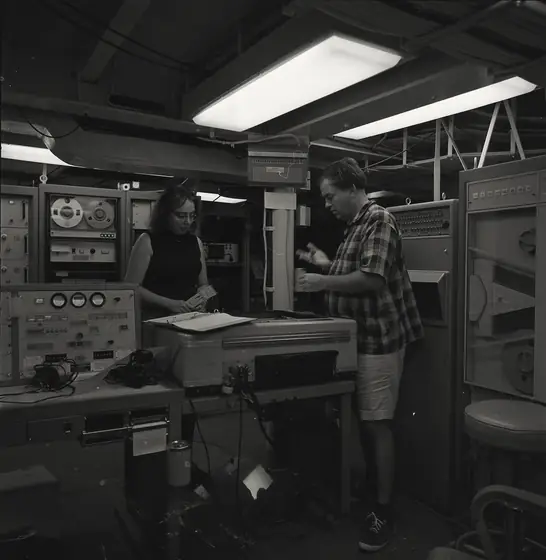
Bruce Heezen and Marie Tharp working with a fathometer record, the echo-sounding profiles they turned into maps of the ocean floor.
- Author
- AIP Emilio Segrè Visual Archives
- Licence
- CC0 · Wikimedia Commons
- Changes
- Cropped, resized and toned to the site palette.
- Used in
- CH 13 Seafloor spreading
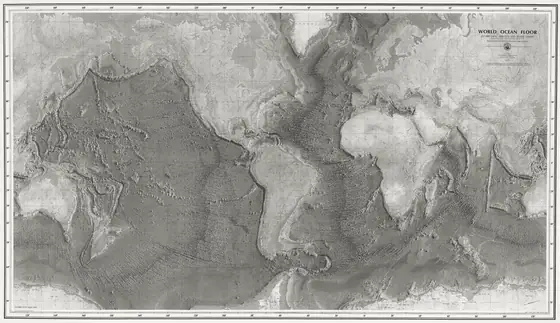
Heezen and Tharp’s map of the world ocean floor, painted by Heinrich Berann, with the mid-ocean ridges running through every ocean basin.
- Author
- Heinrich Berann, Bruce Heezen and Marie Tharp
- Licence
- Public domain · Wikimedia Commons
- Changes
- Cropped, resized and toned to the site palette.
- Used in
- CH 13 Seafloor spreading
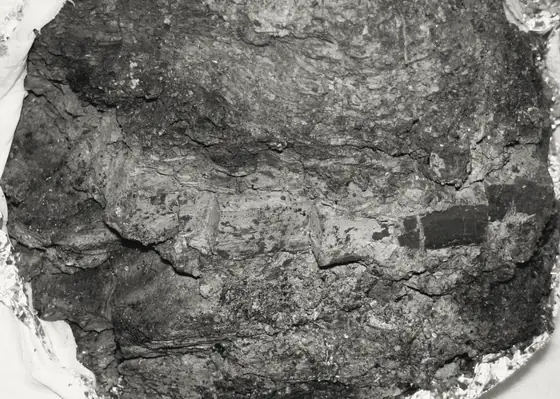
The thin clay layer at the Cretaceous–Paleogene boundary, exposed in the Raton Formation of southern Colorado.
- Author
- James St. John
- Licence
- CC BY 2.0 · Wikimedia Commons
- Changes
- Cropped, resized and toned to the site palette.
- Used in
- CH 14 Chicxulub impact
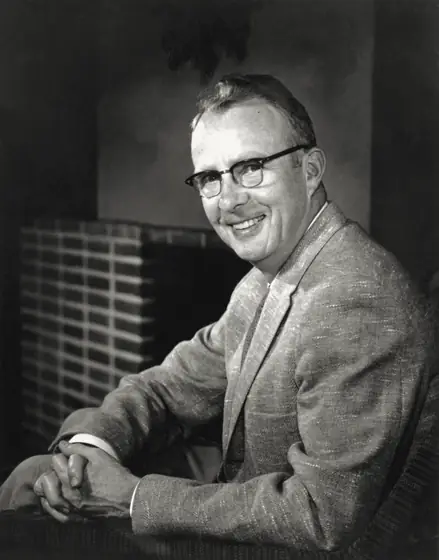
Luis Alvarez in 1962.
- Author
- Donald Cooksey / Lawrence Berkeley National Laboratory
- Licence
- Public domain · Wikimedia Commons
- Changes
- Cropped, resized and toned to the site palette; background removed for a cut-out figure.
- Used in
- CH 14 Chicxulub impact
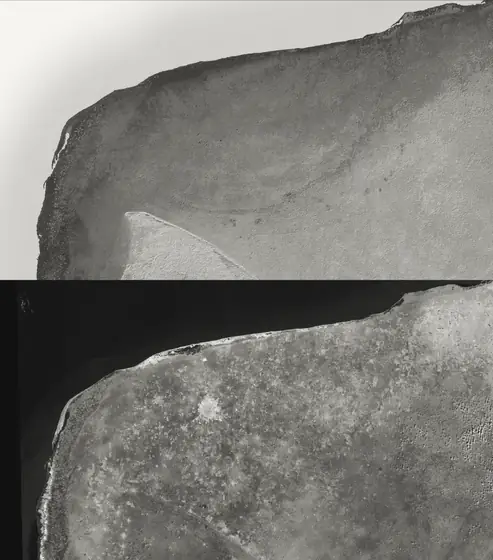
Shuttle radar topography of the Yucatán Peninsula, where a subtle arc in the terrain follows the edge of the buried Chicxulub crater.
- Author
- Shuttle Radar Topography Mission
- Licence
- Public domain · Wikimedia Commons
- Original
- File:Chicxulub.jpg
- Changes
- Cropped, resized and toned to the site palette.
- Used in
- CH 14 Chicxulub impact
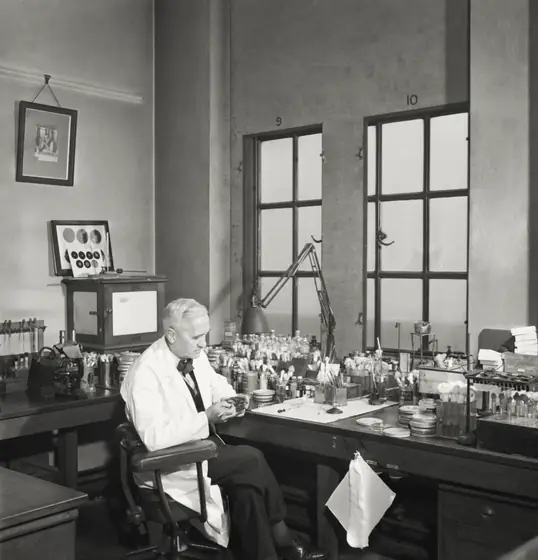
Alexander Fleming at work in his laboratory at St Mary’s Hospital, London, during the Second World War.
- Author
- Ministry of Information Photo Division Photographer
- Licence
- Public domain · Wikimedia Commons
- Changes
- Cropped, resized and toned to the site palette.
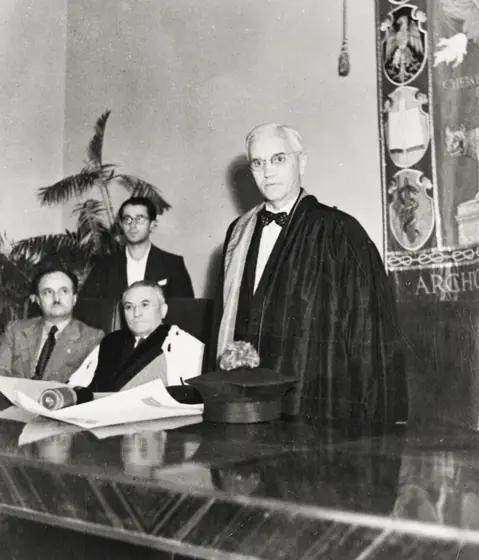
Alexander Fleming in academic dress in 1945.
- Author
- Unknown photographer, Anefo / Nationaal Archief
- Licence
- CC BY-SA 3.0 nl · Wikimedia Commons
- Original
- File:Alexander Fleming 1945b.jpg
- Changes
- Cropped, resized and toned to the site palette; background removed for a cut-out figure.
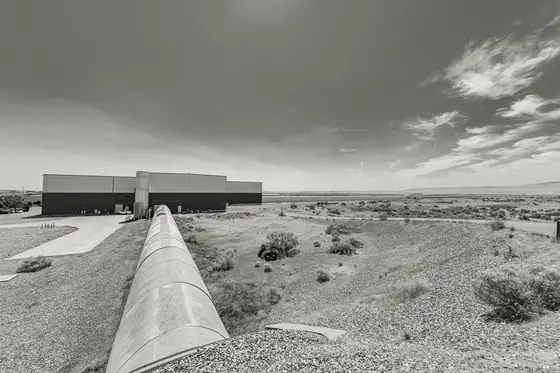
LIGO Hanford in Washington State, one of the two detectors that recorded GW150914. Each of its arms is 4 kilometres long.
- Author
- NOIRLab/LIGO/NSF/AURA/T. Matsopoulos
- Licence
- CC BY 4.0 · Wikimedia Commons
- Changes
- Cropped, resized and toned to the site palette.
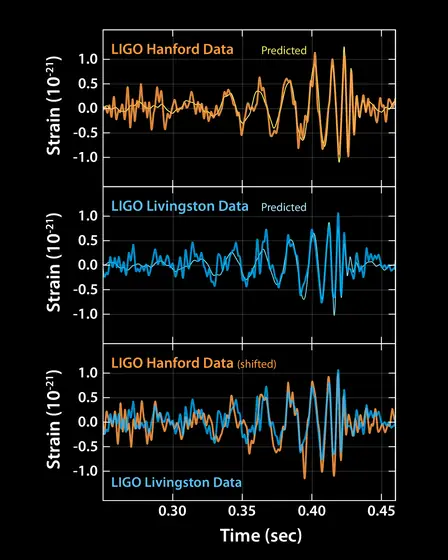
The GW150914 signal as recorded at LIGO Hanford and LIGO Livingston, with the waveforms predicted for each detector.
- Author
- Caltech/MIT/LIGO Lab
- Licence
- CC0 · Wikimedia Commons
- Changes
- Cropped, resized and toned to the site palette.
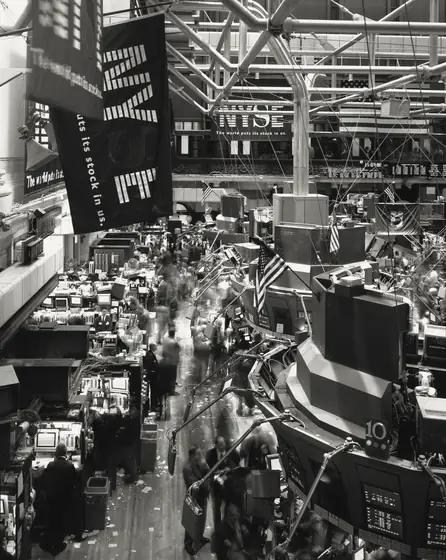
The New York Stock Exchange trading floor in 2011, a year after the Flash Crash. The crash itself unfolded across electronic markets in minutes.
- Author
- Carol M. Highsmith
- Licence
- Public domain · Wikimedia Commons
- Original
- File:No Known Restrictions Trading Floor, New York Stock Exchange (Highsmith LOC) (6718386525).jpg
- Changes
- Cropped, resized and toned to the site palette.
- Used in
- CH 17 2010 Flash Crash
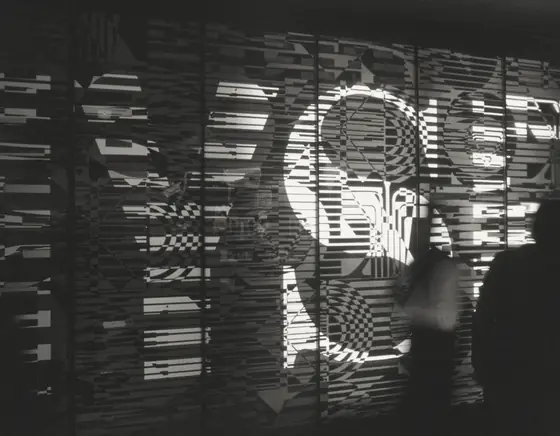
Display panels on the New York Stock Exchange trading floor in 2001. Knight’s 2012 orders were sent by software, not by people on a floor.
- Author
- Asy arch (English Wikipedia)
- Licence
- CC BY-SA 3.0 · Wikimedia Commons
- Changes
- Cropped, resized and toned to the site palette.
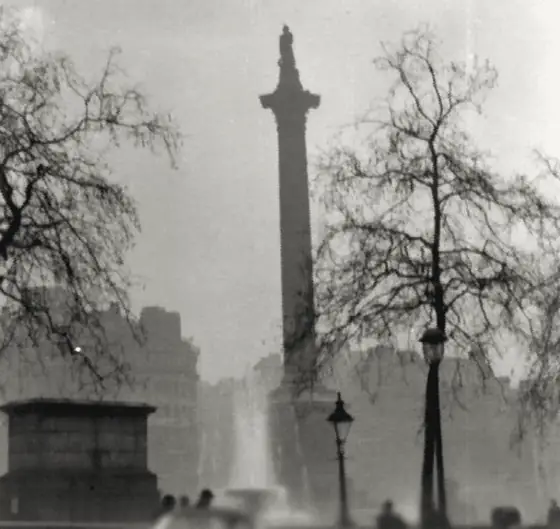
Nelson’s Column in Trafalgar Square, barely visible during the Great Smog.
- Author
- N T Stobbs
- Licence
- CC BY-SA 2.0 · Wikimedia Commons
- Changes
- Cropped, resized and toned to the site palette.
- Used in
- CH 19 London’s Great Smog
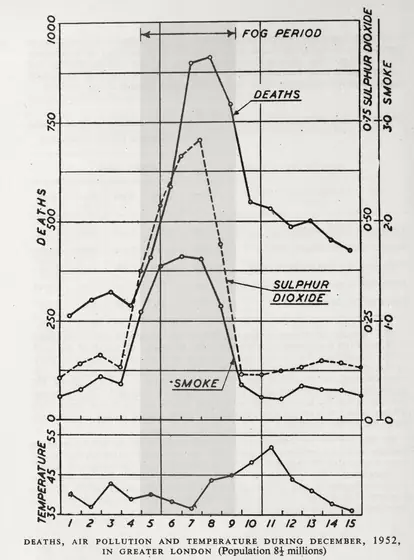
Daily deaths, smoke and sulphur dioxide in London across the smog, as charted in a 1953 government report.
- Author
- Great Britain Committee on Air Pollution
- Licence
- Public domain · Wikimedia Commons
- Changes
- Cropped, resized and toned to the site palette.
- Used in
- CH 19 London’s Great Smog
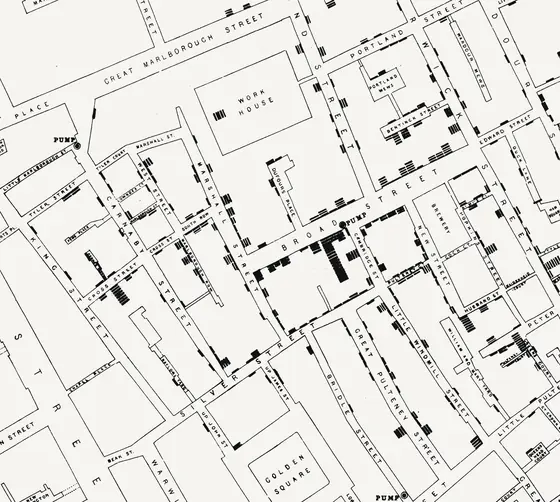
John Snow’s map of Soho. Each bar marks a cholera death at an address, and they cluster around the Broad Street pump.
- Author
- John Snow
- Licence
- Public domain · Wikimedia Commons
- Original
- File:Snow-cholera-map-1.jpg
- Changes
- Cropped, resized and toned to the site palette.
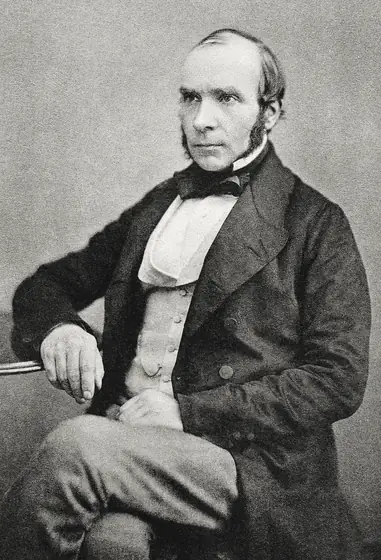
John Snow in 1856.
- Author
- Unknown photographer
- Licence
- Public domain · Wikimedia Commons
- Original
- File:John Snow.jpg
- Changes
- Cropped, resized and toned to the site palette; background removed for a cut-out figure.
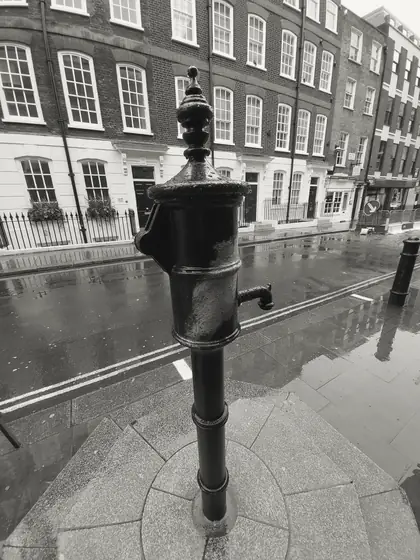
A replica of the Broad Street pump on today’s Broadwick Street in Soho.
- Author
- Jamzze
- Licence
- CC BY-SA 4.0 · Wikimedia Commons
- Changes
- Cropped, resized and toned to the site palette.
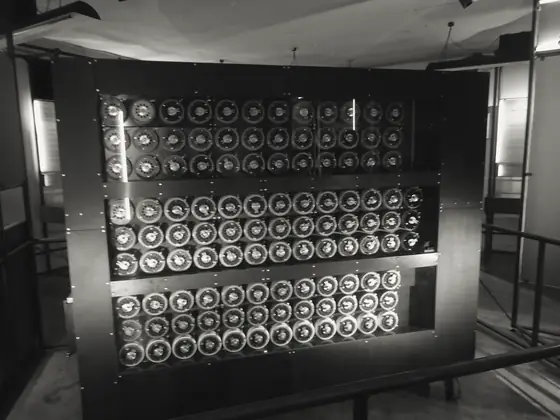
A working reconstruction of the Turing–Welchman Bombe at Bletchley Park.
- Author
- Vintage Fan 5678
- Licence
- CC BY-SA 4.0 · Wikimedia Commons
- Changes
- Cropped, resized and toned to the site palette.
- Used in
- CH 21 Enigma and the Bombe
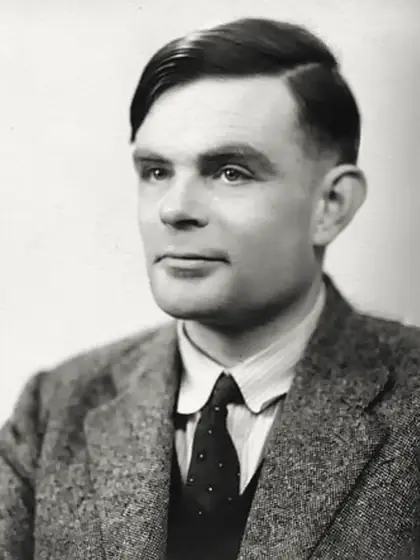
Alan Turing in 1951.
- Author
- Elliott & Fry
- Licence
- Public domain · Wikimedia Commons
- Original
- File:Alan Turing (1951).jpg
- Changes
- Cropped, resized and toned to the site palette; background removed for a cut-out figure.
- Used in
- CH 21 Enigma and the Bombe
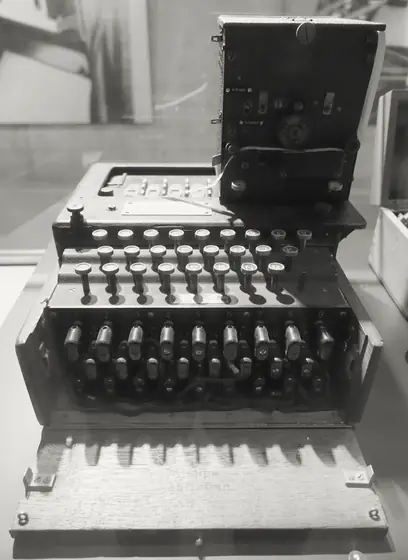
An M4 Enigma machine captured with U-505, on display at Chicago’s Museum of Science and Industry.
- Author
- Daderot
- Licence
- CC0 · Wikimedia Commons
- Original
- File:M4 Enigma machine, 2 of 2, U-505 - Museum of Science and Industry (Chicago) - DSC06769.JPG
- Changes
- Cropped, resized and toned to the site palette.
- Used in
- CH 21 Enigma and the Bombe
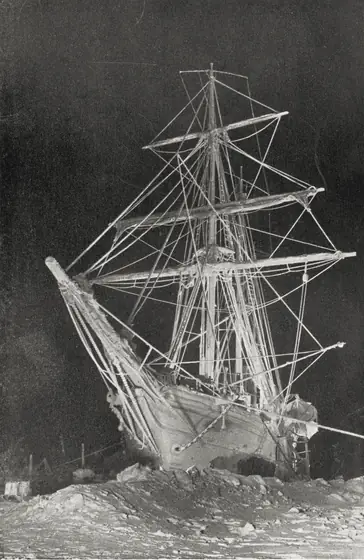
The Endurance held in the Weddell Sea pack ice, photographed by the expedition’s photographer, Frank Hurley.
- Author
- Hurley, F.
- Licence
- Public domain · Wikimedia Commons
- Changes
- Cropped, resized and toned to the site palette.
- Used in
- CH 22 Endurance expedition
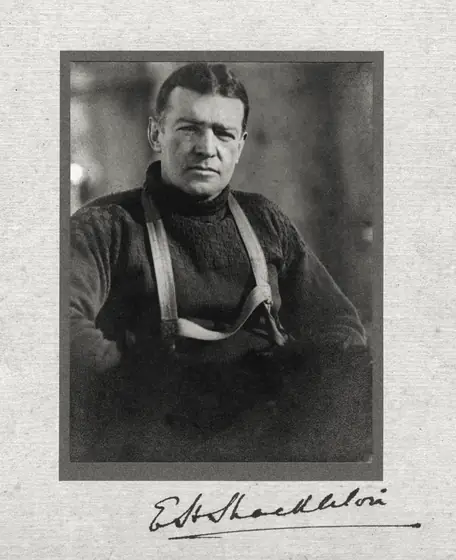
Ernest Shackleton, photographed by Frank Hurley in 1916.
- Author
- Frank Hurley
- Licence
- Public domain · Wikimedia Commons
- Changes
- Cropped, resized and toned to the site palette; background removed for a cut-out figure.
- Used in
- CH 22 Endurance expedition
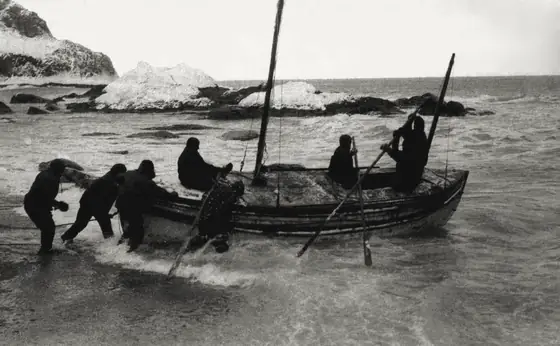
Launching the James Caird from Elephant Island at the start of the open-boat voyage to South Georgia.
- Author
- Probably Frank Hurley, the expedition's photographer
- Licence
- Public domain · Wikimedia Commons
- Original
- File:LaunchingTheJamesCaird2.jpg
- Changes
- Cropped, resized and toned to the site palette.
- Used in
- CH 22 Endurance expedition
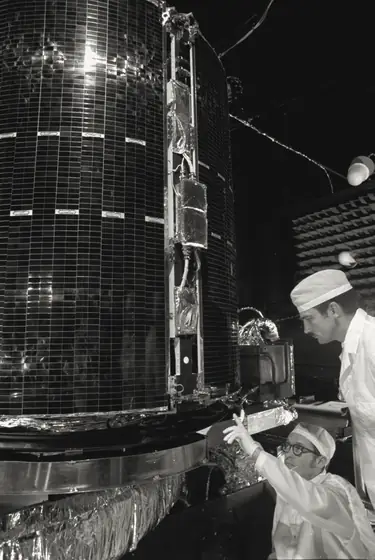
Early NAVSTAR GPS hardware under test in a space-simulation chamber at the Arnold Engineering Development Center.
- Author
- US Air Force
- Licence
- Public domain · Wikimedia Commons
- Original
- File:150710-F-0000U-001.jpg
- Changes
- Cropped, resized and toned to the site palette.
- Used in
- CH 23 GPS and relativity
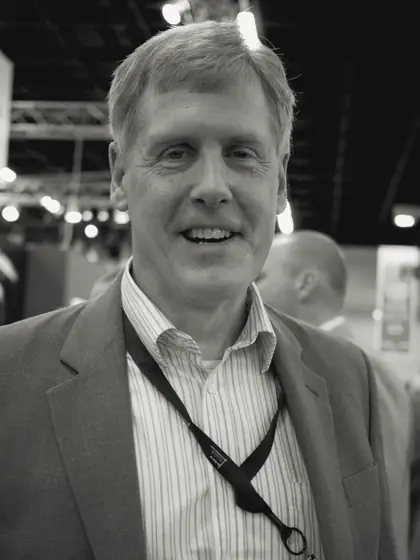
Steven Sasson, who built Kodak’s 1975 digital camera prototype, at Photokina in 2010.
- Author
- Aljawad
- Licence
- CC BY 3.0 · Wikimedia Commons
- Original
- File:Steve sasson.jpg
- Changes
- Cropped, resized and toned to the site palette.
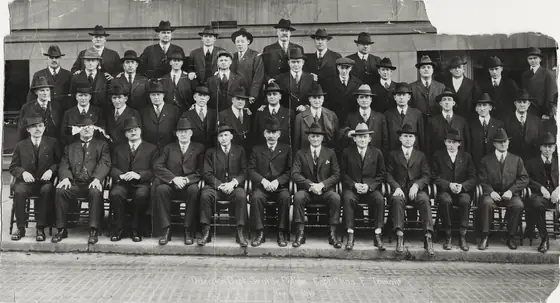
Captain Charles E. Tennant and the detectives of the Seattle Police Department in 1919.
- Author
- Seattle Municipal Archives from Seattle, WA
- Licence
- CC BY 2.0 · Wikimedia Commons
- Changes
- Cropped, resized and toned to the site palette.
- Used in
- Home
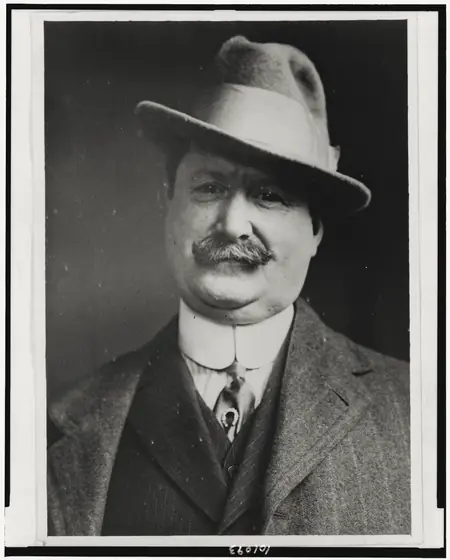
William J. Burns, private detective and former director of the US Bureau of Investigation, in 1927.
- Author
- George Grantham Bain Collection
- Licence
- Public domain · Wikimedia Commons
- Changes
- Cropped, resized and toned to the site palette; background removed for a cut-out figure.
- Used in
- Home
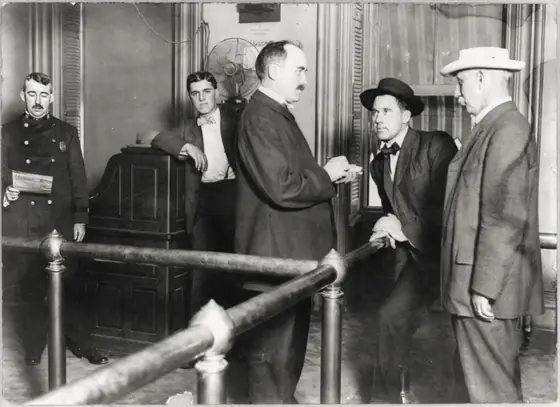
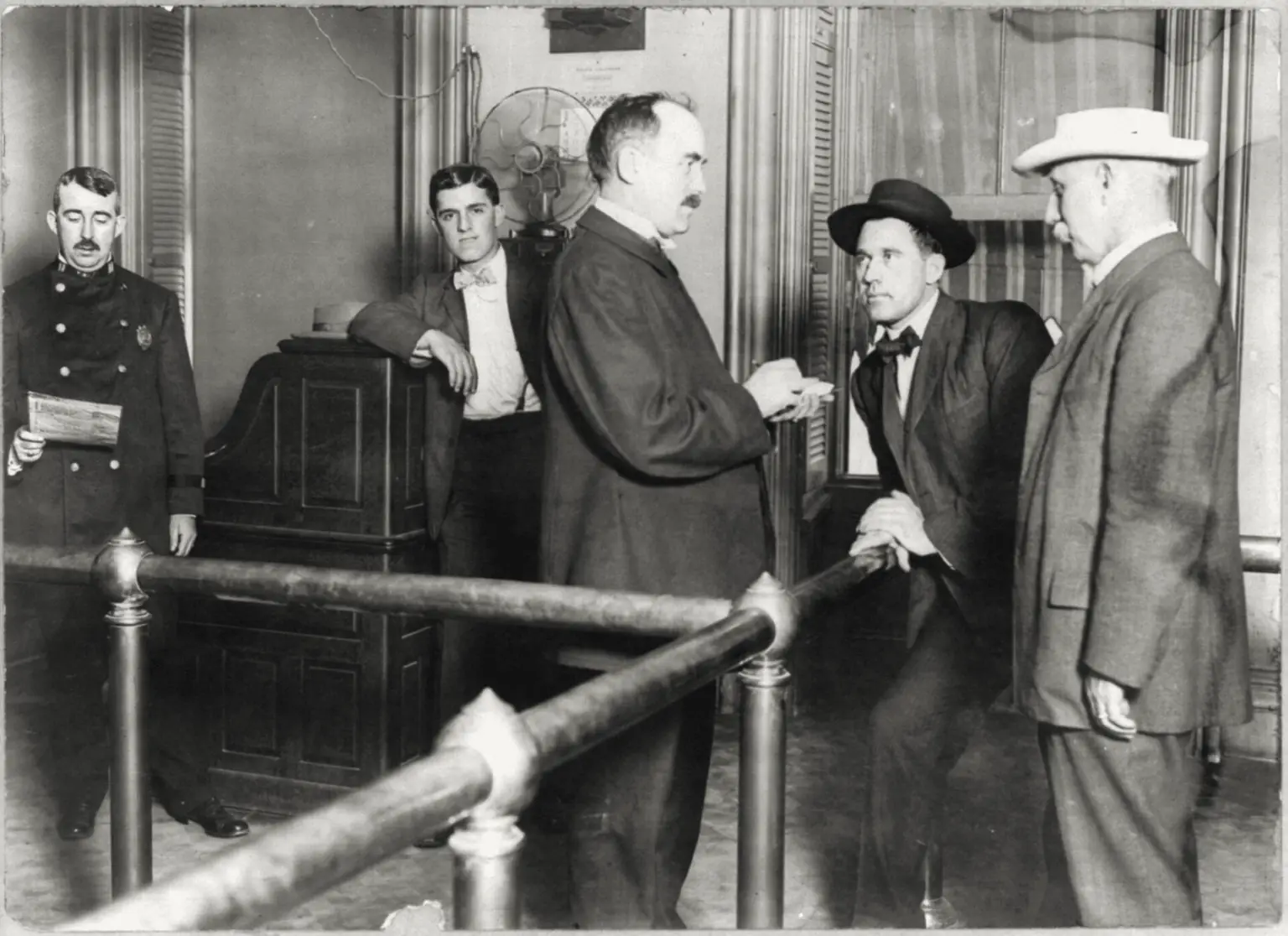
Police and detectives at New York City Police Department headquarters.
- Author
- George Grantham Bain Collection
- Licence
- Public domain · Wikimedia Commons
- Original
- File:New York City Police Dept. activities- 5 police and detectives at HQ LCCN2006677374.jpg
- Changes
- Cropped, resized and toned to the site palette.
- Used in
- Investigations
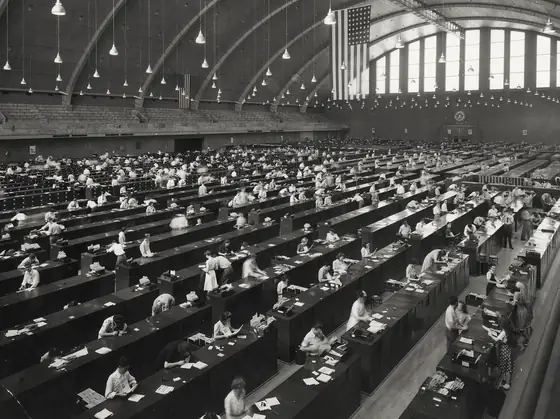
FBI fingerprint examiners at work in a National Guard armory in Washington, DC, during the Second World War.
- Author
- Federal Bureau of Investigation
- Licence
- Public domain · Wikimedia Commons
- Changes
- Cropped, resized and toned to the site palette.
- Used in
- How it works
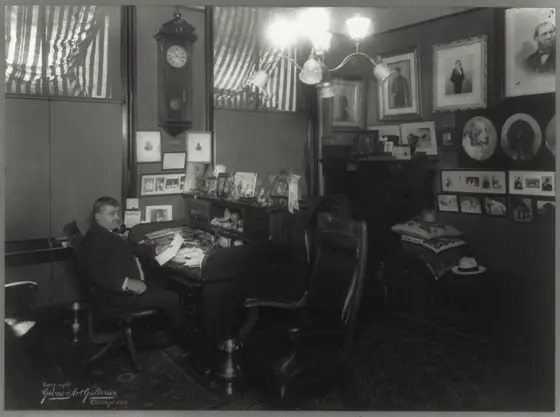
William A. Pinkerton of the Pinkerton National Detective Agency, seated at the desk in his office.
- Author
- Library of Congress
- Licence
- Public domain · Wikimedia Commons
- Changes
- Cropped, resized and toned to the site palette.
- Used in
- About
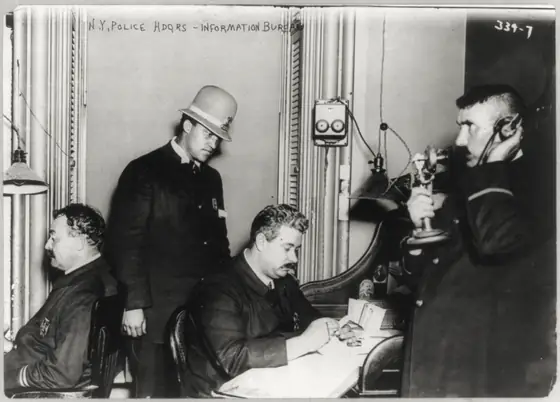
The Information Bureau at New York City Police Department headquarters.
- Author
- George Grantham Bain Collection
- Licence
- Public domain · Wikimedia Commons
- Changes
- Cropped, resized and toned to the site palette.
- Used in
- Your notebook
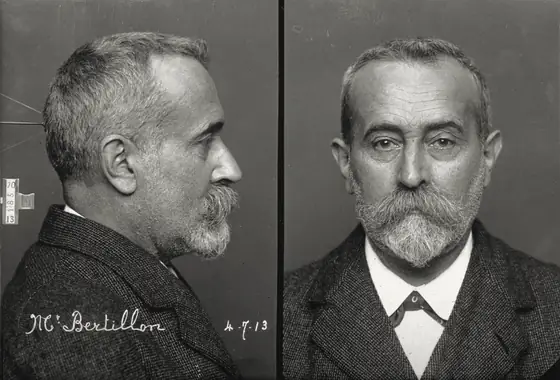
Alphonse Bertillon, pioneer of police identification, photographed in profile and full face by his own method.
- Author
- Wellcome Collection
- Licence
- CC BY 4.0 · Wikimedia Commons
- Original
- File:Alphonse Bertillon 1913.jpg
- Changes
- Cropped, resized and toned to the site palette.
- Used in
- Editorial standards
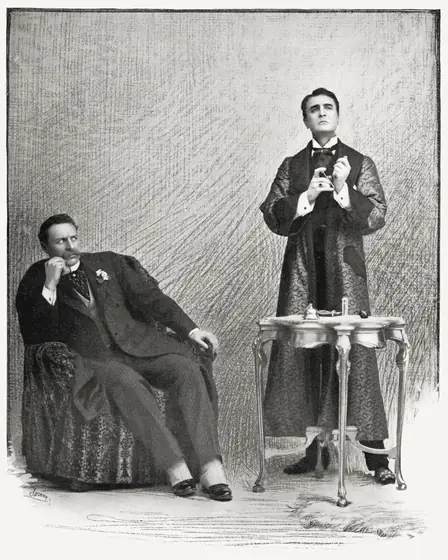
William Gillette as Sherlock Holmes, with Bruce McRae as Dr Watson, in Gillette’s stage play. Photograph by Napoleon Sarony.
- Author
- Napoleon Sarony
- Licence
- Public domain · Wikimedia Commons
- Changes
- Cropped, resized and toned to the site palette.
- Used in
- Page not found
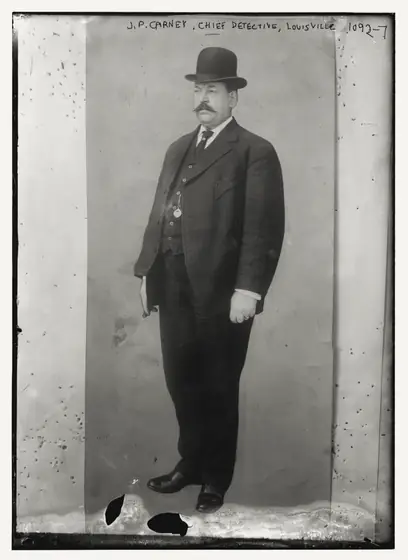
J. P. Carney, chief detective of Louisville.
- Author
- Bain News Service
- Licence
- Public domain · Wikimedia Commons
- Changes
- Cropped, resized and toned to the site palette; background removed for a cut-out figure.
- Used in
- Investigations
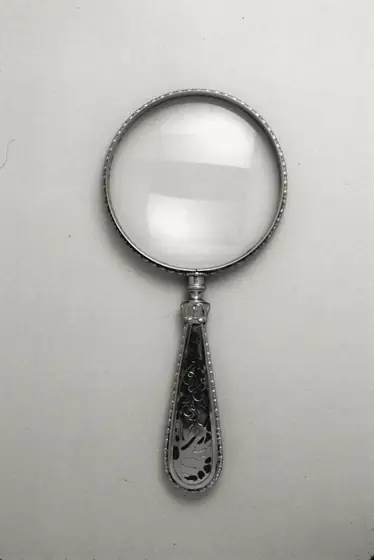
A Tiffany & Co. magnifying glass in the Metropolitan Museum of Art.
- Author
- Metropolitan Museum of Art (object by Tiffany Studios)
- Licence
- CC0 · Wikimedia Commons
- Changes
- Cropped, resized and toned to the site palette; background removed for a cut-out figure.
- Used in
- Home
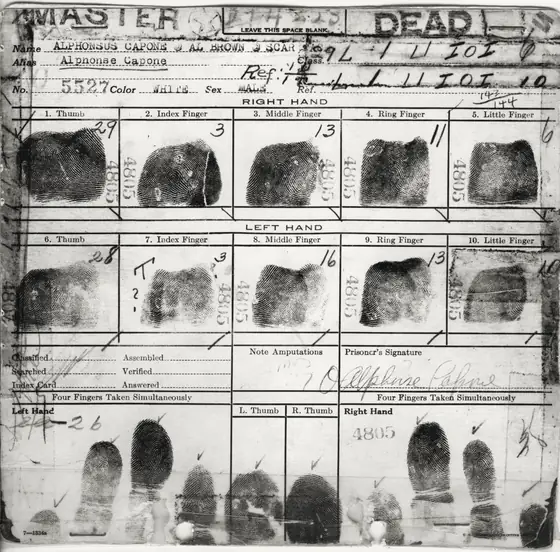
Al Capone’s FBI fingerprint card.
- Author
- FBI
- Licence
- Public domain · Wikimedia Commons
- Changes
- Cropped, resized and toned to the site palette.
- Used in
- How it works
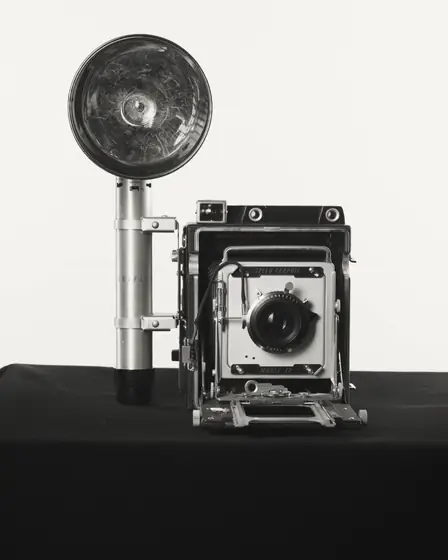
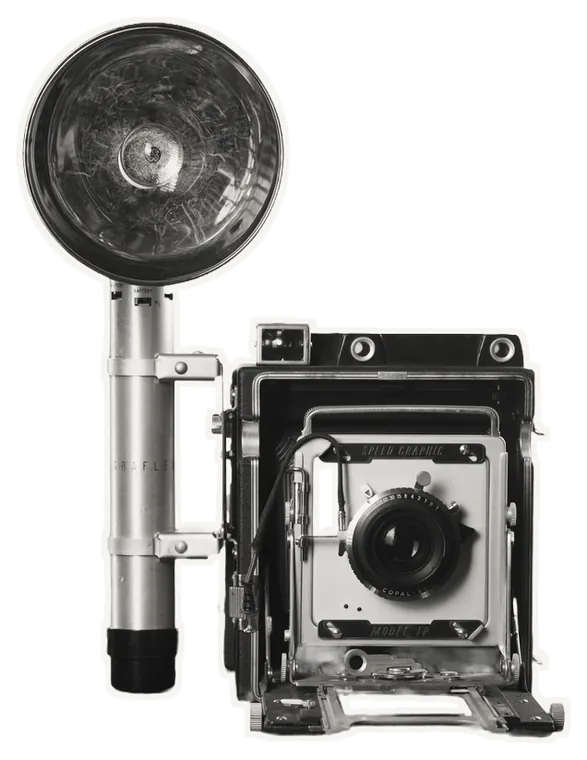
A Graflex Speed Graphic press camera from the FBI’s collection.
- Author
- Federal Bureau of Investigation (FBI)
- Licence
- Public domain · Wikimedia Commons
- Changes
- Cropped, resized and toned to the site palette; background removed for a cut-out figure.
- Used in
- Image credits
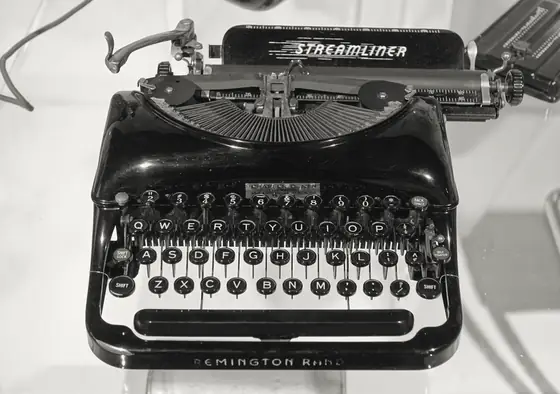
A Remington Streamliner portable typewriter, about 1935.
- Author
- Daderot
- Licence
- CC0 · Wikimedia Commons
- Changes
- Cropped, resized and toned to the site palette; background removed for a cut-out figure.
- Used in
- Your notebook
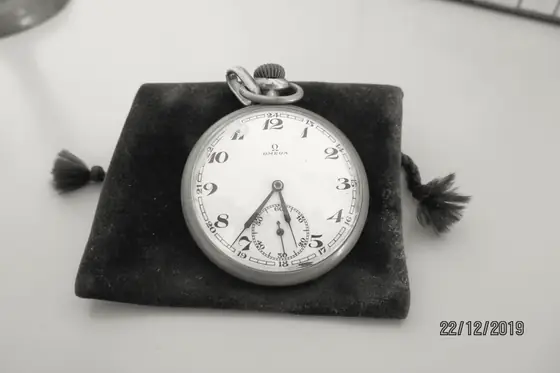
An early twentieth-century Omega pocket watch.
- Author
- Mart61
- Licence
- CC BY-SA 4.0 · Wikimedia Commons
- Original
- File:Omega Pocket Watch.jpg
- Changes
- Cropped, resized and toned to the site palette; background removed for a cut-out figure.
- Used in
- Investigations


_-_Photo_by_Bain_News_Service,_New_York_LCCN90709802.jpg)


Spotted a wrong caption, date or licence? Please report it with the image and page.