Your browser cannot save progress right now. You can still investigate; keep this tab open or enable local storage to save.
This case has been updated. Compatible choices are kept; revisit the evidence before drawing your conclusion.
01 · The briefing
Begin with the question.
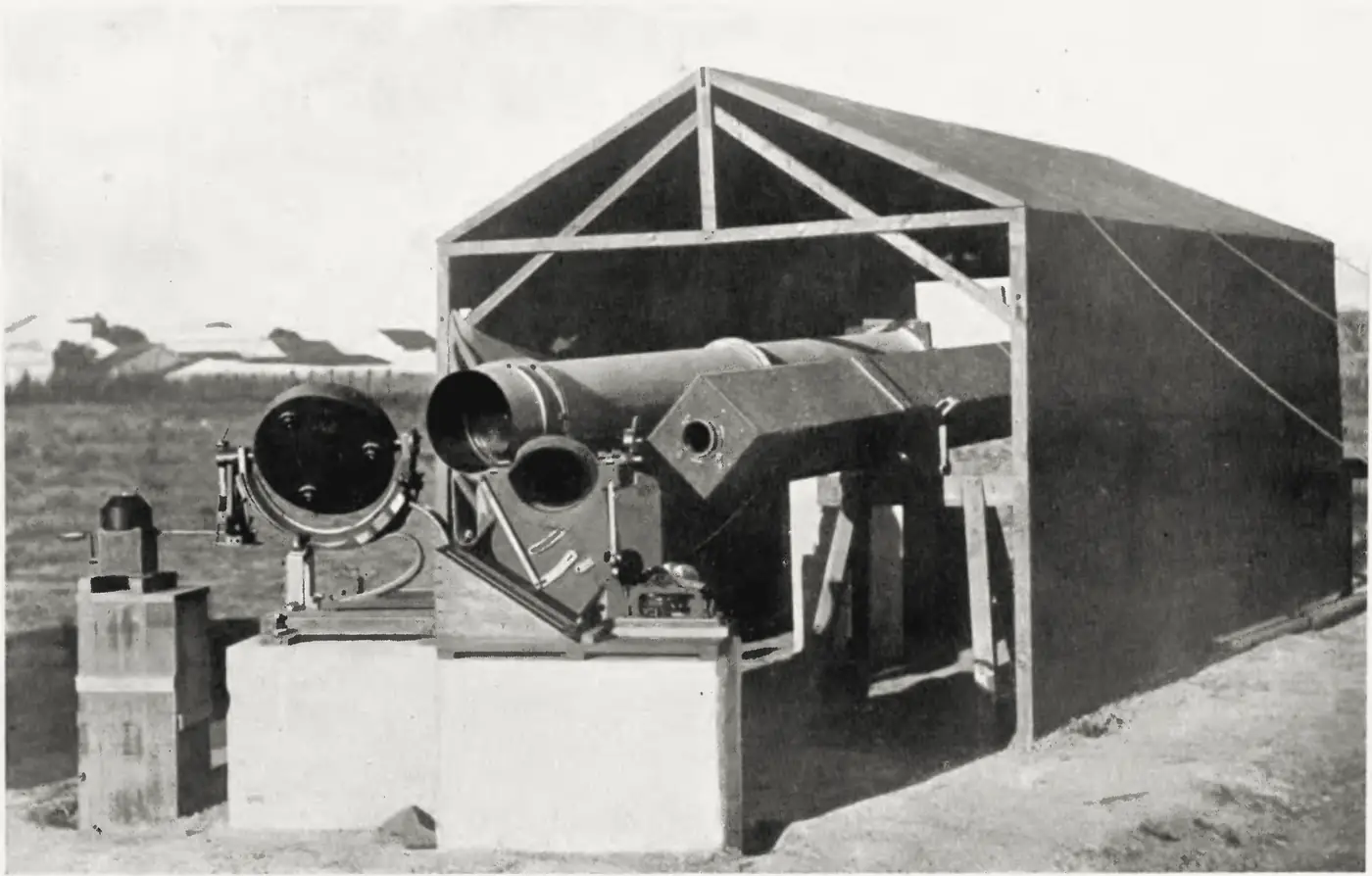
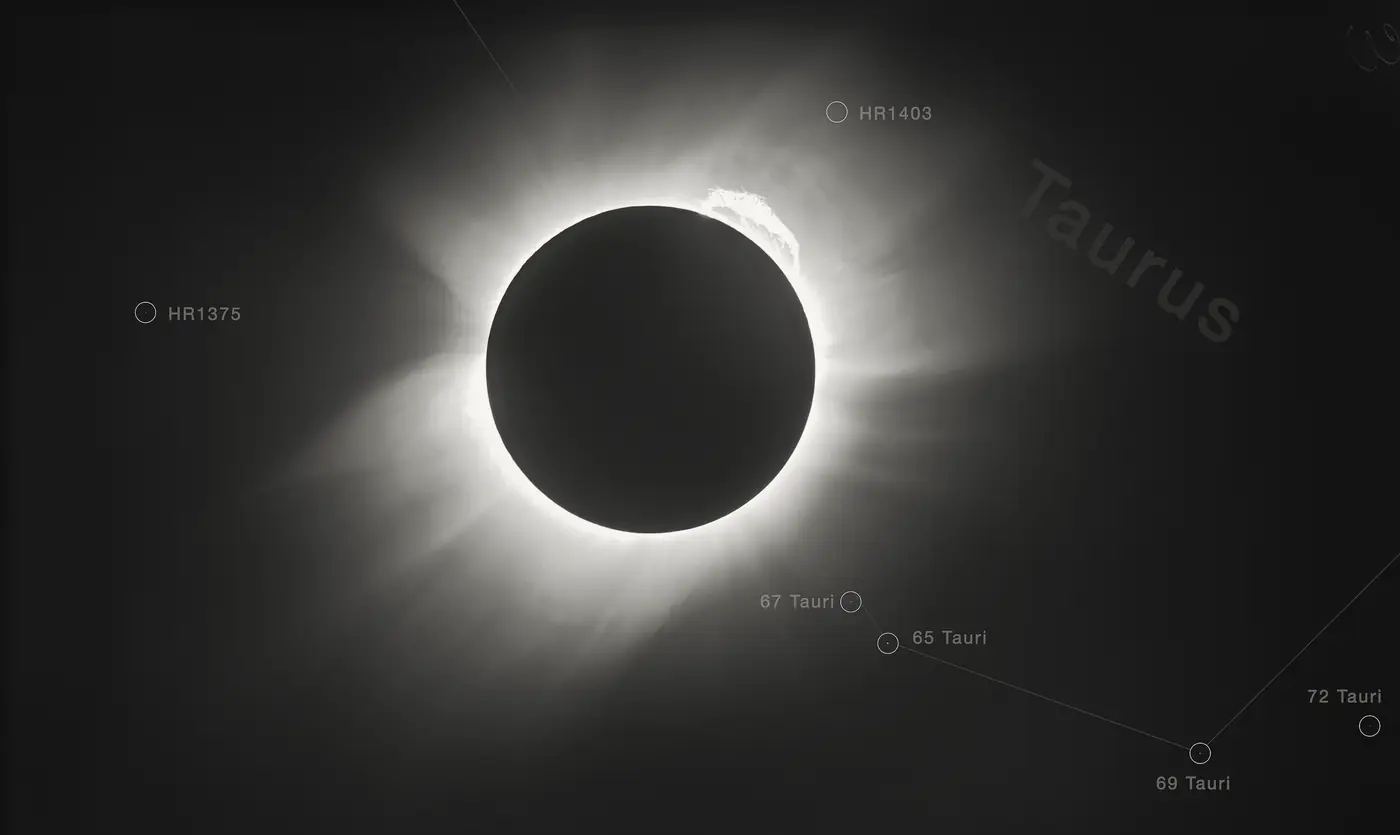
General relativity predicted that starlight passing the edge of the Sun would be bent by about 1.75 arcseconds, twice the amount predicted by Newtonian gravity. The practical test in 1919 was to photograph stars close to the Sun during a total solar eclipse and compare their positions with plates taken when the Sun was absent. Frank Watson Dyson sent Charles Davidson and Andrew Crommelin to Sobral in northern Brazil, and Arthur Eddington went to the island of Príncipe off West Africa. On 29 May 1919 both expeditions observed the eclipse. Heavy clouds left few usable images at Príncipe, while at Sobral the main instrument lost focus. Afterwards the plates had to be measured and reduced, and that stage involved choices. Three outcomes were possible: no deflection, a Newtonian half-deflection, or the full general relativistic value. The investigation separates three questions: what the instruments recorded, which data the analysts chose to use, and whether the later charge of selection is well founded. Each has a different kind of evidence. Earman and Glymour note that the expedition report made Einstein an international celebrity and drove scientific opinion in his favor, so the stakes of the analysis were high.
The timeline
Einstein's first paper predicts that light passing near the Sun is deflected.
The British expeditions leave for Sobral in Brazil and for Príncipe in West Africa.
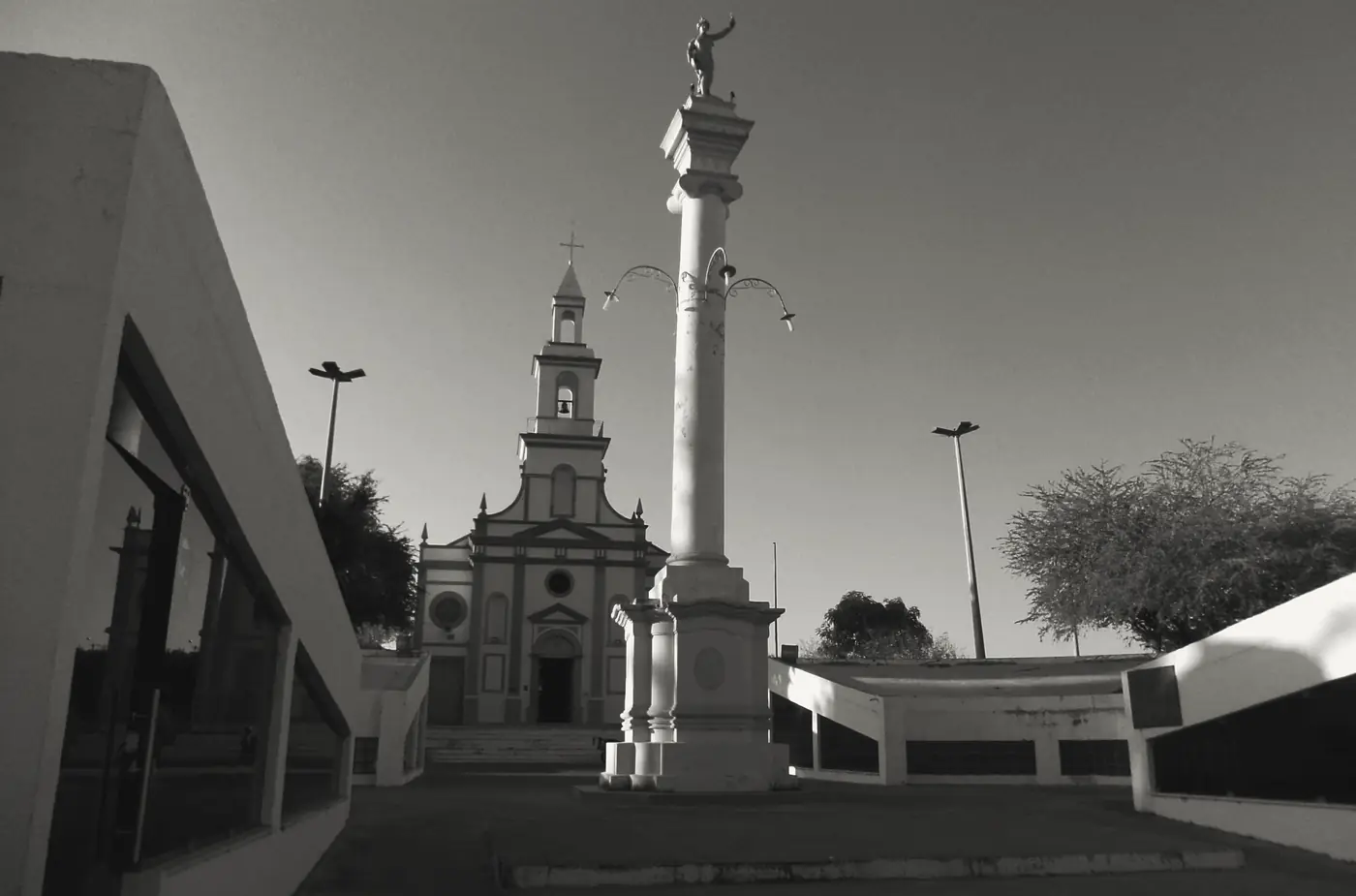
The total eclipse is observed: clouds at Príncipe thin only enough for a few usable images, and the Sobral astrographic lens is out of focus.
Eddington writes to Dyson, glad that the 4-inch-lens plates give the full deflection but worried about his own Príncipe plates.
Dyson, Eddington and Davidson publish their full report in the Philosophical Transactions of the Royal Society.
The 1919 Sobral plates are remeasured with modern equipment; their 4-inch-lens result is close to the 1919 value.
Daniel Kennefick argues in Physics Today that the 1919 team had reasonable grounds for its conclusions.
A researched reconstruction for learning. These reasoning steps simplify a complex record; no score can capture the full history.
02 · The evidence
What does the record show?
Read each exhibit before settling on an explanation. The source links below every exhibit lead to the record behind it.
Exhibits reviewed 0 of 5
A small shift and a careful method
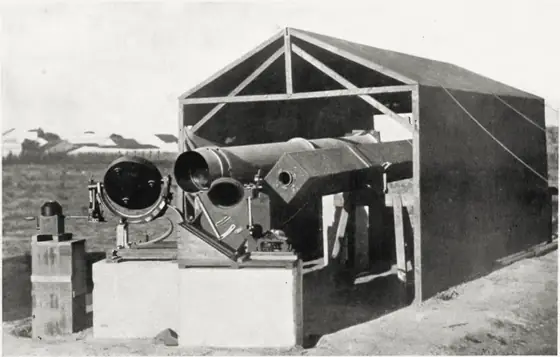
General relativity predicted a shift of about 1.75 arcseconds at the Sun's limb, twice the Newtonian value. Because the shift is so small, the 1919 teams compared eclipse photographs of stars near the Sun with plates of the same star fields taken when the Sun was absent. At Sobral the team waited about two months for the star field to return to the same height in the sky.
Source record s1doi.org
Clouds at Príncipe
At Príncipe heavy clouds on the eclipse day thinned enough for Eddington to obtain images of the brightest stars only on the last few exposures. The team could not take comparison plates on site, so comparison exposures were made in Britain before departure. Those conditions limited the checks that could be made at the station.
Source record s1doi.org
The astrographic lens and the choice of data
At Sobral the astrographic lens had lost focus during the eclipse, and its streaky images were hard to measure. Kennefick reports that Dyson's team measured only one coordinate on the astrographic plates and obtained 0.93 arcseconds, and he argues that the decision to rely on the 4-inch-lens exposures was Dyson's, made once the two instruments were found to disagree.
Source record s1doi.org
The 1979 reanalysis
Kennefick's table compares the 1979 remeasurement with the 1919 results: 1.90 plus or minus 0.11 arcseconds for the 4-inch lens, against 1.98 plus or minus 0.18 in 1919, and 1.55 plus or minus 0.34 for the astrographic lens, against 0.93 in 1919. The reanalysis broadly supports the 4-inch conclusion and suggests the astrographic data were hard to reduce in 1919. It does not show that the original choices were free of judgment.
Source record s1doi.org
The selection charge
The Pesquisa FAPESP feature reports that some critics argued the measurements were not accurate enough to decide the question, while others contended that Eddington deliberately discarded Sobral data that supported Newton. Luiz Nunes de Oliveira says there is no evidence the data were fudged. Kennefick argues that Eddington was not at Sobral and had no hand in analyzing its data, which Dyson's team handled.
Source record s2revistapesquisa.fapesp.br
03 · Your reasoning
Follow the strongest explanation.
Choose an interpretation, then compare it with the evidence. You can revise your choice. The goal is understanding, not a perfect score.
04 · The findings
The chain behind the outcome.
Your notebook
Case report
Next in science & discovery: The lead that dated the Earth
General relativity predicted a shift of about 1.75 arcseconds for starlight grazing the Sun, twice the Newtonian figure. The 1919 expeditions had to decide from photographic plates whether the displacement was nearer one prediction or the other, and the margins were small. The Príncipe observations were limited by cloud, and comparison plates had to be taken in Britain before departure. The Sobral observations were complicated by an astrographic lens that had lost focus during the eclipse. Once the plates were reduced, the astrographic and 4-inch-lens results disagreed sharply, so the analysis had to choose between them. Kennefick reports that Dyson, at Greenwich, decided to rely on the 4-inch-lens exposures, and that Eddington was not part of the Sobral analysis. Critics have argued that Eddington discarded Sobral data that supported Newton. Defenders reply that there is no evidence the data were fudged, and that the analysis was done by others. The 1979 reanalysis of the Sobral plates with modern measuring equipment gave a 4-inch-lens value close to the 1919 figure, while the astrographic value moved from 0.93 to 1.55 arcseconds. That supports the 4-inch conclusion and suggests the astrographic data were hard to reduce, but it does not remove every question about the method. The best-supported account is narrower than either a triumph or a fraud. The measurements were difficult, the reduction involved decisions, and the result was consistent with general relativity within large uncertainties. The debate matters because such decisions can be examined in records, and because a famous result can be shaped by the stories told about it.
Contributing causes and conditions
- Weather at Príncipe, which left few usable images and forced comparison plates to be taken in Britain.
- Instrument problems at Sobral: an astrographic lens that lost focus and a backup 4-inch lens.
- Reduction decisions after the instruments disagreed, including measuring only one coordinate on the astrographic plates and choosing the 4-inch data.
- Expectations on both sides, which critics argue may have shaped choices: Eddington was an enthusiast for the theory, and Dyson was moderately skeptical of it.
Outcome1919 eclipse test of general relativity
Take the method with you
- A very small predicted effect depends on the method and on how the measurements are reduced, not only on the photograph.
- When a selection is alleged, look for records of the decision and of who made it before judging motive.
- A reanalysis can support one result while leaving other choices open, so check which parts it actually tests.
You can read findings at any time. Exploring every reasoning step marks this case as complete in your notebook.
The open record
Sources & further reading
Read the original record and its scope before relying on a conclusion. Source references support the exhibit summaries; Faultory’s reasoning prompts are editorial reconstructions.
- s1
- s2Pesquisa FAPESP — Marcos Pivetta and Rodrigo de Oliveira Andrade, When light bent (2019)
revistapesquisa.fapesp.br
- s3
- s4
Written and curated for Faultory by Yunus Emre Vurgun, with AI-assisted research and drafting. Sources and interpretations can need correction. Read our editorial standards or report an issue.
From the journal
Field notes that use this case
Keep investigating