Your browser cannot save progress right now. You can still investigate; keep this tab open or enable local storage to save.
This case has been updated. Compatible choices are kept; revisit the evidence before drawing your conclusion.
01 · The briefing
Begin with the question.
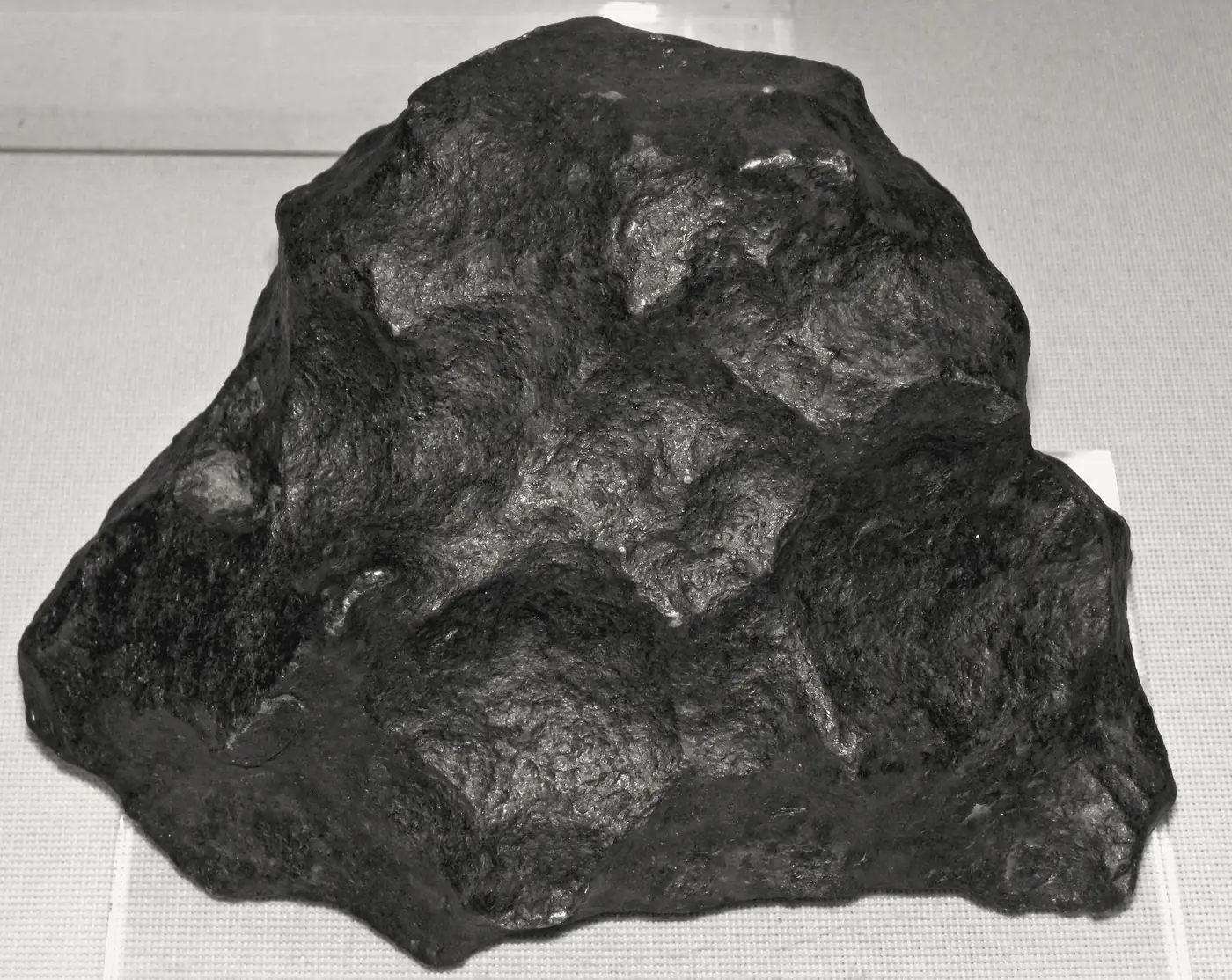
In the early 1950s Clair Patterson, a geochemist at Caltech, set out to date the Earth from the isotopes of lead. The isotope ratios of lead in a sample can carry a record of how long it has been isolated, so meteorites were a natural target: the Caltech summary describes the primordial lead in iron meteorites as the sample for the age of the Earth. Patterson's work therefore depended on measuring very small amounts of lead in samples that could be contaminated by lead from the laboratory and from the surrounding world. This investigation separates three things that are easy to run together: the age that a meteorite lead measurement gives, the reason a meteorite is a suitable sample, and the separate question of how industrial lead changed the environment in which everyone lived. A reasonable reader might believe that one meteorite is too narrow a sample to date the Earth, or that lead contamination was a nuisance with no wider meaning. The evidence should show whether the first concern is answered by sample choice, and whether the second revealed a larger problem.

The timeline
Having measured the isotopic composition of primordial lead in iron meteorites, Patterson determines the age of the Earth at about 4.5 billion years.
Patterson's paper Age of meteorites and the Earth appears in Geochimica et Cosmochimica Acta, volume 10.
Patterson publishes Contaminated and natural lead environments of man in Archives of Environmental Health.
EPA issues its first gasoline lead reduction standards, calling for a gradual phasedown to 0.1 gram per gallon.
The 1973 standards set 1986 as the date for a phasedown to 0.1 gram per gallon.
EPA takes its final step in the phase-out of leaded gasoline, eliminating remaining requirements.
A researched reconstruction for learning. These reasoning steps simplify a complex record; no score can capture the full history.
02 · The evidence
What does the record show?
Read each exhibit before settling on an explanation. The source links below every exhibit lead to the record behind it.
Exhibits reviewed 0 of 5
A meteorite age
Patterson's Caltech oral-history summary records that, by 1953, he had measured the isotopic composition of primordial lead in iron meteorites and was able to determine the age of the Earth at about 4.5 billion years. The summary reports the result rather than the calculation, and the 1956 paper is the published record, which this check did not read in full.
Source record s2resolver.caltech.edu
Contaminated and natural lead
Patterson's 1965 paper, titled Contaminated and natural lead environments of man, is the published record that distinguishes lead from natural sources from lead added by people. The title shows that the paper separates the two. The text was not read in this check, so its measurements are not summarised here.
Source record s3pubmed.ncbi.nlm.nih.gov
Industrial lead in the environment
The oral-history summary says Patterson found that lead concentrations had greatly increased in the modern industrial environment, from sources such as leaded gasoline and the solder used in food cans, with a corresponding rise in lead in people. He investigated seawater, oceanic sediments and polar ice cores, and the summary describes a calculation of the rise since lead mining began in Greek and Roman times.
Source record s2resolver.caltech.edu
Regulation begins in 1973
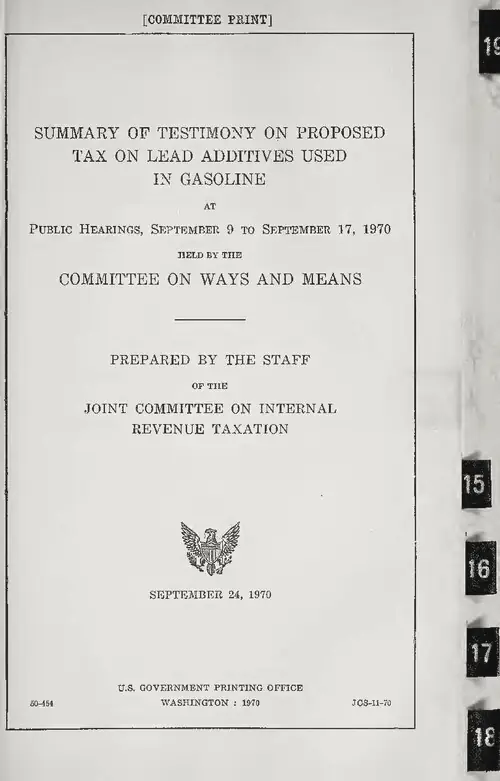
EPA's 1996 press release describes the agency's effort to phase lead out of gasoline as a 25-year campaign. It states that lead has been blended into gasoline since the early 1920s, and that the first reduction standards were issued in 1973, calling for a gradual phasedown to 0.1 gram per gallon by 1986. The average lead content in 1973 was 2 to 3 grams per gallon.
Source record s4epa.gov
The final step
The EPA administrator marked the final rulemaking of 29 January 1996 as the end of the lead phase-out, and said blood lead levels in children were down 70 percent. The release is a government account that presents the outcome as the agency's achievement, so its figures should be read as the agency's own.
Source record s4epa.gov
03 · Your reasoning
Follow the strongest explanation.
Choose an interpretation, then compare it with the evidence. You can revise your choice. The goal is understanding, not a perfect score.
04 · The findings
The chain behind the outcome.
Your notebook
Case report
Next in science & discovery: The bacterium ulcers hid
The case has two results that are often treated as one. The first is an age for the Earth derived from primordial lead in iron meteorites, which Patterson's Caltech summary places at about 4.5 billion years, reached in the early 1950s. The second is a finding that lead in ordinary environmental samples had been raised by human activity. Patterson's later work, using seawater, sediments and polar ice, traced a rise in lead from leaded gasoline and food-can solder, with a corresponding increase in lead in people. The two results are linked by method rather than by a single conclusion. Measuring primordial lead requires controlling for other lead, and the discovery that the modern environment carried a large lead signal made that control a central problem. The public consequence came later. EPA's account describes gasoline lead being reduced through 1973 standards, aimed at 0.1 gram per gallon by 1986, with a final step in January 1996 that eliminated the remaining requirements. EPA also reports that blood lead levels in children were down 70 percent. The record does not show that Patterson's work alone caused the policy change, and the EPA account does not name him. The conclusion is narrow but firm: the meteorite age and the pollution finding came from the same kind of careful isotope and contamination work, and the regulatory outcome was the product of decades of measurement, standards and decisions.
Contributing causes and conditions
- Primordial lead in iron meteorites was the sample type used to measure the age of the Earth.
- Industrial lead additives raised environmental lead concentrations, creating a background that could interfere with precise measurements.
- Leaded gasoline and food-can solder added lead to the environment and to people, and the rise is recorded in ice cores and sediments.
- Gasoline lead was reduced through staged standards from 1973 to a final step in 1996.
OutcomeLead isotope dating of the Earth and leaded gasoline
Take the method with you
- A measurement can answer one question and reveal a different problem in the same methods.
- Contamination is a result to be measured, not only a nuisance to be removed.
- In this case the gasoline phase-out came through a sequence of standards rather than through a single decision.
You can read findings at any time. Exploring every reasoning step marks this case as complete in your notebook.
The open record
Sources & further reading
Read the original record and its scope before relying on a conclusion. Source references support the exhibit summaries; Faultory’s reasoning prompts are editorial reconstructions.
- s1
- s2
- s3
- s4
Written and curated for Faultory by Yunus Emre Vurgun, with AI-assisted research and drafting. Sources and interpretations can need correction. Read our editorial standards or report an issue.
From the journal
Field notes that use this case
Keep investigating