Your browser cannot save progress right now. You can still investigate; keep this tab open or enable local storage to save.
This case has been updated. Compatible choices are kept; revisit the evidence before drawing your conclusion.
01 · The briefing
Begin with the question.
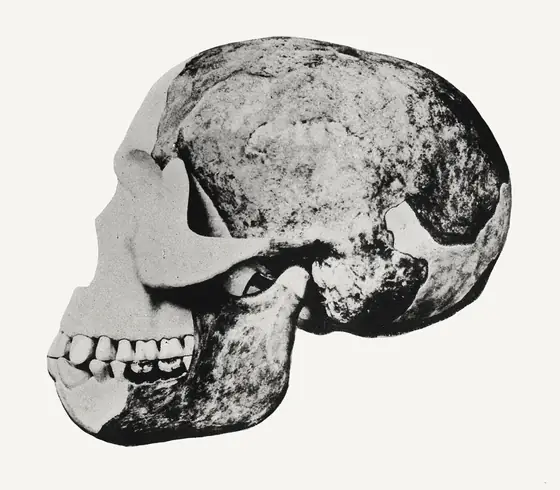
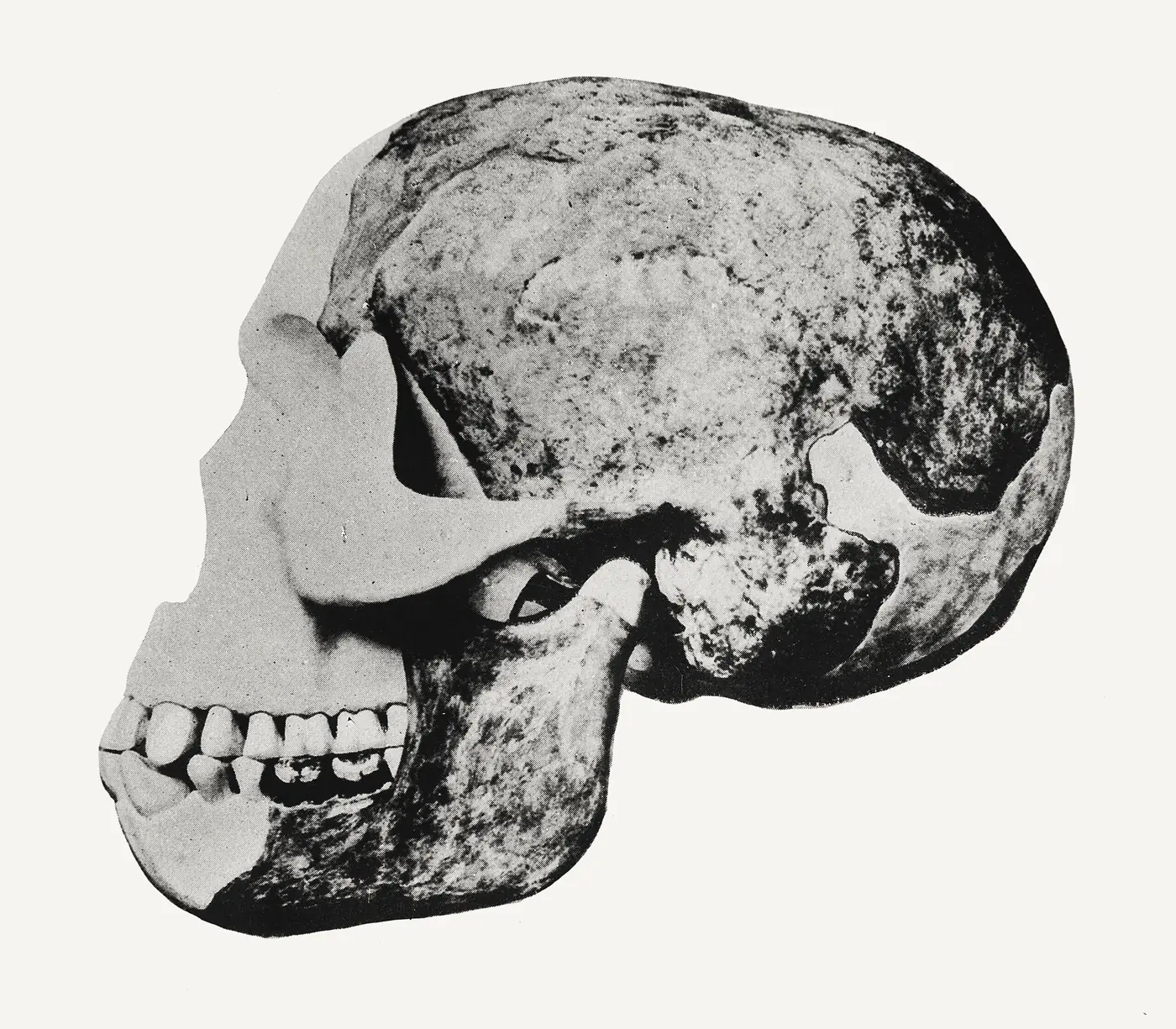
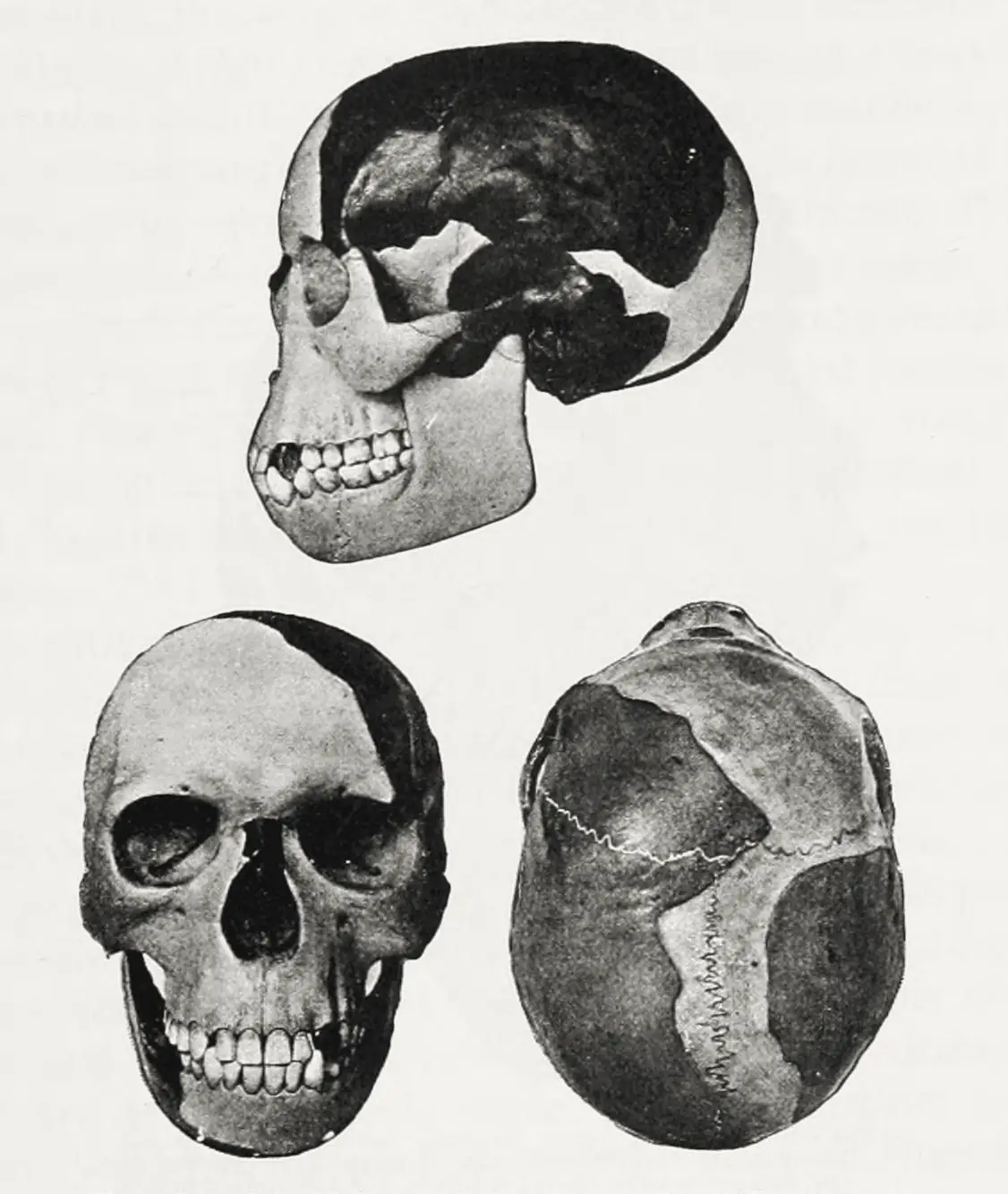
In December 1912 the Natural History Museum's Arthur Smith Woodward announced, with the amateur fossil collector Charles Dawson, a skull and jaw from gravel at Piltdown in Sussex, presented as an early human and named Eoanthropus dawsoni. For four decades the find shaped ideas about human evolution, since it implied a large brain before a human-like jaw. Other fossils from Africa, China and Indonesia suggested the reverse sequence, and the discrepancies grew until new dating methods were applied. In the late 1940s Kenneth Oakley's fluorine tests suggested the bones were far younger than their form implied. In 1953 Joseph Weiner, Wilfrid Le Gros Clark and Oakley retested the remains and showed that they were a forgery. The investigation separates three questions: whether the skull and jaw came from one animal, whether the bones were genuinely old, and who made the fake. The first two are answered by the 1953 tests. The third, the identity of the forger, is the subject of a 2016 study that reaches a qualified conclusion, and of a museum account that lists suspects.
The timeline
Dawson writes to Smith Woodward at the Natural History Museum about skull fragments he has found in gravel, and the two search for more finds over the summer.
Piltdown Man is unveiled to the world as an early human ancestor.
Charles Dawson dies; no further evidence of Piltdown Man is found after his death.
Kenneth Oakley's fluorine tests at the Natural History Museum suggest the fossils are probably less than 50,000 years old.
Weiner, Le Gros Clark and Oakley expose the find: the skull and jaw come from two species, the teeth are filed and the bones are stained.
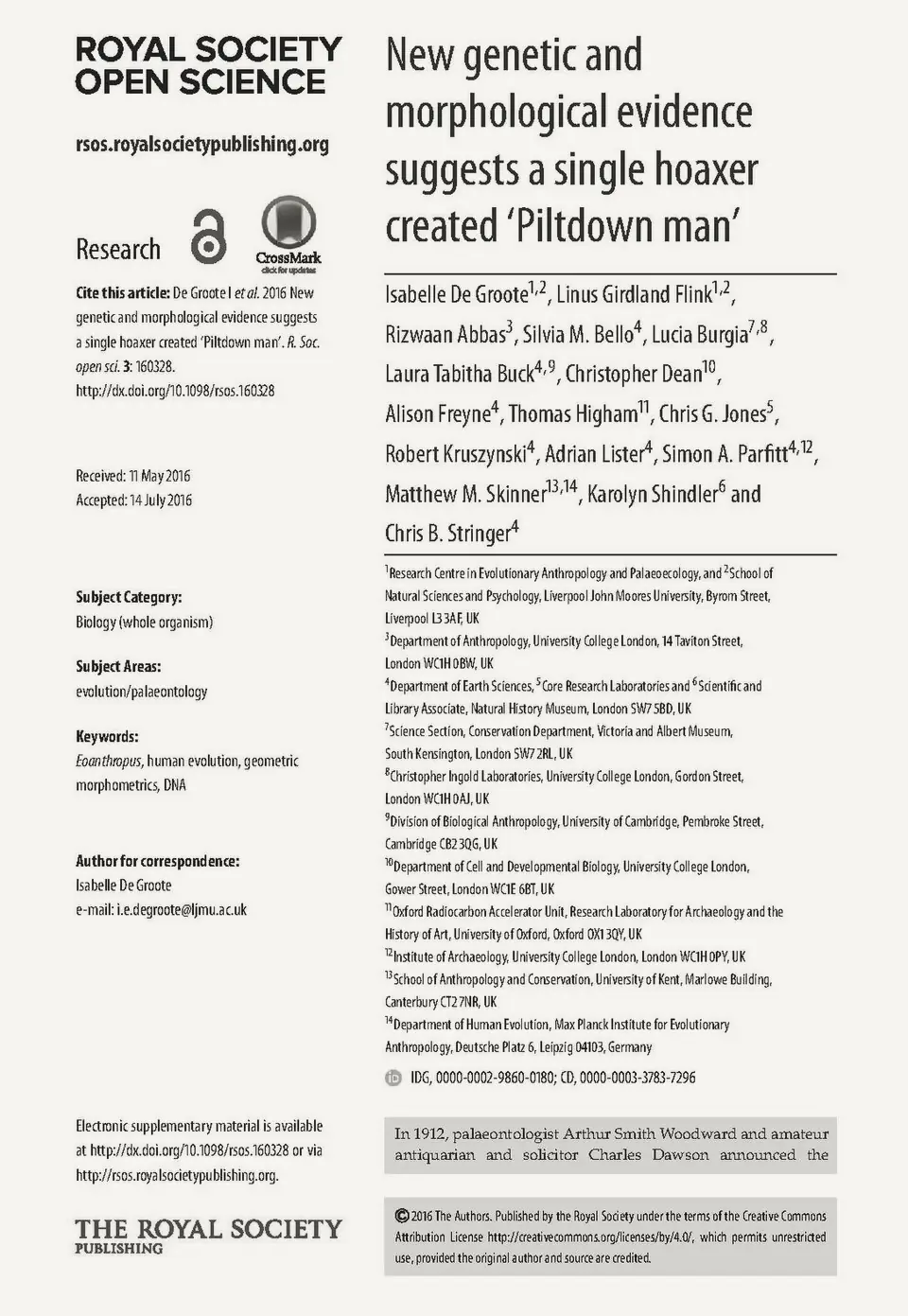
De Groote and colleagues publish a study in Royal Society Open Science linking the specimens to a single forger, Charles Dawson, while noting that whether he acted alone is uncertain.
A researched reconstruction for learning. These reasoning steps simplify a complex record; no score can capture the full history.
02 · The evidence
What does the record show?
Read each exhibit before settling on an explanation. The source links below every exhibit lead to the record behind it.
Exhibits reviewed 0 of 5
Two species in one specimen
The 1953 tests found that the skull and jaw fragments came from two different species, a human and an ape, probably an orang-utan. Scratches visible under the microscope showed that the teeth had been filed down to look human. This establishes that the specimen was a composite; it does not by itself say who assembled it.
Source record s1web.archive.org
Fluorine and apparent age
Kenneth Oakley's fluorine tests in the late 1940s used the tendency of fluorine to accumulate in bone and teeth, and indicated that the Piltdown fossils were probably less than 50,000 years old. That was far too recent for a species with such ape-like features. Joseph Weiner and Wilfrid Le Gros Clark then tested the fossils more stringently, which led to the 1953 findings.
Source record s1web.archive.org
A common modus operandi
De Groote and colleagues report that the specimens are stained brown, loaded with gravel fragments and restored with filling materials, and that this modus operandi is consistent across the Piltdown I and Piltdown II material. That consistency is the basis for the single-forger inference. It does not identify the forger by name.
Source record s4pmc.ncbi.nlm.nih.gov
The prime suspect
The museum's account describes Charles Dawson, the solicitor and amateur fossil hunter who found the fragments and took them to Smith Woodward, as the prime suspect, working either alone or with accomplices. It notes that several other fossils Dawson found were later revealed as fakes. The account also says that still no one really knows the answer to who did it.
Source record s3web.archive.org
The study's conclusion and its limits
The 2016 study says it is highly likely that a single orang-utan specimen and at least two human specimens were used, and it links the fakes to Charles Dawson. The authors state that whether Dawson acted alone is uncertain, and suggest that his hunger for acclaim may have driven him. The attribution rests on consistent physical evidence, so it is a conclusion rather than a verdict.
Source record s4pmc.ncbi.nlm.nih.gov
03 · Your reasoning
Follow the strongest explanation.
Choose an interpretation, then compare it with the evidence. You can revise your choice. The goal is understanding, not a perfect score.
04 · The findings
The chain behind the outcome.
Your notebook
Case report
Next in science & discovery: A disease that spared the staff
The Piltdown remains were a composite, and the decisive evidence came from testing the pieces rather than from the original announcement. The 1953 team showed that the skull and jaw belonged to different species, a human and an ape, and that the teeth had been filed. Oakley's fluorine tests had already suggested that the bones were far younger than their form implied, and the surface features showed that the specimens had been stained and loaded with gravel to match the site. These findings establish fraud in the specimen itself. The harder question is who made it. The museum's account names Charles Dawson, who found the fragments and took them to Smith Woodward, as the prime suspect, working alone or with accomplices, and it notes that no one really knows the answer. The 2016 study by De Groote and colleagues used DNA analyses, high-precision measurements, spectroscopy and virtual anthropology. It concluded that a single orang-utan specimen and at least two human specimens were used, and that the common modus operandi links the material to Charles Dawson. The authors say that whether Dawson acted alone is uncertain, and the study therefore leaves that question visibly open. The case also shows why the hoax lasted so long. The find fitted a picture in which a large brain came before a human-like jaw, while other fossils pointed the other way, and the discrepancies accumulated for decades before new dating methods and more stringent tests were applied. A claim that fits expectations can survive for a long time, and it is the testing of its parts that finally separates the specimen from the story told about it.
Contributing causes and conditions
- Assembly of pieces from different species, a human skull and an ape jaw presented as one individual.
- Filing of teeth, and staining of bones with gravel and filling materials to match the site.
- Acceptance over four decades despite discrepancies with other fossils from Africa, China and Indonesia.
- Fluorine and later tests that exposed the mismatch between apparent age and composition.
- Attribution to a single forger, most likely Dawson, with the question of accomplices left open.
OutcomePiltdown Man hoax
Take the method with you
- A composite specimen can look coherent until its parts are tested separately.
- A widely accepted claim can survive contrary evidence for decades, so test its foundations as well as its conclusions.
- State an attribution as a conclusion with its open questions, rather than as settled proof.
You can read findings at any time. Exploring every reasoning step marks this case as complete in your notebook.
The open record
Sources & further reading
Read the original record and its scope before relying on a conclusion. Source references support the exhibit summaries; Faultory’s reasoning prompts are editorial reconstructions.
- s1Natural History Museum (archived 2013) — Piltdown hoax revealed
web.archive.org
- s2Natural History Museum (archived 2013) — Discoveries at Piltdown
web.archive.org
- s3Natural History Museum (archived 2013) — Piltdown suspects
web.archive.org
- s4
- s5Time — End as a Man (1953)
content.time.com
Written and curated for Faultory by Yunus Emre Vurgun, with AI-assisted research and drafting. Sources and interpretations can need correction. Read our editorial standards or report an issue.
From the journal
Field notes that use this case
Keep investigating