
Your browser cannot save progress right now. You can still investigate; keep this tab open or enable local storage to save.
This case has been updated. Compatible choices are kept; revisit the evidence before drawing your conclusion.
01 · The briefing
Begin with the question.
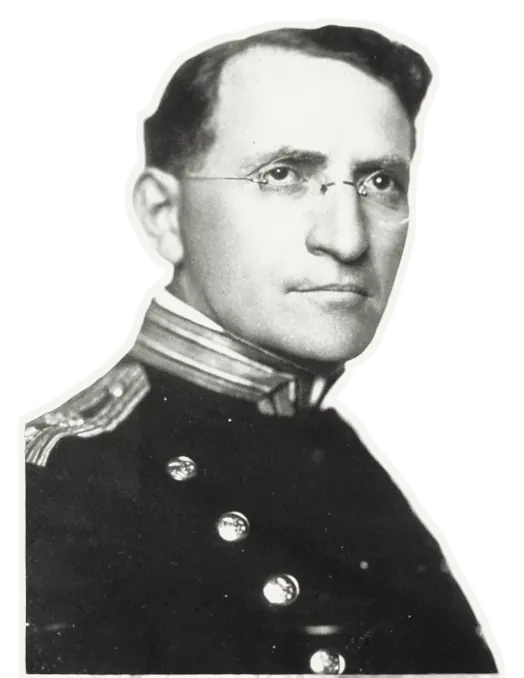
Pellagra caused blackened, peeling skin on sun-exposed areas, then diarrhoea and, if untreated, dementia and death. During the early twentieth century it spread through poor communities and institutions across the American South. In 1914 the US Surgeon General asked Joseph Goldberger, a physician in the US Public Health Service, to investigate. The prevailing medical view was that pellagra was an infection, a position consistent with the germ theory that was then reshaping medicine, and other explanations were also in circulation. Goldberger noticed that the worst-affected institutions, including asylums, prisons and orphanages, had cases among their inmates but none among their employed staff, and that the food supplied to those institutions was cheap and corn-based. This investigation separates three possible readings: an infectious agent, a dietary deficiency, and a social or sanitary condition that merely travelled with poverty. A reasonable reader might believe that the staff observation alone settles the question, or that a diet experiment proves a cause without showing what is missing. The evidence should show which observations separate an infection from a deficiency, and what the later chemistry adds.

The timeline
The US Surgeon General asks US Public Health Service physician Joseph Goldberger to investigate pellagra.
Goldberger supplements the diets of two orphanages and part of an asylum, and no new cases appear the following spring.
A pellagra experiment is carried out at Rankin State Farm in Mississippi, as described in a 2005 secondary note.
Goldberger's report on experimental attempts to transmit pellagra to human subjects is published in Public Health Reports.
Elvehjem and colleagues publish the isolation and identification of the anti-black tongue factor; the vitamin's chemical identity is established in the same year.
Pellagra disappears from the United States as diets with adequate vitamin B3 become normal.
A researched reconstruction for learning. These reasoning steps simplify a complex record; no score can capture the full history.
02 · The evidence
What does the record show?

Read each exhibit before settling on an explanation. The source links below every exhibit lead to the record behind it.
Exhibits reviewed 0 of 5
Staff who were not affected
Goldberger visited the worst-affected prisons and asylums and reported that employed staff in those institutions had no cases, while inmates did. He treated this contrast as effectively ruling out infection. The argument rests on an observed contrast rather than on an experiment, and it does not identify what the diet lacked.
Source record s4pmc.ncbi.nlm.nih.gov
The shared diet, and the orphanage test
The affected communities ate corn meal, biscuits, molasses and fatty salt pork, and fresh food was often unavailable. Institutions fed their residents the least expensive foodstuffs. In 1914 and 1915 Goldberger supplemented the diets of two orphanages and part of an asylum, and no new cases appeared the next spring; when funding ran out, the disease returned, affecting many children at one orphanage. The observations show association and reversal, not the identity of the missing nutrient.
Source record s4pmc.ncbi.nlm.nih.gov
Attempts to transmit the disease
The 1916 report, titled The transmissibility of pellagra, describes experimental attempts to transmit the disease to human subjects, and it was reprinted in 1973 as a nutrition classic. The record of its result is the paper itself, which should be read in full before a reader relies on any summary. A later review says earlier laboratory tests by another microbiologist also failed to transmit the disease by injecting or swallowing material from patients.
Source record s4pmc.ncbi.nlm.nih.gov
A prison-farm test in 1915
A 2005 article by L. Lampton, titled Goldberger's War in Mississippi, describes the 1915 pellagra experiment at Rankin State Farm and a new book about it. The title establishes the place, year and subject. As a short secondary note, it cannot establish the protocol, the number of men, or the outcome, so those details belong to the primary report.
Source record s5pubmed.ncbi.nlm.nih.gov
A later chemical step
The 1937 paper by Elvehjem and colleagues is titled The isolation and identification of the anti-black tongue factor. The review links pellagra to deficiency of vitamin B3, also called nicotinic acid, and dates the identification of the vitamin's chemical identity to 1937. The paper came more than two decades after Goldberger's first studies, so it supported the dietary explanation without being the evidence for it.
Source record s3pubmed.ncbi.nlm.nih.gov
03 · Your reasoning
Follow the strongest explanation.
Choose an interpretation, then compare it with the evidence. You can revise your choice. The goal is understanding, not a perfect score.
04 · The findings
The chain behind the outcome.
Your notebook
Case report
Next in science & discovery: Starlight bent by the Sun
The key comparison in this case is between two explanations that both predict cases in some places and not in others. An infectious cause predicts that people in close contact with patients should be at risk, and that a transmissible agent should be identifiable. Goldberger's observations told against that prediction: in the worst-affected institutions, staff who worked among inmates did not develop the disease, and laboratory attempts to transmit it by injecting or swallowing material from patients failed. A dietary cause predicts something different: that changing what people eat should change the disease. In 1914 and 1915 Goldberger supplemented the diets of two orphanages and part of an asylum. New cases stopped, and existing cases cleared. When the funding ended, the disease returned, affecting many children at one orphanage. That reversal under a change in diet is the core of the case for a nutritional cause. The 1915 Rankin State Farm experiment in Mississippi pursued the same question in a prison population, although its details are known here only from a short secondary note. The 1937 identification of a nutrient later tied pellagra to a vitamin B3 deficiency. None of these steps alone decides the matter, but together they show that a cause can be established before its mechanism is fully understood. The case also shows that a well-supported scientific conclusion can change practice slowly when it conflicts with local economic arrangements, since the dietary explanation implicated the cheap foods on which institutions and cotton-mill towns depended.
Contributing causes and conditions
- A cornmeal-based diet, cheap and nutritionally narrow, was the common staple in the affected institutions and communities.
- Institutions and company-run towns limited the foods people could afford, so the diet was largely set by economics.
- Pellagra concentrated among inmates and workers on that diet, while staff in the worst-affected institutions were not affected.
- The disease reversed when diets were supplemented and returned when supplements stopped, pointing to a nutritional deficiency.
- A chemical identification of the missing vitamin followed in 1937, but full acceptance of the dietary cause came only later.
OutcomePellagra and diet (1914 to 1937)
Take the method with you
- A contrast between exposed groups can narrow a cause, but it rarely proves one by itself.
- An intervention that changes the suspected cause and then reverses the outcome is stronger evidence than a correlation alone.
- A scientific finding can be correct and still change practice slowly when it conflicts with existing economic arrangements.
You can read findings at any time. Exploring every reasoning step marks this case as complete in your notebook.
The open record
Sources & further reading
Read the original record and its scope before relying on a conclusion. Source references support the exhibit summaries; Faultory’s reasoning prompts are editorial reconstructions.
- s1
- s2
- s3
- s4
- s5
Written and curated for Faultory by Yunus Emre Vurgun, with AI-assisted research and drafting. Sources and interpretations can need correction. Read our editorial standards or report an issue.
Keep investigating