Your browser cannot save progress right now. You can still investigate; keep this tab open or enable local storage to save.
This case has been updated. Compatible choices are kept; revisit the evidence before drawing your conclusion.
01 · The briefing
Begin with the question.
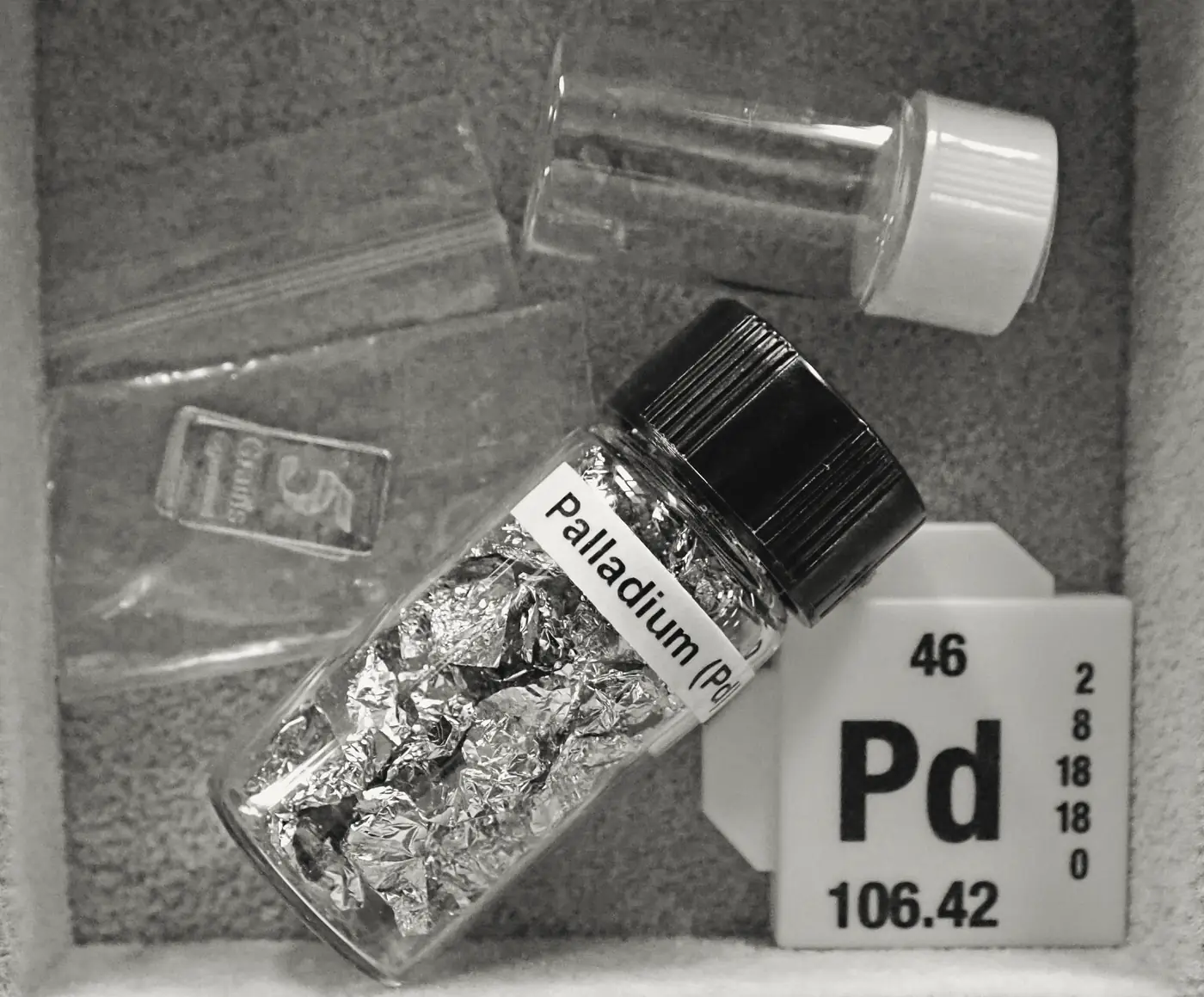
On 23 March 1989 the University of Utah announced that two electrochemists, Martin Fleischmann and Stanley Pons, had produced sustained heat from a simple electrolysis cell. The cell passed current through heavy water with a palladium electrode, and the announcement said the heat was too large to be chemical and was best attributed to a nuclear process they called cold fusion. Press reports of the time described neutrons and tritium alongside the heat, which are products that ordinary fusion of deuterium would also produce. Within weeks, laboratories in several countries tried to repeat the work. Some reported excess heat, others reported none, and one early positive report was later withdrawn by its group. The US Department of Energy asked its Energy Research Advisory Board to assess the claim, and the panel reported in November 1989. This investigation separates three questions that are easily merged: whether the heat measurements were reliable, whether fusion products matched the heat, and whether independent laboratories reproduced the effect. A reasonable reader might decide that one failed measurement settles everything, or that failed replications prove nothing because the original work was described too briefly to copy. The evidence should show which of these readings the record supports.

The timeline
The University of Utah announces excess heat from a palladium electrode in heavy-water electrolysis, and press reports describe neutron and tritium claims.
Fleischmann, Pons and Hawkins publish their calorimetry paper in the Journal of Electroanalytical Chemistry.
A Texas A&M group announces confirmation of excess heat; the group later retracts the result during a panel visit in June.
A Caltech group reports no excess heat in open-cell calorimetry at an American Physical Society meeting.
A Santa Fe workshop hears both positive and negative calorimetry results, including negative results from Caltech and MIT.
The Energy Research Advisory Board issues its report Cold Fusion Research (DOE/S-0073).
A second Department of Energy review of newer experiments is reported, and its panel is divided.
A researched reconstruction for learning. These reasoning steps simplify a complex record; no score can capture the full history.
02 · The evidence
What does the record show?
Read each exhibit before settling on an explanation. The source links below every exhibit lead to the record behind it.
Exhibits reviewed 0 of 5
An announcement before the paper
The university release of 23 March 1989 and the press coverage that followed reached the public before the paper appeared. The paper, dated 10 April, reported excess heat of 5 to 111 percent at several current densities. The chronology shows that early judgements had to rest on press descriptions, not on the full methods.
Source record s2files.ncas.org
Negative results from Caltech and MIT
On 1 May 1989 a Caltech group presented open-cell calorimetry with no excess heat. At the Santa Fe workshop in late May, negative results from Caltech and MIT were presented alongside positive reports from Texas A&M and Stanford. The record shows a split among laboratories, not a single failed attempt, and it does not show that every negative experiment used the same standard.
Source record s2files.ncas.org
Calibration decides the heat
Most groups that reported excess heat calibrated their cells by adding a known heater power and treating the resulting temperature change as a heat-transfer coefficient. The panel said this method is intrinsically prone to overestimate heat, and it saw no calibration detailed enough to compute the true coefficient. It judged that an error of a few percent in the assumed coefficient would invalidate nearly all reported excess heat.
Source record s3files.ncas.org
A gamma line that was not a neutron
The Utah group's neutron claim rested on a gamma-ray peak produced by neutron capture in the surrounding water. The panel noted that the peak was narrower than the detector could produce, and an MIT group pointed to internal inconsistencies in the energy scale. After exchanges between the groups, the panel described the claimed neutron detection as an artefact of the apparatus. The record concerns the measurement, not the motives of the researchers.
Source record s4files.ncas.org
Fusion products that were missing
The panel said groups claiming excess heat did not find commensurate fusion products, such as neutrons or tritium, which should be the most sensitive signatures of fusion. Neutrons near background were reported in some experiments, but far below the levels the heat claims would require. Some laboratories reported excess tritium without the other particles that the known reaction would produce.
Source record s1files.ncas.org
03 · Your reasoning
Follow the strongest explanation.
Choose an interpretation, then compare it with the evidence. You can revise your choice. The goal is understanding, not a perfect score.
04 · The findings
The chain behind the outcome.
Your notebook
Case report
Next in science & discovery: Early neutrinos and a faulty connector
The central distinction is between a measured heat and a nuclear explanation. The Utah group inferred a nuclear origin from heat alone, but the strongest test would have been the particles a deuterium fusion reaction should emit in proportion to its energy. The 1989 panel found that groups claiming excess heat did not find those products at commensurate levels. Neutrons near background were reported in some experiments, far below what the heat claims required, and reports of excess tritium lacked the other particles that the known reaction would produce. The neutron claim that rested on a gamma-ray line was judged an artefact of the apparatus after exchanges with an MIT group. The heat measurements were fragile too. Excess heat depends on calibrating each cell's heat-transfer coefficient across its operating range, and the panel found no calibration detailed enough to establish the true value. A few percent of error could erase most of the reported effect. The panel did not claim that every observation had been disproved. It concluded that the evidence was not persuasive for a new nuclear process, and that some observations were not yet invalidated. Caltech and MIT groups had reported no excess heat in 1989. A second Department of Energy review of newer experiments, reported in 2004, was divided on whether the experiments produced power. The durable lesson is narrower than either the early hype or the dismissal: a claimed energy source must produce the products its mechanism requires, and a heat measurement is only as strong as the calibration behind it.
Contributing causes and conditions
- Electrolysis of heavy water on a palladium electrode produced temperature rises that the team attributed to a nuclear process.
- Results reached the press before the paper appeared, so early judgements rested on descriptions rather than full methods.
- Excess-heat values depended on calibrations that overestimate power when the heat-transfer coefficient is not measured across the operating range.
- The fusion products expected from the claimed reaction were absent or far below the levels the heat implied.
- The neutron signal from a gamma-ray peak was traced to apparatus artefacts rather than to fusion.
OutcomeCold fusion claim, 1989
Take the method with you
- A measured quantity is only as strong as the calibration that converts the raw reading into the quantity claimed.
- A proposed energy source should be checked against the particles or products its mechanism must produce.
- Replication failures matter most when the failed tests were designed to detect the claimed effect under comparable conditions.
You can read findings at any time. Exploring every reasoning step marks this case as complete in your notebook.
The open record
Sources & further reading
Read the original record and its scope before relying on a conclusion. Source references support the exhibit summaries; Faultory’s reasoning prompts are editorial reconstructions.
- s1
- s2
- s3
- s4
- s5
Written and curated for Faultory by Yunus Emre Vurgun, with AI-assisted research and drafting. Sources and interpretations can need correction. Read our editorial standards or report an issue.
From the journal
Field notes that use this case
Keep investigating