
Your browser cannot save progress right now. You can still investigate; keep this tab open or enable local storage to save.
This case has been updated. Compatible choices are kept; revisit the evidence before drawing your conclusion.
01 · The briefing
Begin with the question.
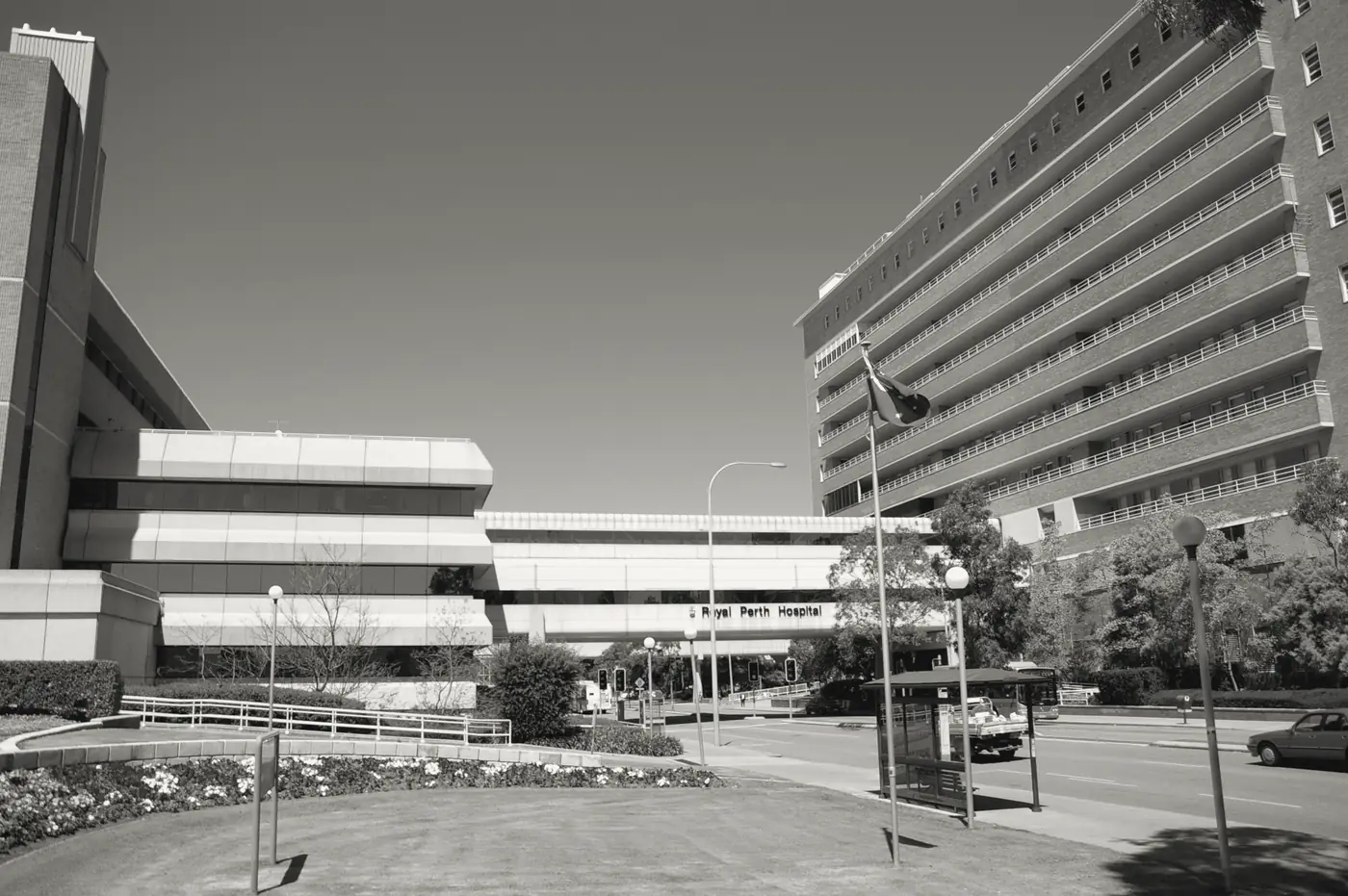
By 1982 peptic ulcers were usually explained by excess stomach acid, linked to stress, smoking, diet or inheritance. Drugs that reduced acid could heal most ulcers, but the ulcers often recurred once treatment stopped. In Perth, Western Australia, the pathologist Robin Warren saw small curved bacteria in biopsies of the stomach lining, with inflammation always present close to them. He and a young clinical fellow, Barry Marshall, set out to study 100 consecutive endoscopy patients. A reasonable clinician might have held three positions at the time. The bacteria could be a harmless passenger that happened to be present in people with ulcers; they could be a consequence of the ulcer and its acid environment; or they could be a cause, and removing them would change the disease. Each position predicts different evidence. Association, culture, exposure of a volunteer and treatment trials address different parts of the question. Whether the explanation was right mattered for treatment as well as theory, which is why the question was practical. The investigation asks which evidence supports the strongest claim, and which parts of the causal story were still unproven in the 1980s.
The timeline
A biopsy taken on the Thursday before Easter gives the first successful culture; the plates are left untouched until the Tuesday after Easter.
Letters by Warren and Marshall are published in The Lancet; Marshall's letter describes a new species and suggests the bacterium may play a role in peptic ulcer and gastric cancer.
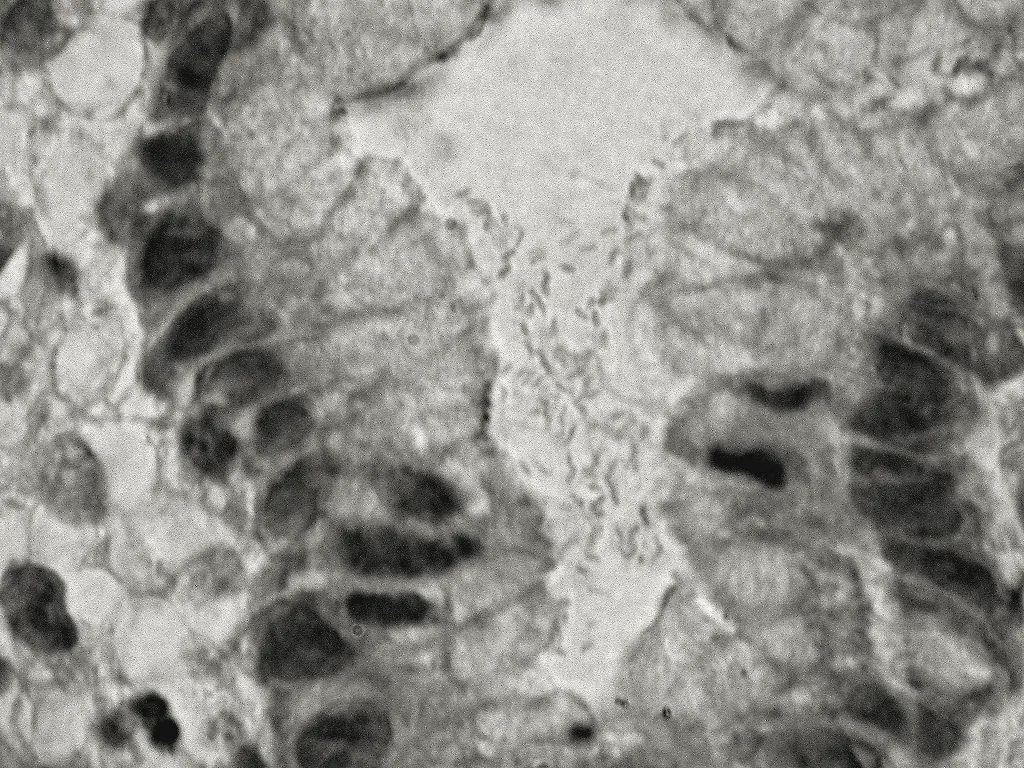
The Lancet paper reports spiral or curved bacilli in 58 of 100 consecutive patients, present in almost all with gastritis or ulcers.
Marshall swallows a culture of the bacterium, develops nausea and vomiting, and a later endoscopy shows gastritis with the organism present.
The Medical Journal of Australia publishes a report of acute gastritis in a volunteer who swallowed the bacterium, with the illness lasting 14 days.
The Nobel Assembly awards the Prize in Physiology or Medicine to Marshall and Warren.
A researched reconstruction for learning. These reasoning steps simplify a complex record; no score can capture the full history.
02 · The evidence
What does the record show?
Read each exhibit before settling on an explanation. The source links below every exhibit lead to the record behind it.
Exhibits reviewed 0 of 5
The Easter culture
Marshall's 2005 Nobel lecture says the first successful culture came from a biopsy taken on the Thursday before Easter 1982. The plates stayed in the incubator until the Tuesday after Easter, when small colonies were seen, because the laboratory had been discarding research plates at 48 hours. The episode shows how easily the organism could have been lost. It does not show that the organism causes disease.
Source record s2nobelprize.org
A series of 100 patients
The 1984 Lancet paper reports 100 consecutive consenting patients undergoing gastroscopy, with spiral or curved bacilli in 58. Bacilli cultured from 11 biopsies were gram-negative, flagellate and microaerophilic, and appeared to be a new species related to Campylobacter. The organism was present in almost all patients with active chronic gastritis, duodenal ulcer or gastric ulcer. This is an association across a series, not proof of cause.
Source record s3pubmed.ncbi.nlm.nih.gov
Bismuth, relapse and unfinished tests
Marshall's lecture describes bismuth, an older ulcer treatment, which killed the bacteria in laboratory tests and temporarily healed gastritis in a small single-blind study, although the infection usually relapsed. A published comparison he cites found ulcer recurrence lower after bismuth than after cimetidine. His attempt to fulfil Koch's postulates in piglets failed because the organism did not take. These results pointed toward eradication mattering without proving that the bacteria cause ulcers.
Source record s2nobelprize.org
A volunteer with gastritis
A 1985 Medical Journal of Australia report describes a volunteer with histologically normal gastric mucosa who swallowed the organism and developed a mild illness lasting 14 days, with gastritis proven on day 10 and largely resolved by day 14. Marshall's Nobel lecture identifies the volunteer as himself. The paper suggests the infection could progress to chronic infection and peptic ulceration, which is a hypothesis rather than a demonstrated sequence.
Source record s4pubmed.ncbi.nlm.nih.gov
The 2005 summary
The 2005 Nobel press release credits Warren with the observation that inflammation was always present in the gastric mucosa close to where the bacteria were seen. It says the bacterium causes more than 90 percent of duodenal ulcers and up to 80 percent of gastric ulcers, and that ulcer disease can be cured by a short regimen of antibiotics and acid-secretion inhibitors. These are summary statements written decades after the events, so the original papers carry the detailed evidence.
Source record s1nobelprize.org
03 · Your reasoning
Follow the strongest explanation.

Choose an interpretation, then compare it with the evidence. You can revise your choice. The goal is understanding, not a perfect score.
04 · The findings
The chain behind the outcome.
Your notebook
Case report
Next in science & discovery: Heat without the expected signature
The central distinction is between a bacterium that accompanies a disease and one that causes it. The early series showed association: spiral bacteria were found in 58 of 100 consecutive patients and were present in almost all with gastritis or ulcers. Warren's observation that inflammation lay close to the bacteria made the association harder to dismiss, and the culture first obtained at Easter 1982 allowed the organism to be studied rather than only seen. Association alone was not enough for a field that attributed ulcers to acid and stress. The stronger steps were treatment and exposure. Bismuth killed the bacteria in laboratory tests and temporarily healed gastritis, but relapse was common, so the evidence was incomplete. A 1985 report of a volunteer who swallowed the organism then showed that the infection could cause gastritis, which resolved within about two weeks. That is a single case, so it is persuasive about infection but does not show the path from gastritis to ulcer. The 2005 Nobel summary states that the bacterium causes more than 90 percent of duodenal ulcers, and that ulcer disease can be cured by a short regimen of antibiotics and acid-secretion inhibitors. The detailed claim rests on several lines of evidence rather than one experiment: association, culture, exposure, treatment and relapse. Marshall's own lecture also records failures and uncertainties, including piglet experiments that did not establish infection and a clearance of his own infection that he describes as a mystery. The episode shows how a claim can be strong enough to change treatment while some of its mechanisms remain under study.
Contributing causes and conditions
- Early-childhood infection that persists for life in the stomach, most often acquired in childhood according to the 2005 summary.
- Chronic inflammation of the lower stomach, which the bacterium provokes.
- Altered acid output that predisposes the duodenum, where most ulcers form, to ulceration.
- Acid suppression alone, which heals ulcers but leaves the infection, allowing relapse.
- Strain and host differences that determine which infected people develop disease.
OutcomeHelicobacter pylori and peptic ulcer
Take the method with you
- Association can show that two things go together, but a causal claim needs tests that could show it is wrong.
- A controlled exposure and a relapse comparison test different parts of a causal claim, and each adds something.
- Laboratory routine can decide what is found: the first culture was almost lost because research plates were discarded at 48 hours.
You can read findings at any time. Exploring every reasoning step marks this case as complete in your notebook.
The open record
Sources & further reading
Read the original record and its scope before relying on a conclusion. Source references support the exhibit summaries; Faultory’s reasoning prompts are editorial reconstructions.
- s1Nobel Prize — Press release: The Nobel Prize in Physiology or Medicine 2005
www.nobelprize.org
- s2
- s3
- s4
Written and curated for Faultory by Yunus Emre Vurgun, with AI-assisted research and drafting. Sources and interpretations can need correction. Read our editorial standards or report an issue.
From the journal
Field notes that use this case

Keep investigating