Your browser cannot save progress right now. You can still investigate; keep this tab open or enable local storage to save.
This case has been updated. Compatible choices are kept; revisit the evidence before drawing your conclusion.
01 · The briefing
Begin with the question.
On the morning of 28 January 1986, Space Shuttle Challenger lifted off from Kennedy Space Center on mission 51-L. The flight ended 73 seconds later. The failure lay in a joint between two lower segments of the right solid rocket motor, where O-rings were meant to stop hot gases escaping. Those seals had shown erosion and gas leakage on earlier flights, and that morning was colder than any previous launch. Three explanations compete in public discussion. One holds that the seal failure was a sudden, random defect. A second holds that the risk was known and accepted as part of routine operations. A third holds that a single low temperature reading explains everything. The investigation has to separate what was observed on earlier flights, what the decision-makers knew before the launch, and what engineers recommended in writing. Each of these bears on a different question about the cause. The Commission later examined the design history, the test record and the decisions made in the days before launch. Its findings are a starting point here, but the case asks you to judge which evidence the decision-makers actually had, and which evidence bears on the cause, before accepting any single explanation.
The timeline
Erosion is recorded in a field joint on an early flight, the first entry in the Commission's distress table.
A field joint on flight 51-C shows erosion at a recorded joint temperature of 53 degrees Fahrenheit, the coldest distressed joint before 51-L.
Flight 61-A records blow-by in a field joint at about 75 degrees Fahrenheit, a different kind of gas-path damage.
In the evening teleconference, contractor engineers oppose launch below 53 degrees Fahrenheit. After an off-net caucus of about 30 minutes, contractor management reverses its position and recommends launch.
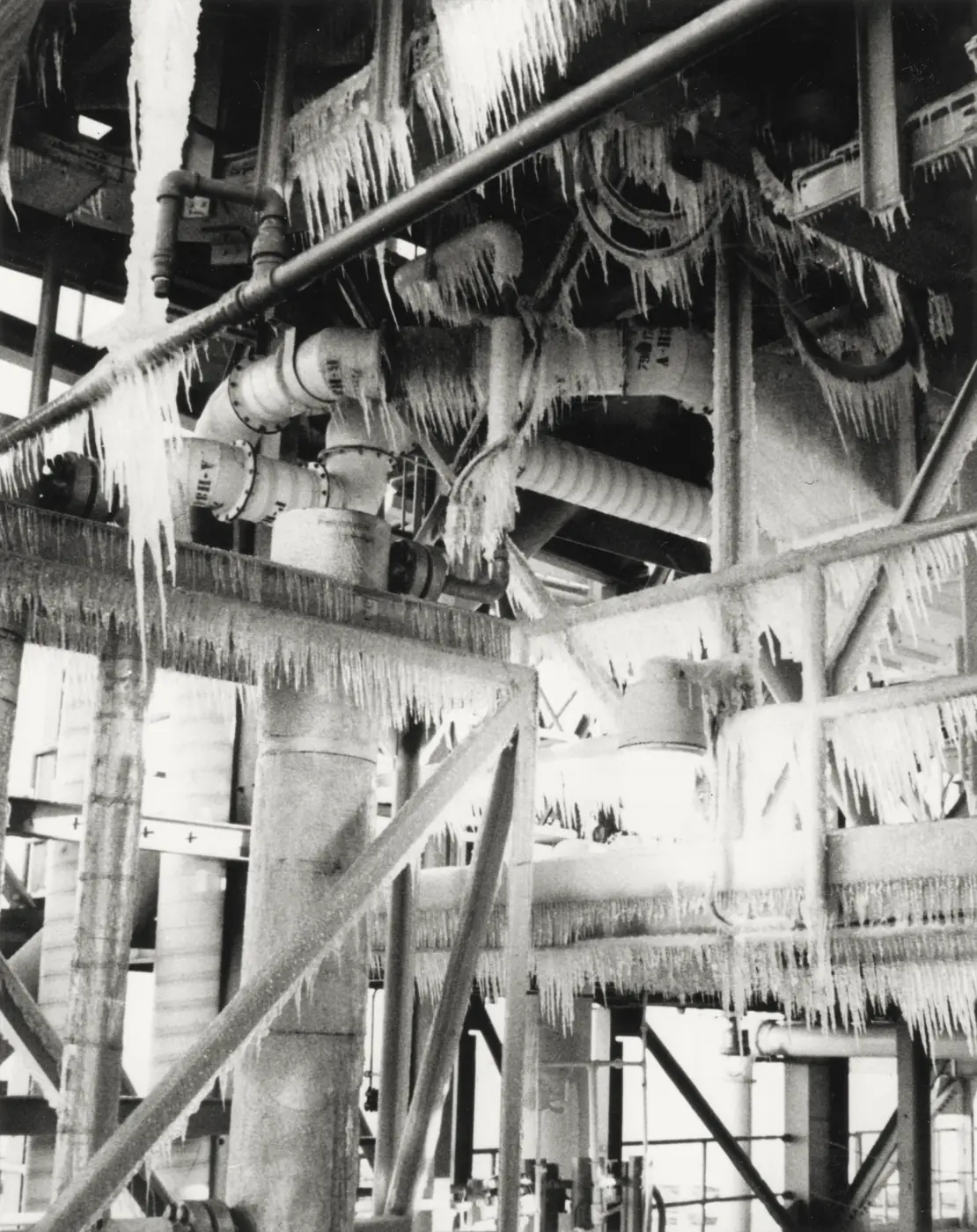
Challenger launches at 11:38 a.m. Eastern time with an ambient temperature of 36 degrees Fahrenheit; the flight ends 73 seconds later.
A researched reconstruction for learning. These reasoning steps simplify a complex record; no score can capture the full history.
02 · The evidence
What does the record show?
Read each exhibit before settling on an explanation. The source links below every exhibit lead to the record behind it.
Exhibits reviewed 0 of 5
A pattern of erosion, not one event
The Commission's field-joint table lists ten distressed joints in 150 flight exposures, including erosion on several flights and blow-by on 61-A. The table shows that the damage recurred before 51-L. It does not by itself give the probability of loss on a given launch.
Source record s2history.nasa.gov
The coldest joint on record
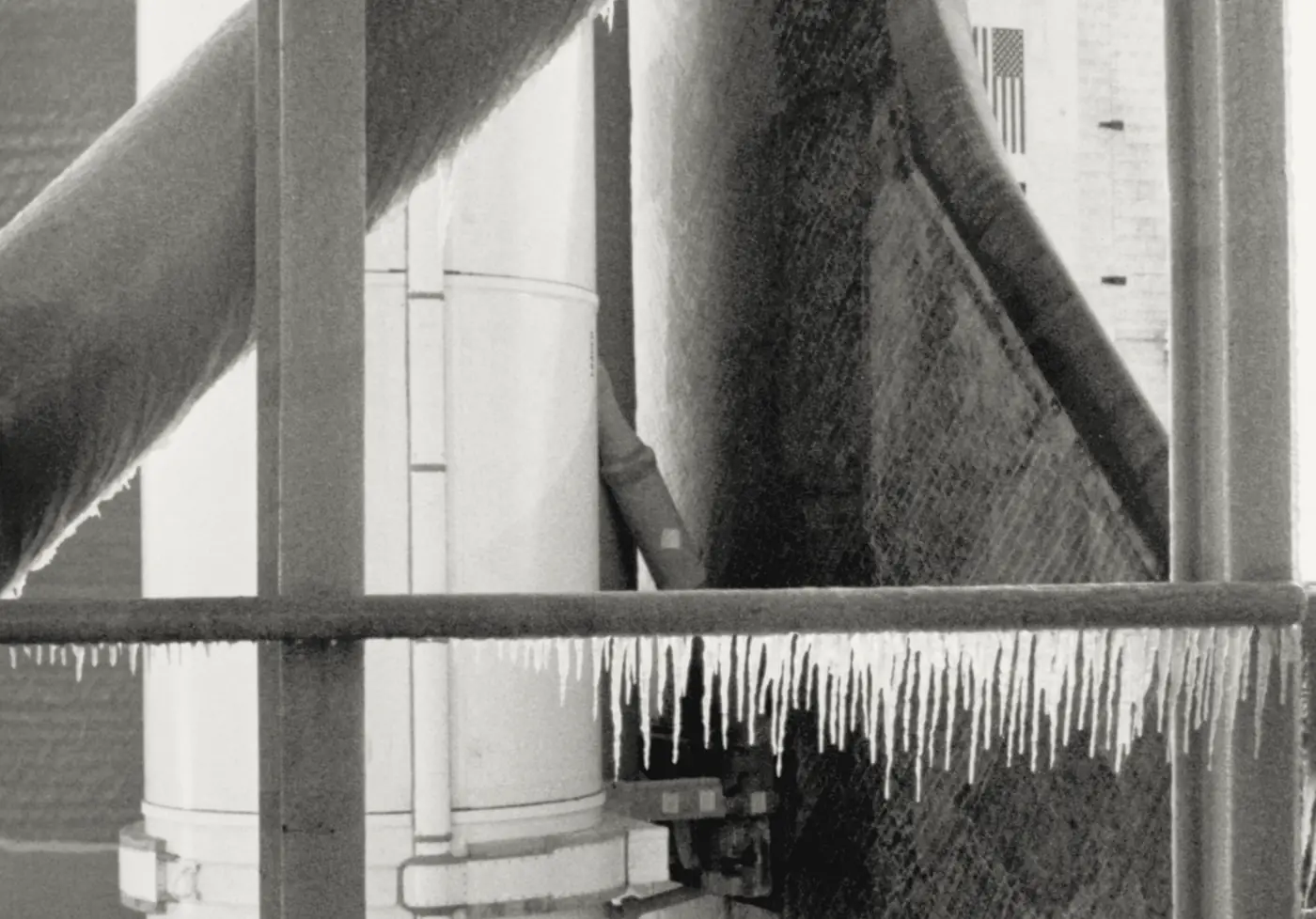
The Commission records an ambient launch temperature of 36 degrees Fahrenheit, 15 degrees below the next coldest previous launch, and estimates the coldest point on the right aft field joint at 28 degrees, plus or minus 5. These are measurements and estimates for one joint on one morning. They do not show how the seal would have behaved on a warmer day.
Source record s2history.nasa.gov
A written warning
The Commission's summary of Chapter V states that the contractor's initial written recommendation advised against launch below 53 degrees Fahrenheit. It also says the decision-makers were unaware of that recommendation and of the engineers' continuing opposition after management reversed its position.
Source record s3history.nasa.gov
The off-net caucus
The evening teleconference recessed for an off-net caucus of about 30 minutes at the contractor's offices. Testimony in the report describes engineers continuing to object, and a manager saying that a management decision was needed before a final rationale was read from notes. The accounts differ on some points, so the caucus is best read as a documented sequence rather than a full transcript.
Source record s3history.nasa.gov
Erosion as a warning sign
Feynman's appendix to the Commission report argues that the O-rings were not designed to erode. He treats erosion as a clue that something was wrong, not as evidence that the joint was safe.
Source record s4history.nasa.gov
03 · Your reasoning
Follow the strongest explanation.

Choose an interpretation, then compare it with the evidence. You can revise your choice. The goal is understanding, not a perfect score.
04 · The findings
The chain behind the outcome.
Your notebook
Case report
Next in engineering & technology: A clock that drifted with uptime
The Commission concluded that the loss of Challenger was caused by a failure in the joint between the two lower segments of the right solid rocket motor, specifically the destruction of the seals meant to stop hot gases leaking through the joint during the burn. The record supports that mechanism: erosion and blow-by had been recorded on earlier flights, and the seal's resiliency was shown to decline at lower temperatures. Launch-day conditions were the coldest recorded for a launch, with an ambient temperature of 36 degrees Fahrenheit and an estimated joint temperature near 28 degrees at the coldest point. Those facts establish what was measured and estimated. They do not, by themselves, settle how the seal would have performed on a warmer morning. The decision chain is a separate question. The contractor's engineers recommended against launch below 53 degrees Fahrenheit in writing, then objected during a teleconference. After an off-net caucus, contractor management reversed its position. The Commission found the decision flawed because the decision-makers were unaware of the written recommendation and of the continuing engineering opposition. The chain of information, rather than one hidden fact, is the main lesson for decision making.
Contributing causes and conditions
- The right solid rocket motor's aft field joint seal failed, letting hot gases escape during the burn.
- Erosion and blow-by had recurred on earlier flights, so the seal was already a known vulnerability.
- Low joint temperature reduced O-ring resiliency, making the seal respond more slowly when the joint was pressurized.
- The launch decision rested on incomplete information, because the written recommendation against cold launches did not reach the decision-makers.
- Contractor management reversed its position during the teleconference after an off-net caucus of about 30 minutes, while engineers continued to object.
OutcomeChallenger disaster
Take the method with you
- A pattern of recorded anomalies is evidence about a mechanism, not proof that the mechanism is safe because it has not yet failed.
- A decision is only as well informed as the written information that reaches the person who signs it.
- A stated temperature limit is a claim about a mechanism, so ask how the component responds below that limit.
You can read findings at any time. Exploring every reasoning step marks this case as complete in your notebook.
The open record
Sources & further reading
Read the original record and its scope before relying on a conclusion. Source references support the exhibit summaries; Faultory’s reasoning prompts are editorial reconstructions.
- s1
- s2
- s3
- s4
- s5
Written and curated for Faultory by Yunus Emre Vurgun, with AI-assisted research and drafting. Sources and interpretations can need correction. Read our editorial standards or report an issue.
From the journal
Field notes that use this case
 Hindsight bias: judging decisions with the ending in viewKnowing how an event ended makes earlier choices look obvious. Learn how hindsight bias distorts investigations and how to rebuild what was known.
 How to read an accident report: findings, causes and limitsOfficial investigation reports separate what was measured from what was concluded and what should change. Learn to read each layer and test its claims.
 Normalization of deviance: when warnings become routineDiane Vaughan's concept explains how anomalies become acceptable one flight at a time. Learn to recognize the pattern and what would reopen the question.
Keep investigating