After reading this, you will be able to separate a report's measured findings from its causal conclusions and its recommendations. You will also recognize where the evidence stops and interpretation begins.
01A walkway that looked almost the same
On July 17, 1981, two suspended walkways collapsed inside the Hyatt Regency hotel in Kansas City. People who first heard the story asked how a building could lose two walkways full of people. The more useful question came from the investigation: what changed between the design drawings and the structure that was actually built?
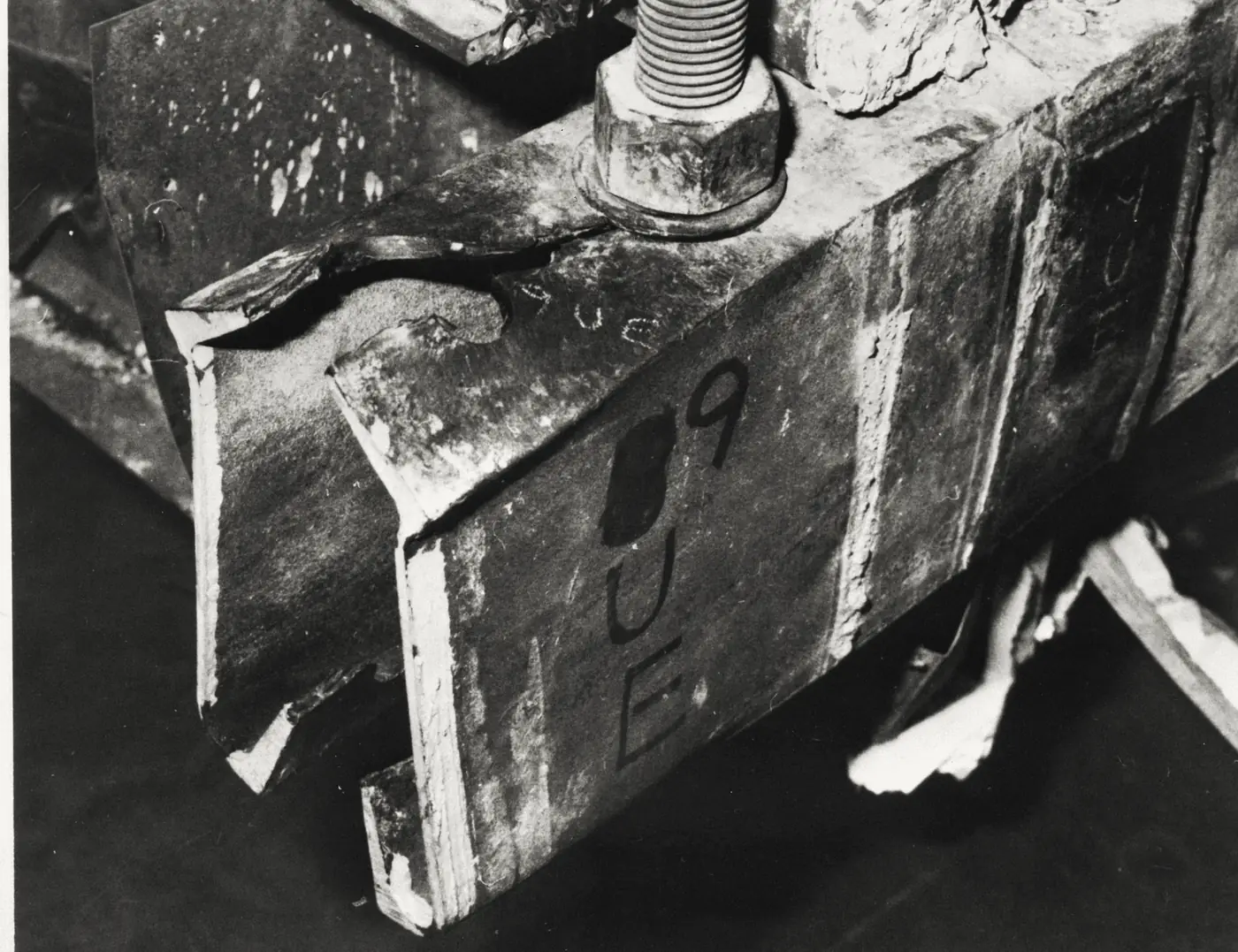
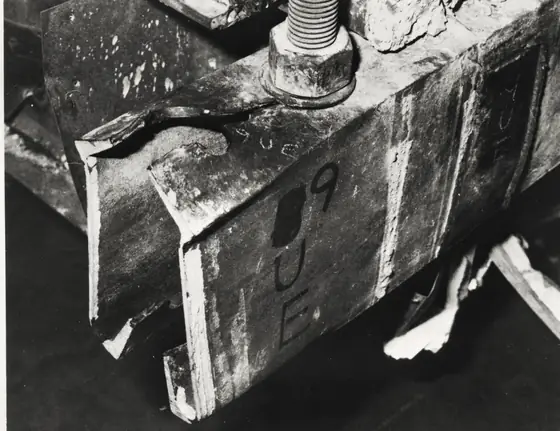
The National Bureau of Standards examined the connections between the hanger rods and the box beams. The original design used continuous rods that ran past the upper walkway to carry the lower one. During construction, the arrangement changed to separate rods, so the lower walkway hung from the upper walkway's own structure. The two arrangements looked nearly identical, which is why the change was easy to miss.
The report's central finding was that this change essentially doubled the load on the fourth-floor box-beam connections. It also found that the original connection design was inadequate. Read the report as two findings, not one: a change that altered the load path, and a design that lacked enough capacity to begin with.
02What a report is for
An accident report is usually written to explain how a failure happened and to reduce the chance that it recurs. It is not a verdict on the people involved, although it may describe their decisions in detail. The National Transportation Safety Board publishes an overview of its investigative process so that readers can see how evidence is gathered and how conclusions are reached.
Knowing the purpose helps you read the text. A report aimed at preventing future failures will usually end with recommendations that look technical or procedural. A report that focuses on one component may be correct about that component and still incomplete about the system around it.
Keep three questions in view from the start: what did investigators establish directly, what did they infer, and what do they recommend? These layers are easy to blur together, and blurring them is one of the most common ways that readers misread a report.
03Findings, probable cause and contributing factors
Reports use distinct vocabulary, and each term carries a different weight. Findings are observations and test results: a surface was examined, a sensor was read, a document was reviewed. Probable cause is the investigators' best-supported account of what produced the failure. Contributing factors are conditions that made the failure more likely or more severe without being sufficient on their own.
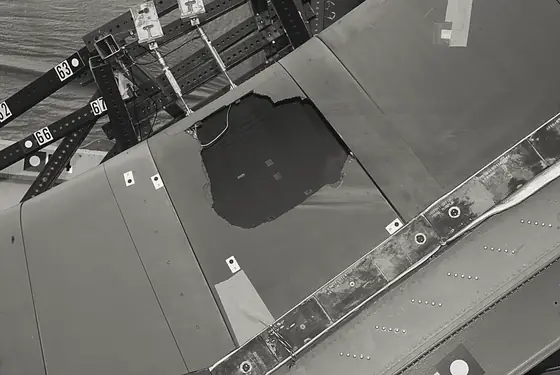
The Columbia Accident Investigation Board's report shows how these layers fit together. Its physical account begins with foam striking the left wing about 82 seconds into the flight and continues through a breach in the wing's thermal protection and damage during re-entry. The board also treated organizational causes, including reliance on prior success and barriers to raising safety concerns, as part of the explanation rather than as background commentary.
A careful reader checks whether each conclusion connects back to a finding. If a cause appears without measurements, tests or documents behind it, that conclusion is an interpretation and should be read as one.
04Hedges are information
Investigators rarely observe the moment of failure directly. They work backward from debris, records and tests, so their language often includes qualifiers. Words such as probably, likely, consistent with and could are not signs of weakness. They tell you how much of the account rests on inference.
The Apollo 13 investigation of the oxygen tank illustrates this. Investigators concluded that heater switches rated for 28 volts were probably damaged during a ground procedure that used 65-volt power, and that the switches were believed to have welded shut. The tank's temperature gauges could read only to 80 degrees Fahrenheit, so the heating mechanism had to be reconstructed rather than observed. The hedges mark the boundary between what was seen and what was reconstructed.
When a report makes a probabilistic claim, ask what evidence would make it stronger and whether anyone collected that evidence.
05Read the data before the conclusion
Many reports include tables, charts and test matrices that carry more information than the summary. Reading only the summary risks adopting the author's emphasis without checking what supports it.
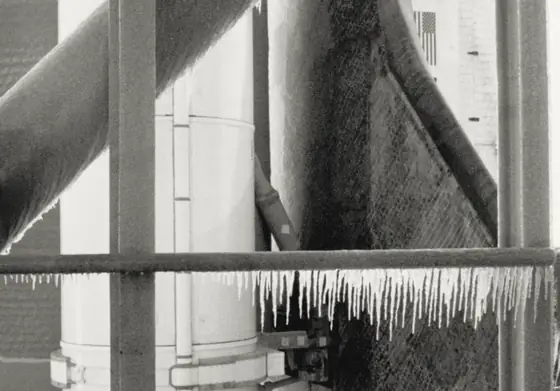
The Rogers Commission report on the Challenger accident is an example. It gives the launch-day ambient temperature as 36 degrees Fahrenheit, a single number that is easy to remember. The analysis, however, depends on comparing that figure with the conditions of earlier flights. The report also estimates the temperature at the coldest point of one joint, with an explicit uncertainty, and includes a table of erosion and blow-by recorded across missions. One entry notes that both primary and secondary O-rings were affected on a particular flight. A reader who looks only at the headline will miss the spread in those figures.
The useful habit is to ask what is being compared with what, and over what range. Conclusions about a threshold depend heavily on how many observations sit near it.
06Separate the fix from the proof
Recommendations are often the most visible part of a report, and they are easy to over-read. A recommendation that corrects one factor does not automatically show that the whole system is now adequate.
The Hyatt investigation makes the point. Restoring the original rod arrangement would address the change in load path, but the original connection design was also found inadequate. A fix that simply returns to the original drawing is therefore incomplete unless the connection's capacity is checked against the loads it must carry.
Ask whether each recommendation targets a specific finding, and whether it includes a way to confirm that the change worked. Recommendations without verification tend to fade from practice.
07A reading routine
A short routine helps. Read the summary and list its claims. Mark each claim as measured, inferred or recommended. For each measured claim, find the table, test or document that supports it. Then search the text for alternative explanations that were considered and rejected.
Finally, compare the report's causal story with the sequence of events. A report that reads cleanly may have simplified a messy sequence. Apollo 13's oxygen-tank account, for example, spreads the causal chain across ground equipment, a voltage mismatch, a heating procedure and in-flight operation. A single sentence naming one cause would hide that structure.
None of this makes official reports untrustworthy. It makes them more useful, because the reader keeps the logic visible.
Terms in this note
- Probable cause
- The investigators' best-supported account of what produced a failure. It is usually an inference from evidence rather than a direct observation. Glossary
- Contributing factor
- A condition that increased the likelihood or severity of a failure without being sufficient by itself. Glossary
- Load path
- The route by which forces travel through a structure to its supports. Changes to connections can change the load path even when the visible members look the same. Glossary
Test the idea
The case files behind this note

The open record
Sources & further reading
- 1The Investigative Process
National Transportation Safety Board
- 2Investigation of the Kansas City Hyatt Regency walkways collapse (NBSIR 82-2465A)
National Bureau of Standards (now NIST)
- 3
- 4
- 5Apollo 13 Accident
NASA National Space Science Data Center
Written for Faultory by Yunus Emre Vurgun, with AI-assisted research and drafting. Editorial standards · Report an issue.