After reading, you will be able to recognize judgments that quietly treat the outcome as evidence. You will have a method for reconstructing what was known at each decision point.
01A ship that could not finish the crossing
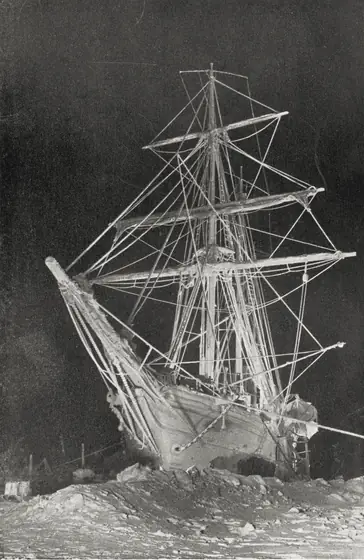
The Endurance left Plymouth in August 1914 and sailed south from South Georgia in December, on an expedition meant to cross Antarctica. In January 1915 the ship became trapped in Weddell Sea pack ice. The crossing that had organized the plan could no longer be completed, and the party's problem became survival.
The ship was abandoned in October 1915 and sank in November. The party reached Elephant Island in April 1916 in three boats. The 22 men left on the island were rescued in August 1916, after a boat journey to South Georgia and an overland crossing to a whaling station.
Looking back, the chain of decisions can appear clear. Looking forward, each step had to be chosen under constraints that were changing.
02What hindsight bias is
Hindsight bias is the tendency, after learning an outcome, to believe that the outcome was predictable or likely all along. Fischhoff's 1975 paper on the effect of outcome knowledge on judgment under uncertainty is a foundation for the research that followed.
The general finding is that people who know how something turned out tend to rate that outcome as more likely than people who do not. They also tend to recall their own earlier forecasts as more accurate than they were. The mechanism is not dishonesty. Knowledge of the ending rearranges what seems salient about the past.
For an investigator, the danger is that the outcome becomes a silent premise. Warning signs look obvious, decisions look negligent, and alternative choices look certain to have worked.
The bias is strongest when the outcome was dramatic. A failure that ends in loss makes earlier warning signs look like a clear message, while the same signs in a case that ended safely are remembered as minor noise. That asymmetry is why cases that did not end badly deserve the same careful examination as those that did.
03Challenger and the data that looked obvious afterward
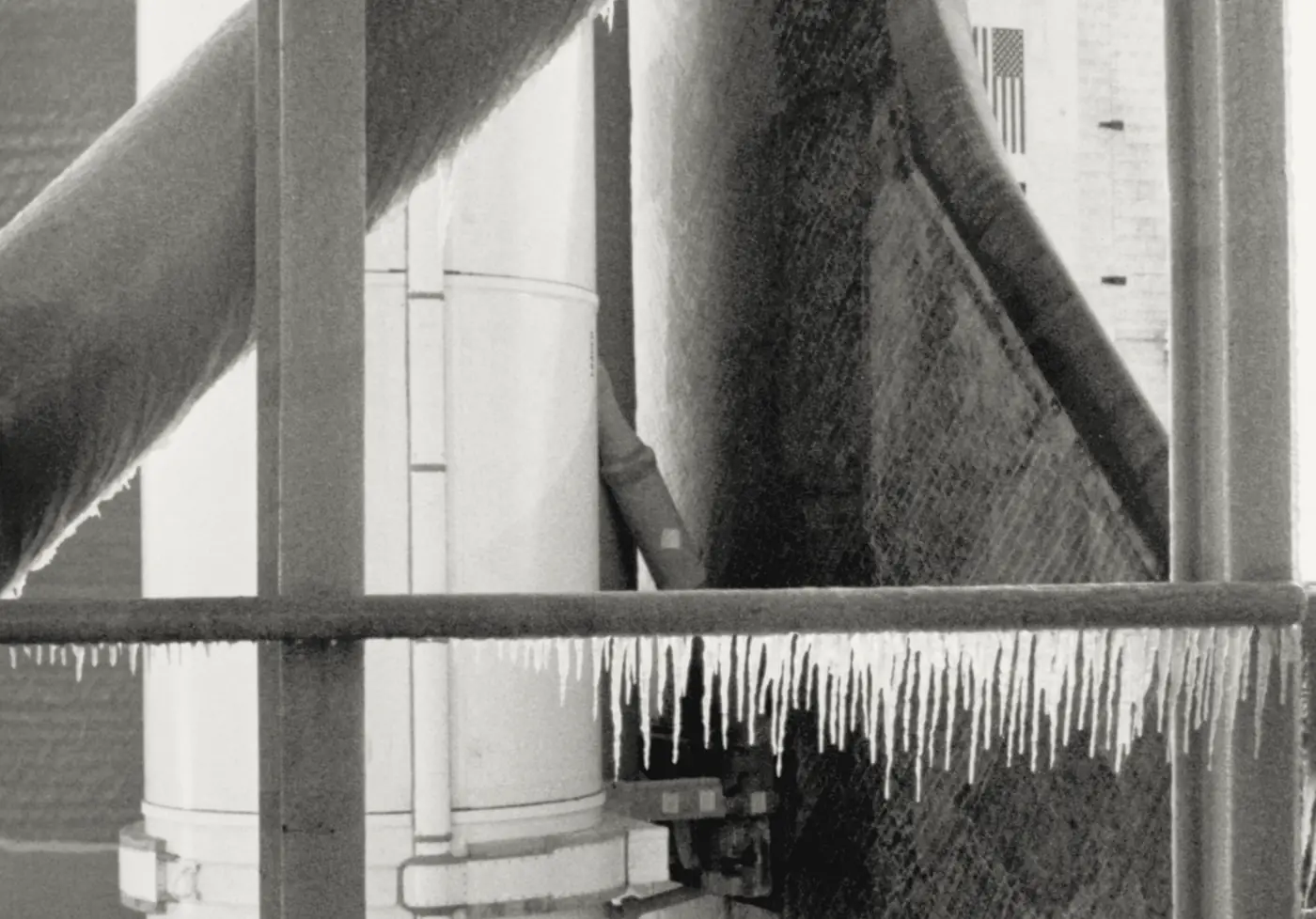
After Challenger, the erosion record seems to point to one inevitable conclusion. On the day of the decision, however, the data were spread across flights, temperatures and estimates. The Rogers Commission report gives a launch-day ambient temperature of 36 degrees Fahrenheit, which was 15 degrees colder than the next-coldest earlier launch.
The same report gives estimated temperatures at the coldest point of a joint, with an uncertainty, and a table of erosion and blow-by across flights. Those data reached different participants in different forms. Reconstructing the decision requires asking which numbers were in front of which people, not which numbers later became famous.
Interpretation: hindsight makes the most salient data look like the only data. A fair review distinguishes what was known, what could have been learned with effort, and what could not have been known at all.
04Discovery narratives and credit
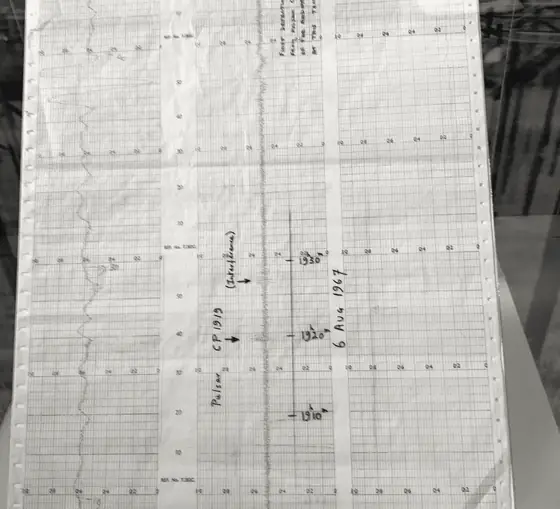
Hindsight also shapes how discoveries are told. Once a pulsar explanation is accepted, the early chart features can seem to have announced it. Jocelyn Bell Burnell's 1967 observation is often narrated as though its meaning were instantly clear.
The Cambridge account describes the chart feature and the faster recording that revealed a train of pulses. The early discovery paper, published in 1968, kept more than one kind of compact star open as a possibility. The rotating neutron star picture developed as later observations established the source class, not in a single moment of recognition.
Investigations should avoid rewriting the early state of knowledge into its later conclusion. The careful question is which hypotheses were live at the time, and which evidence would have distinguished them.
05The discovery paper is not the whole story
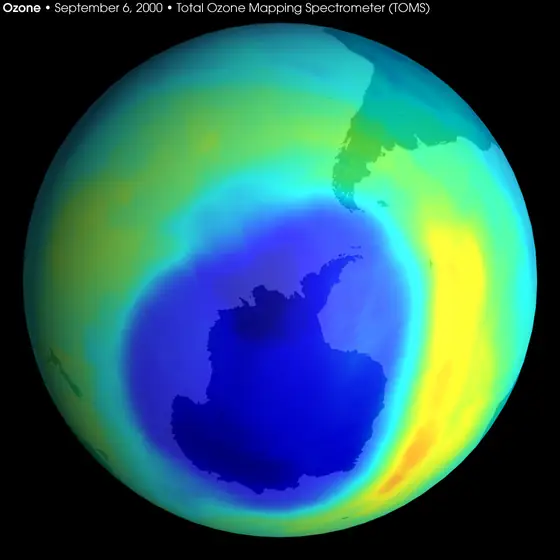
The Antarctic ozone case shows a related trap. The 1985 Farman and colleagues paper is often treated as if it instantly supplied the chemical mechanism. In fact, the chemistry of polar stratospheric clouds and halogen reactions was developed afterward. The 1985 paper established the observed decline, which is a narrower claim.
Hindsight can compress that sequence. A reader who knows the mechanism may judge the early measurements as obviously chemical, and overlook the steps by which investigators checked the data, the seasonal pattern and the geographic extent.
The method is to separate the claims: what was measured, what was inferred at each stage, and what later work added. Each claim should carry a date.
The same caution applies wherever a dramatic result is later refined. The first announced version of a result is usually simpler than the mechanism that is eventually accepted, so it should be read as an early state of knowledge rather than its final form.
06Reconstructing what was known
The practical method starts at the decision point. Write down what the decision-makers had at that time: data, reports, time pressure and incentives, along with what they did not have. Then list the alternative actions that were available, with their costs.
Next, identify which outcome-based facts entered the reasoning. A useful check is to remove the outcome from the narrative and see whether the decision still looks clearly wrong or clearly right.
Then compare the decision with similar choices that succeeded under comparable conditions. If a successful case made the same choice, the investigation must explain what differed, not only how the story ended.
Write the reconstruction before reading the ending in detail. A reconstruction written after the outcome is known tends to drift toward it. If the record of contemporaneous decisions is partial, say so, and keep open the questions that the missing record leaves.
07Judgment without the ending
Hindsight is not a reason to excuse every decision. Some outcomes reveal information that was available and ignored. The task is to be accurate, neither generous nor harsh.
The Endurance case shows why. Its leaders faced changing constraints, and the plan was revised repeatedly as the ice, the ship and the available help changed. Judging that adaptation requires the timeline of constraints, not the eventual rescue.
Open questions remain for each case, including what would have been done differently with the same information. Writing those questions down is safer than settling them with the ending.
Accountability is a legitimate question, but it is a different one. An investigation can establish what was known and what choices were available. Judgments of responsibility should follow from that reconstruction rather than replace it.
Terms in this note
- Hindsight bias
- The tendency, after learning an outcome, to judge it as more predictable than it was when the decision was made. Glossary
- Outcome knowledge
- Information about how an event ended, which can change judgments about how likely the event had seemed earlier. Glossary
- Counterfactual
- A reasoning exercise about what would have happened under different choices. It must be bounded by the information and constraints of the time. Glossary
Test the idea
The case files behind this note

The open record
Sources & further reading
- 1Hindsight bias and outcome knowledge: Fischhoff (1975), APA PsycNet record
American Psychological Association (PsycNet)
- 2
- 3Endurance expedition timeline and historical overview (teaching resource PDF)
Royal Geographical Society
- 4Sir Ernest Shackleton
Royal Museums Greenwich
- 5Journeys of discovery: Jocelyn Bell Burnell and pulsars
University of Cambridge
Written for Faultory by Yunus Emre Vurgun, with AI-assisted research and drafting. Editorial standards · Report an issue.