Your browser cannot save progress right now. You can still investigate; keep this tab open or enable local storage to save.
This case has been updated. Compatible choices are kept; revisit the evidence before drawing your conclusion.
01 · The briefing
Begin with the question.
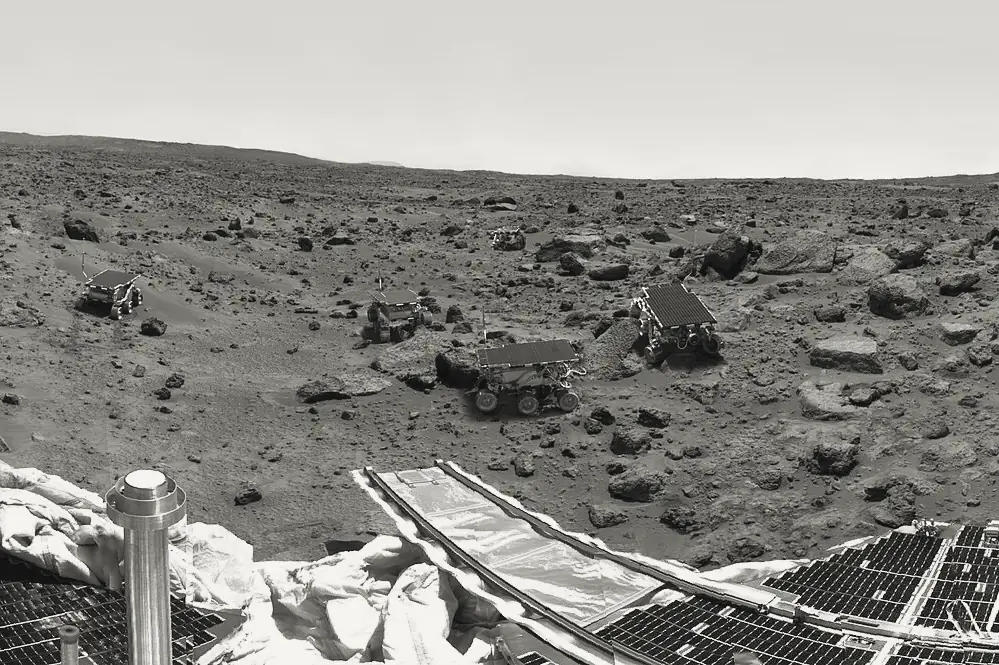
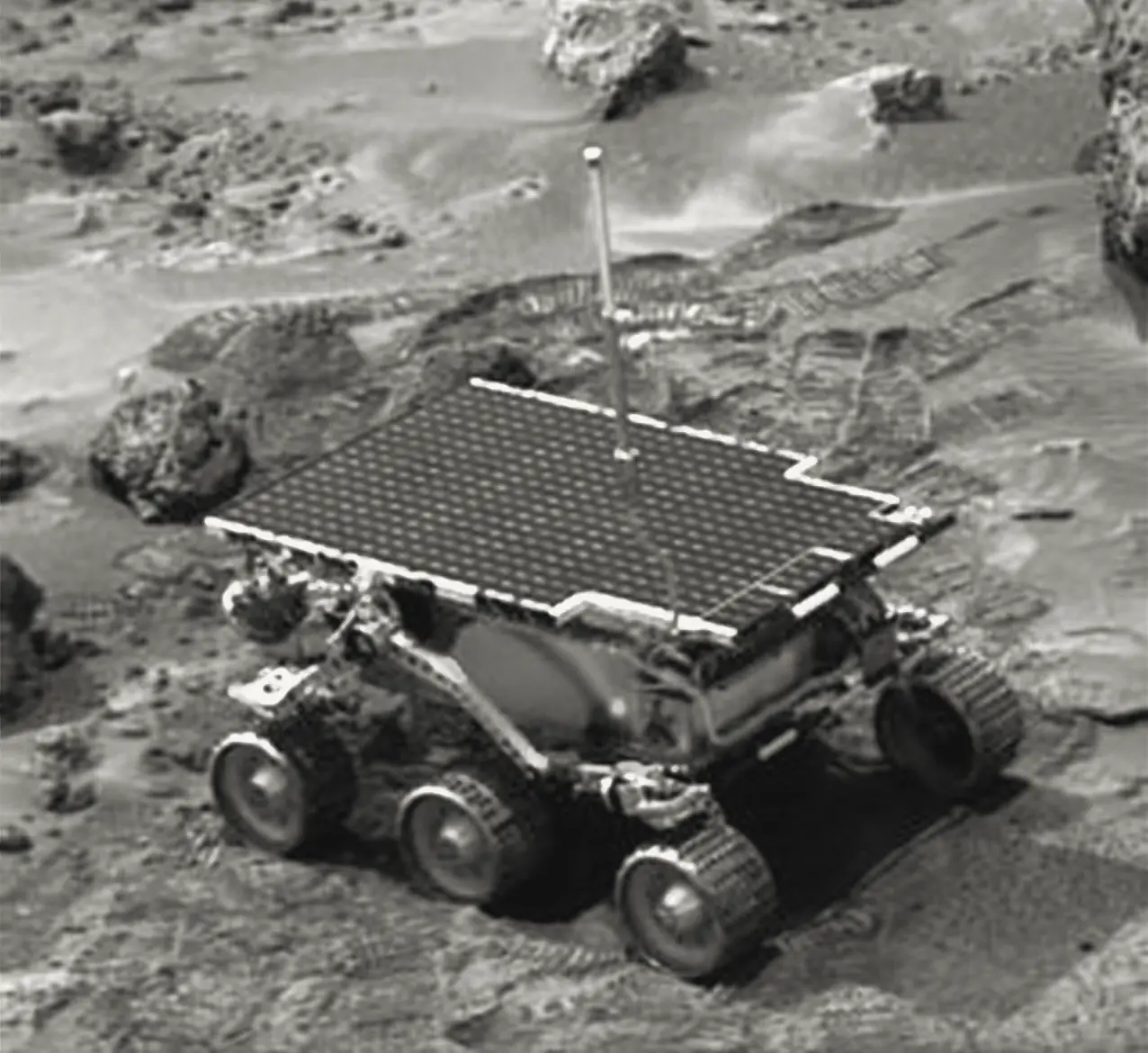
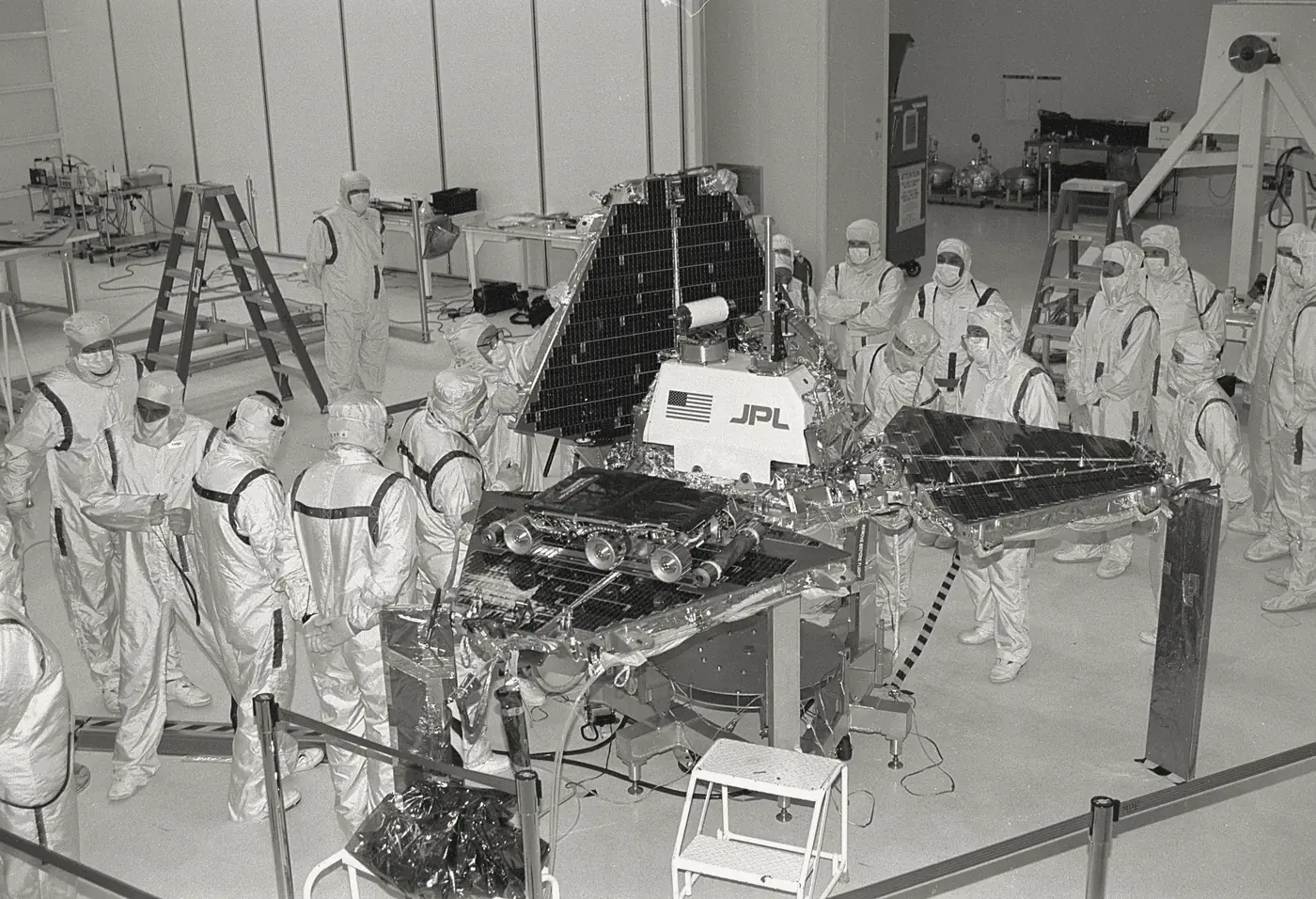
Mars Pathfinder launched in December 1996 and landed on 4 July 1997 at Ares Vallis, carrying the small rover Sojourner. Its flight software ran on the VxWorks real-time operating system, with tasks given fixed priorities so that time-critical work could take precedence over science and housekeeping. A bus scheduler ran at a high rate, and all of the tasks shared a single processor. During the surface mission the computer reset. On a spacecraft a reset is serious: it stops the current activities, reinitializes the system and delays the next day plans. Engineers had to decide whether the cause was a faulty part, a memory problem, an error in new code or a timing conflict built into the design. The question was harder because the failure occurred only under some conditions and was difficult to reproduce. Your investigation has to separate the hardware and data paths from the scheduling logic. Activities that day were postponed to the next day while the team worked on the cause. Identify which task was late, what it was waiting for, and why lower-priority work could delay it.
The timeline
Mars Pathfinder launches from Cape Canaveral aboard a Delta II.
The lander touches down at Ares Vallis, Mars, with the Sojourner rover aboard.
During surface operations, the computer resets; the day activities are completed the following day.
The end of the surface mission is recorded by NASA.
The software team lead, Glenn Reeves, sends a first-hand account of the failure, diagnosis and fix to colleagues.
A researched reconstruction for learning. These reasoning steps simplify a complex record; no score can capture the full history.
02 · The evidence
What does the record show?
Read each exhibit before settling on an explanation. The source links below every exhibit lead to the record behind it.
Exhibits reviewed 0 of 5
The priority order
Reeves describes the bus scheduler as the highest-priority task after the VxWorks executive, the bus distribution task third, and the meteorological task lower still, with several medium-priority tasks running in between. This structure made it possible for a low-priority task to block a high-priority one. The account does not give the full task table or the scheduler configuration.
Source record s1web.archive.org
The blocked resource
Reeves reports that the meteorological task called select() and was preempted while it held a mutual-exclusion semaphore inside the pipe mechanism. The distribution task then blocked on the same semaphore when it sent data, and medium-priority tasks ran while the low-priority holder could not finish. This explains the inversion. It does not show how often the sequence occurred, since the failure was rare.
Source record s1web.archive.org
The reset logic
At the next cycle the bus scheduler found that the distribution task had not finished, which the spacecraft treated as a failure, and the computer was reset. Reeves notes that data in memory were recovered as long as power was kept, but the remaining activities for the day were postponed. This shows the consequence designed into the system. It does not identify the cause, which is the inversion.
Source record s1web.archive.org
Reproduction on the ground
Reeves reports that the flight software contained trace and log facilities left in by design, which helped the team find the sequence. The team ran the same activities in the laboratory with the flight software unchanged, and reproduced the failure in less than 18 hours. This shows that flight-configuration instrumentation made diagnosis possible. It does not show that the timing was understood before the reproduction.
Source record s1web.archive.org
Mission background
The JPL history page confirms the December 1996 launch, the July 1997 landing and the airbag-based landing with a small rover. It establishes context rather than cause, since it does not describe the software fault.
Source record s2web.archive.org
03 · Your reasoning
Follow the strongest explanation.
Choose an interpretation, then compare it with the evidence. You can revise your choice. The goal is understanding, not a perfect score.
04 · The findings
The chain behind the outcome.
Your notebook
Case report
Next in engineering & technology: Footsteps that tuned a bridge
The reset was caused by priority inversion. The bus scheduler ran at a high rate and needed the distribution task to finish before the next cycle. The distribution task was blocked on a mutual-exclusion semaphore inside the select mechanism for a pipe. That semaphore was held by a low-priority meteorological task, which had been preempted in the middle of releasing it. Medium-priority tasks then ran for long enough that the holder could not finish, so the higher-priority task waited, missed its cycle and triggered the reset. The team found the sequence with trace facilities that had been left in the flight software by design, and reproduced it on the ground in under 18 hours without changing the software. The fix enabled priority inheritance on the semaphore by changing a global creation option, which temporarily raises the holder priority while a higher-priority task waits. The change affected every select semaphore created afterwards, so the team analyzed and tested it before uploading the software differences. The established points are the sequence, the reset logic, the reproduction and the patch method, as described by the software lead. The interpretation lies in why the problem was not caught earlier. Reeves states that pre-launch testing covered best-case data rates and that the team saw the problem before landing without reproducing it. The durable lesson is that a correct design can hide a timing dependency that nominal tests do not expose, and that a team must know how the commercial components it relies on actually behave.
Contributing causes and conditions
- Fixed priorities that let a medium-priority task run while a low-priority task held a lock
- A shared semaphore inside the select mechanism for a pipe used for communication between tasks
- A high-rate bus cycle with a hard deadline that the blocked task could not meet
- A reset policy that treated the missed deadline as a failure and restarted the computer
- Pre-launch tests that covered best-case data rates rather than the heavier case that exposed the sequence
OutcomeMars Pathfinder software resets
Take the method with you
- A higher-priority task can be delayed by lower-priority work when both share a resource.
- Keep diagnostic facilities in flight software when they help explain an anomaly, and test the flight configuration itself.
- Know how a commercial operating system defaults behave before relying on them, since one global option can change many objects at once.
You can read findings at any time. Exploring every reasoning step marks this case as complete in your notebook.
The open record
Sources & further reading
Read the original record and its scope before relying on a conclusion. Source references support the exhibit summaries; Faultory’s reasoning prompts are editorial reconstructions.
- s1
- s2NASA/JPL: JPL history, the 1990s, Pathfinder (archived page)
web.archive.org
- s3NASA: Mars Pathfinder mission page
science.nasa.gov
Written and curated for Faultory by Yunus Emre Vurgun, with AI-assisted research and drafting. Sources and interpretations can need correction. Read our editorial standards or report an issue.
From the journal
Field notes that use this case
Keep investigating