After reading, you will be able to recognize a deviation that has quietly been reclassified as normal. You will also have practical questions for checking whether an accepted anomaly still has a safe boundary.
01A foam strike that had happened before
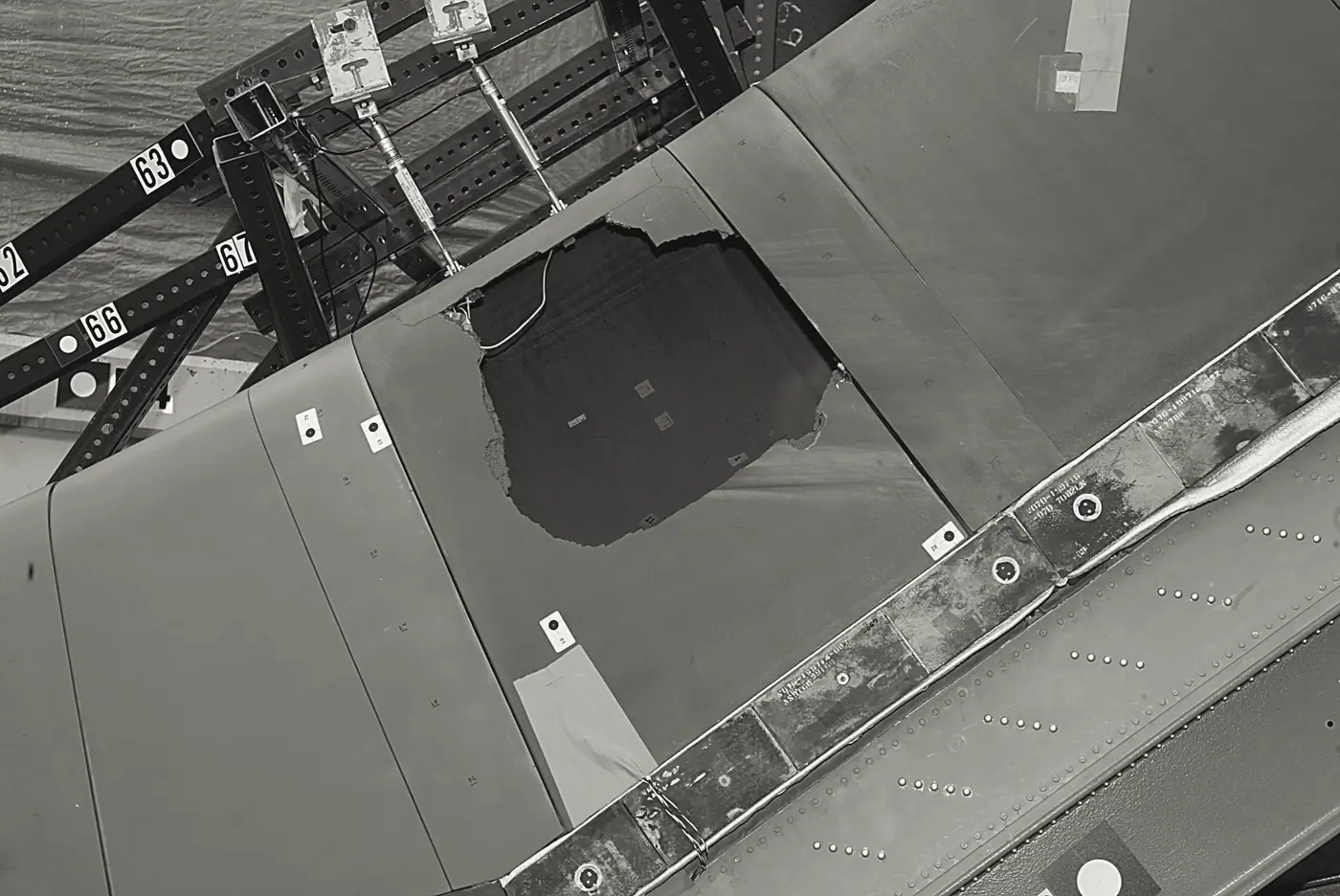
On January 16, 2003, insulating foam separated from Columbia's external tank during launch and struck the orbiter's left wing. Launch imagery recorded the strike. The shuttle was lost during re-entry on February 1, but the reasoning that allowed the strike to be treated as ordinary had been building for years before that flight.
Foam had shed from external tanks on earlier missions, and those missions had returned safely. That history mattered. Each safe return made the next foam event look like a known and bounded condition, even though no one had established that every impact location and energy was safe.
The Columbia Accident Investigation Board's report makes the point directly. It treats prior survival as an unreliable basis for accepting a recurring anomaly, and it identifies organizational barriers to communicating concerns as part of the explanation.
02What the concept describes
Diane Vaughan's study of the Challenger launch decision introduced the phrase normalization of deviance to describe a process in which departures from expected performance are gradually redefined as acceptable. No single step looks like a breach of rules. Each departure is compared with the one before it, and each survival becomes evidence that the margin is wider than it appeared.
The concept concerns how organizations interpret evidence, not only individual carelessness. People can recognize an anomaly, describe it accurately and still accept it, because the surrounding routines, schedules and reporting channels make acceptance the ordinary outcome.
The Columbia board's report contains a chapter that compares two decision histories, from Challenger and from Columbia, under the heading Failures of Foresight: Two Decision Histories and the Normalization of Deviance. Read this way, the recurring anomaly becomes a question of foresight across many decisions rather than a single wrong choice.
03Challenger: a margin that moved
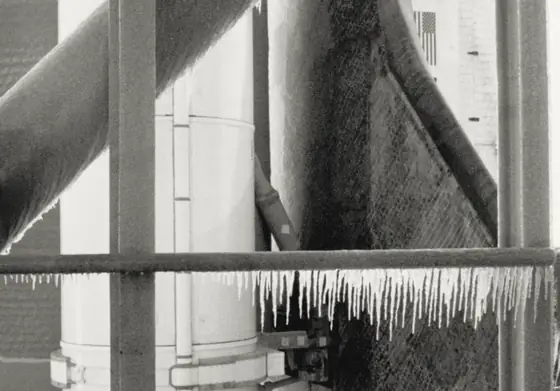
Before the Challenger launch, erosion and blow-by had been recorded in the joint seals on several earlier flights. The Rogers Commission report documents a launch-day ambient temperature of 36 degrees Fahrenheit, which was 15 degrees colder than the next-coldest earlier launch. The estimated temperature at the coldest point of one joint was lower still.
Interpretation: a history of tolerated erosion created a baseline against which the new condition was compared. The question shifted from whether erosion was acceptable at all to whether this particular erosion was different. A reader should check whether the comparison used the full range of earlier conditions, including the colder one.
04Columbia: survival as evidence
The Columbia board found that foam strikes had been accepted for a long period. Its report describes how, over about 22 years, foam strikes were normalized. Survival of earlier flights had been read as evidence that the strikes were not dangerous, even though survival under particular conditions does not establish safety across different impact locations and energies.
The case also separates two claims that are often confused: missing evidence of damage and evidence of safety. An absence of images or measurements showing damage does not prove that no damage occurred, particularly when the methods of observation are limited.
Interpretation: normalization is not only a psychological phenomenon. It can be built into a program's risk classification, its engineering rationale and its decision thresholds, so that the same anomaly is reclassified without a single new test.
05Apollo 13: a workaround outside the qualified range
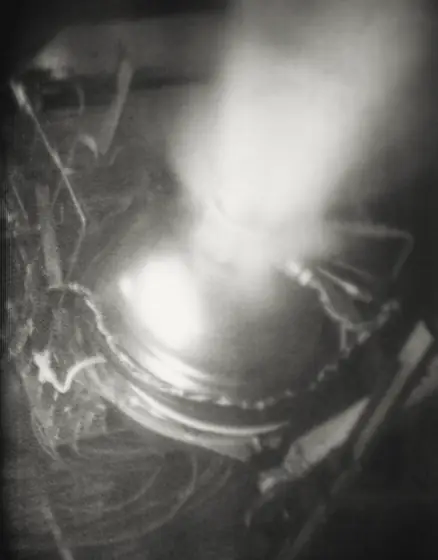
The Apollo 13 oxygen-tank investigation shows a deviation of a different kind. The tank had been adapted to run on 65-volt ground power at the launch site, but the heater thermostatic switches had been designed for 28 volts and were not upgraded. A ground procedure then ran the heaters for hours to boil off oxygen that could not be drained normally.
The procedure met its immediate goal of emptying the tank, yet it exceeded the conditions under which the heater hardware had been qualified. Investigators concluded that the switches were probably damaged, and that excessive heating could damage insulation beyond what the available gauges could show.
The lesson is that a workaround can be accepted because it works in the moment, and that acceptance can quietly rewrite a component's safe operating envelope. Asking whether a procedure stayed within the qualified range is a direct test for this failure.
06Signals of a shifting margin
Several signals suggest that normalization is under way. The range of an anomaly grows while its explanation stays fixed. Warnings are written as if the anomaly were known and acceptable. Discussion moves from whether a condition is outside the design range to whether it is far enough outside to matter.
Other signals concern process. Concerns may be raised but routed through channels where they are never decided. Acceptance rationales may cite past flights without comparing the current conditions. Engineers may stop asking for new tests because the old tests are considered sufficient.
These signals are not proof of wrongdoing. They are prompts to ask what evidence has changed and who has the authority to reopen the decision.
A practical counter is a running record for each accepted anomaly. The record holds the observed range of the anomaly, the conditions under which it was accepted, the basis for acceptance and the date of the last review. Such a record makes drift visible, because the range and the conditions can be compared over time rather than remembered.
07Reopening the question
The remedy is procedural as well as technical. Define in advance what evidence would reopen a previously accepted anomaly, and who decides. Record the conditions under which each acceptance was made, so that later reviewers can see when the reasons no longer hold.
The lesson the Columbia investigation draws is to test the limits of past experience, actively seek evidence that can separate competing explanations, and give unresolved safety concerns a clear route to authoritative review. That lesson applies to any organization that depends on a long run of successes.
Open questions remain. Some anomalies are benign, and a program that reopened every one would stall. The task is to tell which deviations have a bounded explanation and which have quietly become the baseline.
Reopening a question has costs too. A reviewer who treats every anomaly as a new emergency can exhaust the people and attention that the serious cases need. The discipline is therefore selective: reopen a decision when the range, the conditions or the consequences change, and say in advance which of those would trigger review.
Terms in this note
- Normalization of deviance
- The gradual acceptance of a departure from expected performance, often through a series of small decisions that each seem reasonable on their own. Glossary
- Qualified envelope
- The range of conditions, such as voltage, temperature or load, within which a component has been shown to perform safely. Glossary
- Baseline shift
- A change in what an organization treats as normal, so that a condition once considered abnormal no longer triggers review. Glossary
Test the idea
The case files behind this note

The open record
Sources & further reading
- 1
- 2
- 3Apollo 13 Accident
NASA National Space Science Data Center
- 4Columbia lessons and investigation
NASA Safety and Mission Assurance
Written for Faultory by Yunus Emre Vurgun, with AI-assisted research and drafting. Editorial standards · Report an issue.