Your browser cannot save progress right now. You can still investigate; keep this tab open or enable local storage to save.
This case has been updated. Compatible choices are kept; revisit the evidence before drawing your conclusion.
01 · The briefing
Begin with the question.
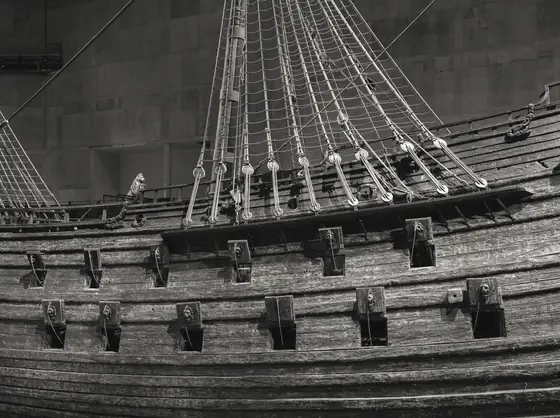
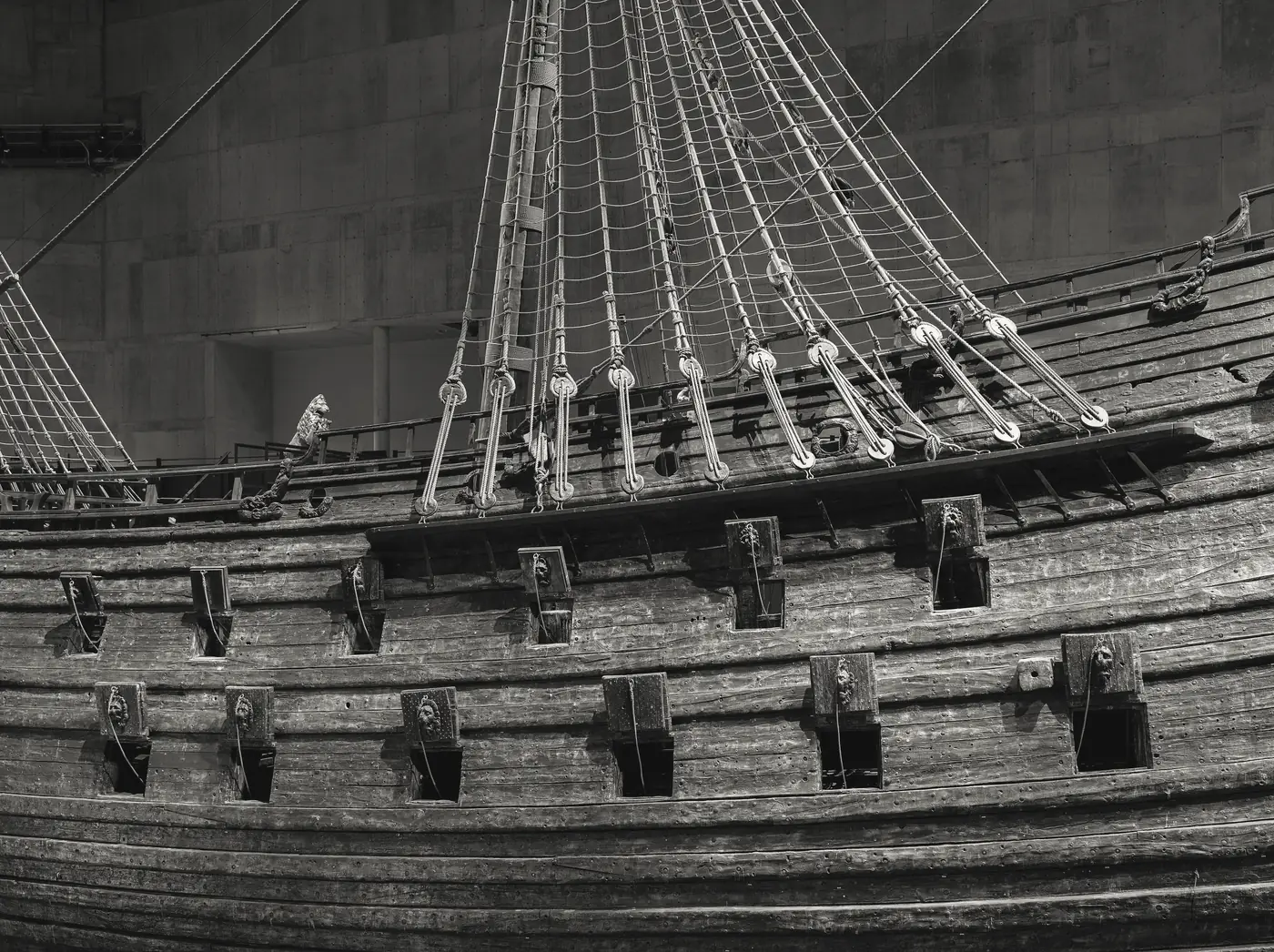
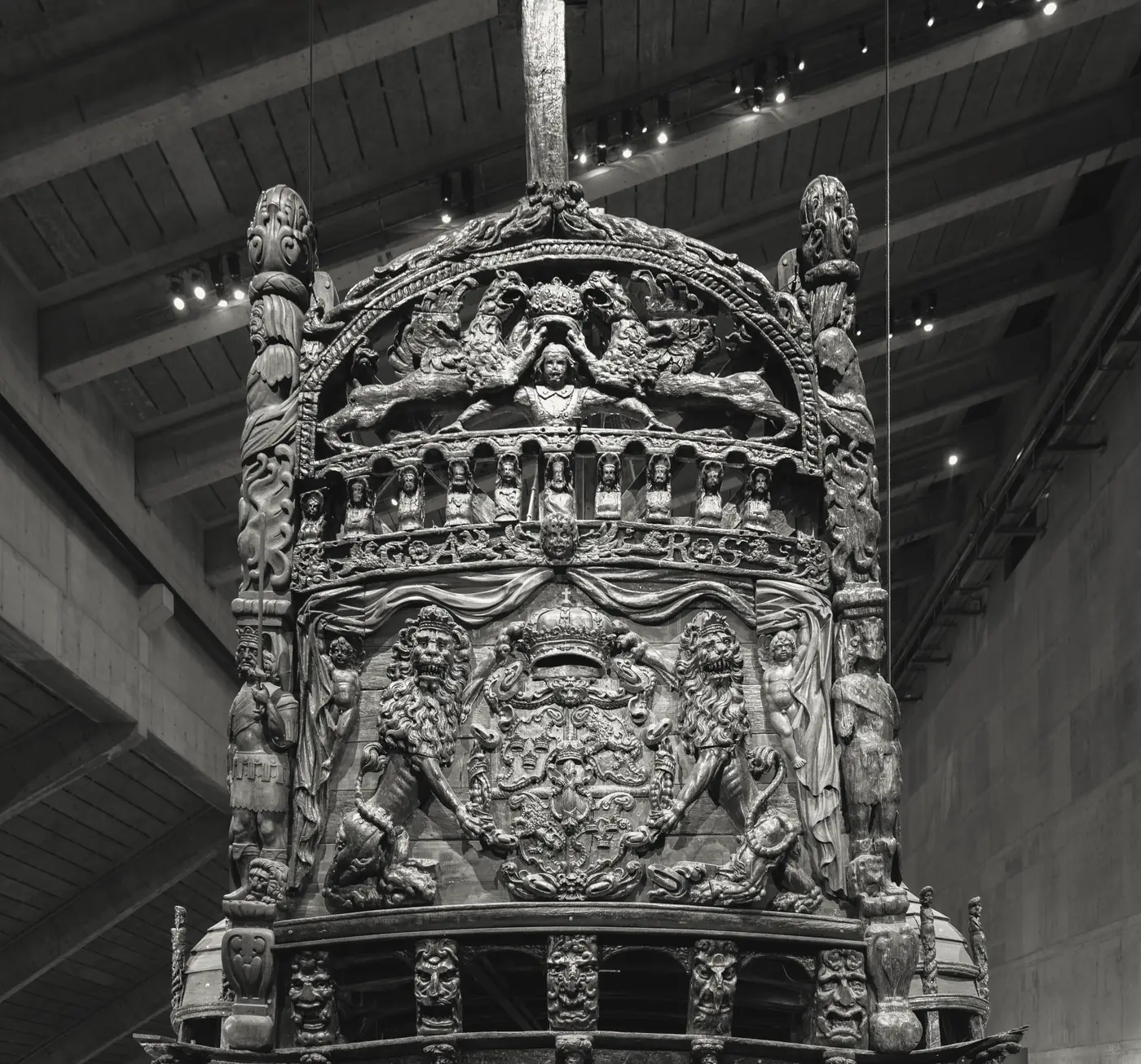
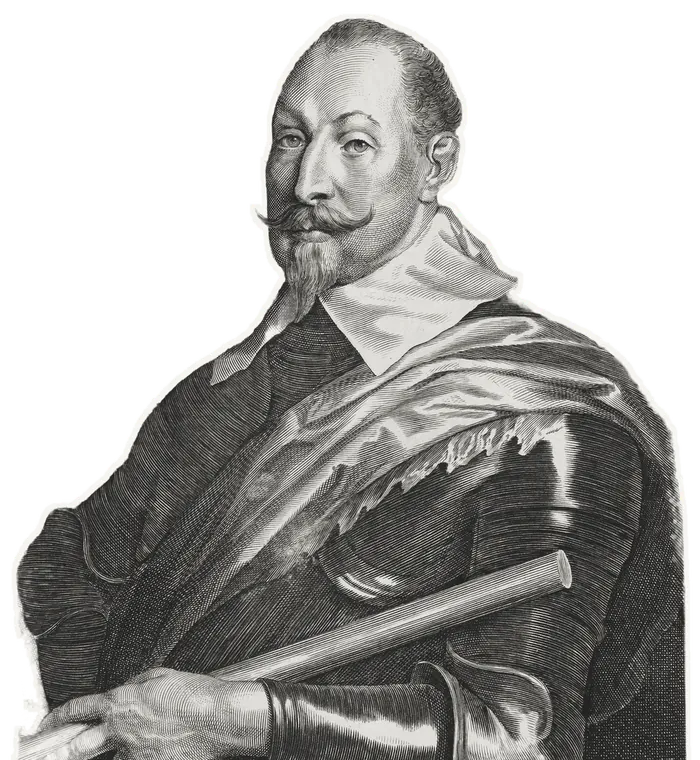
On 10 August 1628, the Swedish warship Vasa sailed from Stockholm on her maiden voyage before a large crowd. The Vasa Museum describes her as the most powerful warship in the Baltic, carrying 64 cannon, and she was to take aboard 300 soldiers as well as her crew. Scant minutes after leaving harbour, a much stronger gust heeled her far over. Water poured in through gunports that had been left open, and she sank to the seabed within minutes, in view of the shore. King Gustavus Adolphus, then at war with Poland-Lithuania, had pressed for the ship to be sent to sea as soon as possible. Three explanations are commonly offered. The first blames the weather: a gust caught a ship that was otherwise sound. The second blames the design: the upper structure was too tall and heavy for the hull below the waterline, so the centre of gravity sat too high. The third blames the handling: the ballast may have been wrongly stowed, and a test of the ship's stability was stopped early while the decision to sail went ahead anyway. Your investigation separates evidence about the design and loading from evidence about the test before sailing, and from the inquest that followed. The question is not only why the ship was unstable. It is why a warning was not allowed to delay the voyage.
The timeline
Vasa's keel is laid at the navy yard in Stockholm, and her designer, Henrik Hybertsson, is already ill.
Vasa is launched in the spring, and her designer dies within about a year of the start of construction.
A demonstration before sailing has thirty men run across the upper deck; the ship heels alarmingly and the admiral stops it.
Vasa sails on her maiden voyage in the afternoon, with her gunports open, and sinks within minutes in Stockholm harbour.
The inquest opens at the Tre Kronor palace; no one is later punished.
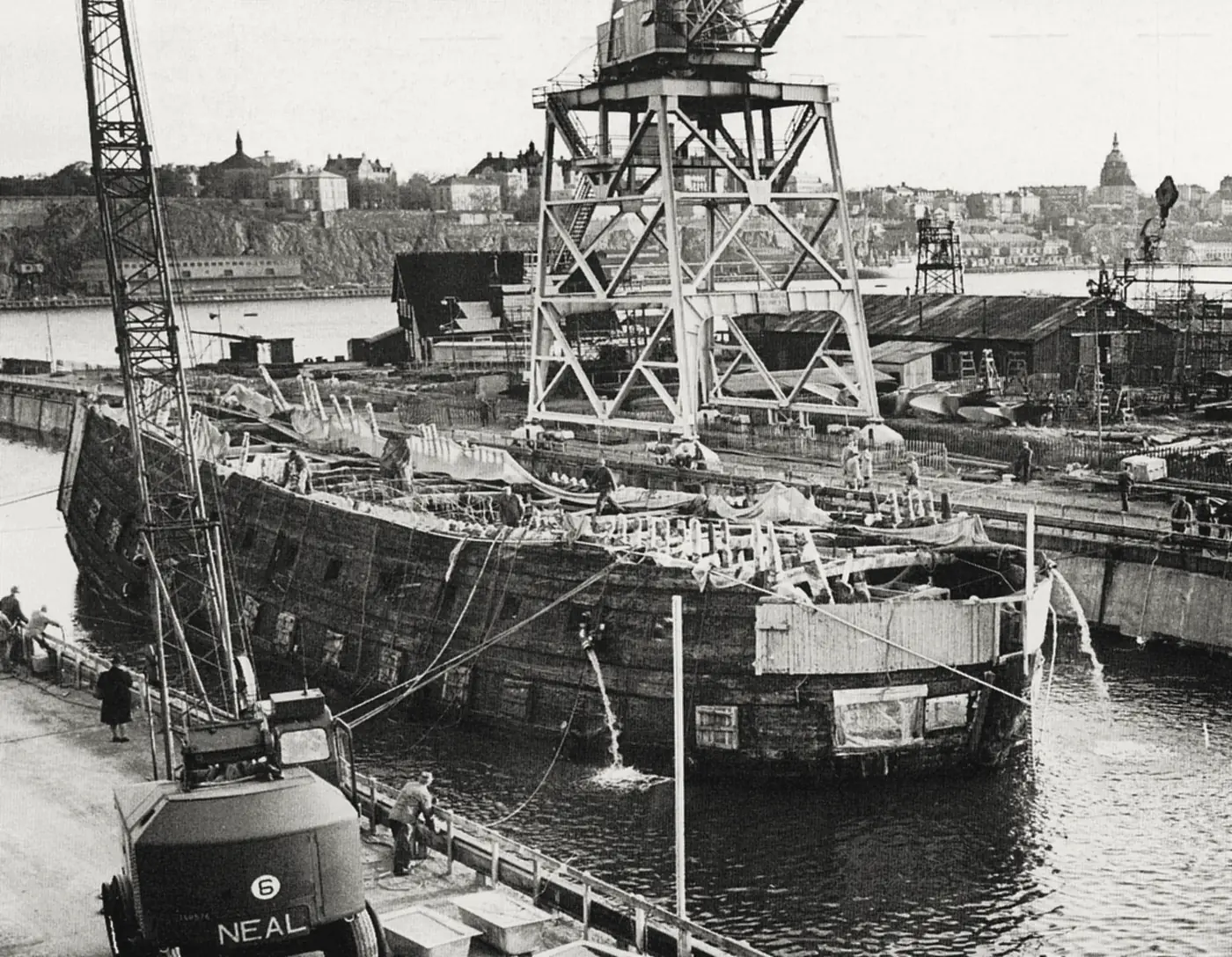
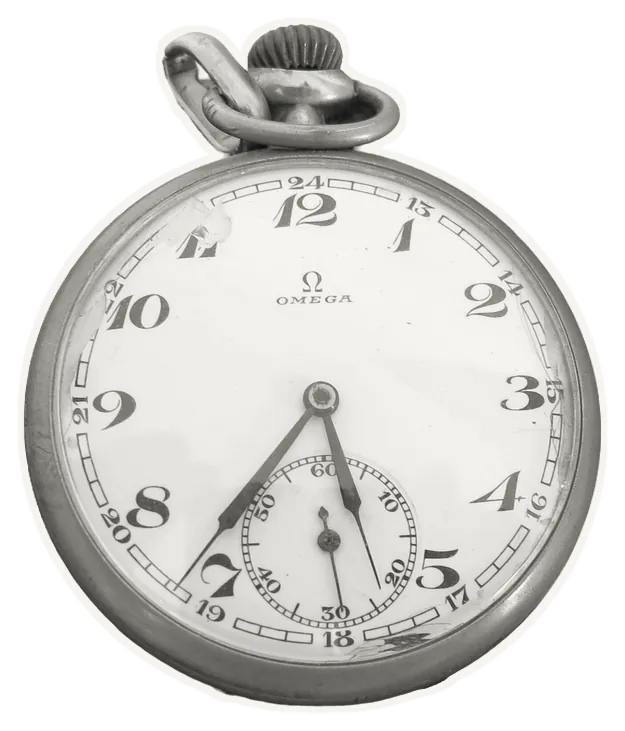
The salvage reaches the surface: the tops of a few frames appear at 9.03 a.m.
A researched reconstruction for learning. These reasoning steps simplify a complex record; no score can capture the full history.
02 · The evidence
What does the record show?
Read each exhibit before settling on an explanation. The source links below every exhibit lead to the record behind it.
Exhibits reviewed 0 of 5
Proportions and the centre of gravity
The Vasa Museum attributes the instability to proportions: the upperworks were too tall and heavily built for the relatively small hull below the waterline, so the centre of gravity sat too far above the water, and even a light breeze could heel the ship alarmingly. The museum adds that the mathematics for predicting stability lay more than a century away, so shipwrights relied on experience. Vasa was so crank, it says, that she did not survive long enough to be improved.
Source record s1vasamuseet.se
The ballast and the test
At the inquest, the ship's master, who was responsible for stowing 120 tonnes of stone ballast, said he had ballasted the ship as deeply as it should be. He then described a demonstration before sailing, in which thirty men ran back and forth over the upper deck until the ship heeled so badly that there was great fear it would capsize at the quay, and reported overhearing the admiral wish the king were at home. He did not report what he had seen to the king, who was pressing for the ship to go to sea.
Source record s2vasamuseet.se
A demonstration stopped and overridden
The museum timeline says the captain supervising construction called Vice Admiral Klas Fleming down to the ship because he was worried, and had thirty men run back and forth across the deck until the ship rolled alarmingly. The admiral had the demonstration stopped, afraid the ship would sink at the quay. Under pressure from the king to get the ship to sea, he ordered the captain to sail anyway.
Source record s3vasamuseet.se
An inquest without a punishment
The Council of State began looking for those responsible on the day after the sinking, and a commission of 17 councillors and naval officers, chaired by the Admiral of the Realm, opened its inquest on 5 September. Surviving officers and senior petty officers were asked whether they had known the ship was unsteady, and all claimed ignorance until the master was questioned. Nobody was ever punished, and parts of the transcript have disappeared.
Source record s2vasamuseet.se
The 1961 salvage
The museum describes the 1961 salvage as a navy-led operation with divers, which raised a hull that had lain on the seabed for almost 333 years. It records that the clock showed 09.03 on 24 April 1961 when the tops of a few eroded frames came above the water. The recovered hull allows researchers to study design and ballast, but the salvage does not by itself settle how the crew judged the ship's stability.
Source record s4vasamuseet.se
03 · Your reasoning
Follow the strongest explanation.
Choose an interpretation, then compare it with the evidence. You can revise your choice. The goal is understanding, not a perfect score.
04 · The findings
The chain behind the outcome.
Your notebook
Case report
Next in history & systems: The cold summer after Tambora
The Vasa case is a stability problem with a decision layered on top. The design placed too much weight high in the hull: the upperworks were too tall and heavy for the small hull below the waterline, so the centre of gravity sat too far above the water. Stability could not yet be calculated in advance, so shipwrights relied on experience. The master had stowed about 120 tonnes of ballast. A demonstration before sailing, probably on 8 or 9 July, had thirty men running across the upper deck until the ship heeled so badly that the admiral stopped it. Under pressure from a king at war, the order to sail stood. On 10 August 1628 the ship sailed in the afternoon with her gunports open. A much stronger gust heeled her over, water poured in through the open ports, and she sank within minutes in view of a large crowd. The museum calls the open gunports a fateful decision. The inquest heard testimony about the test and the ballast, but nobody was ever punished, and parts of its transcript have been lost. Two things should be kept separate: the physical fault, a high centre of gravity, and the organisational one, a clear warning from a test that was not acted on. The 1961 salvage allowed the hull to be studied, though it does not settle how the crew judged her stability. The most defensible conclusion is that the ship was unstable by design, and that the decisions to proceed and to leave the gunports open turned a dangerous condition into a fatal one.
Contributing causes and conditions
- Upperworks too tall and heavy for the hull below the waterline, which raised the centre of gravity.
- Limited means of predicting stability in 1628, so proportions were judged by experience.
- A test before sailing, with thirty men rolling the ship, showed alarming heel and was stopped.
- A royal order to sail that overrode the warning, with the gunports left open.
- A gust that heeled the ship far over, letting water pour in through the open gunports.
OutcomeVasa (ship)
Take the method with you
- A ship's stability depends on proportions that can be judged before she sails, so a warning sign during a test is worth acting on.
- Unresolved responsibility can still leave a clear lesson, and the gaps in the record should be named rather than filled.
- A museum's account is a reasoned interpretation, and its strongest claims are those that rest on surviving records.
You can read findings at any time. Exploring every reasoning step marks this case as complete in your notebook.
The open record
Sources & further reading
Read the original record and its scope before relying on a conclusion. Source references support the exhibit summaries; Faultory’s reasoning prompts are editorial reconstructions.
- s1Vasa Museum — Vasa History: The Disaster
www.vasamuseet.se
- s2Vasa Museum — Vasa History: The Inquest
www.vasamuseet.se
- s3Vasa Museum — Vasa History: Timeline
www.vasamuseet.se
- s4Vasa Museum — Vasa History: The Salvage
www.vasamuseet.se
Written and curated for Faultory by Yunus Emre Vurgun, with AI-assisted research and drafting. Sources and interpretations can need correction. Read our editorial standards or report an issue.
Keep investigating