Your browser cannot save progress right now. You can still investigate; keep this tab open or enable local storage to save.
This case has been updated. Compatible choices are kept; revisit the evidence before drawing your conclusion.
01 · The briefing
Begin with the question.
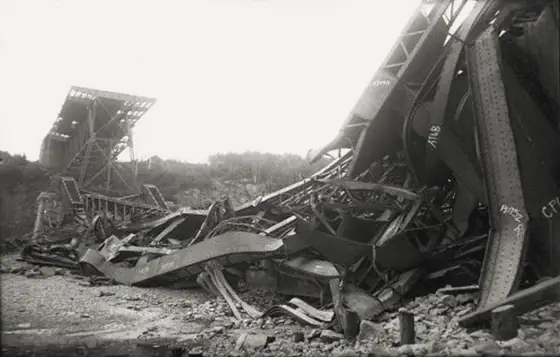
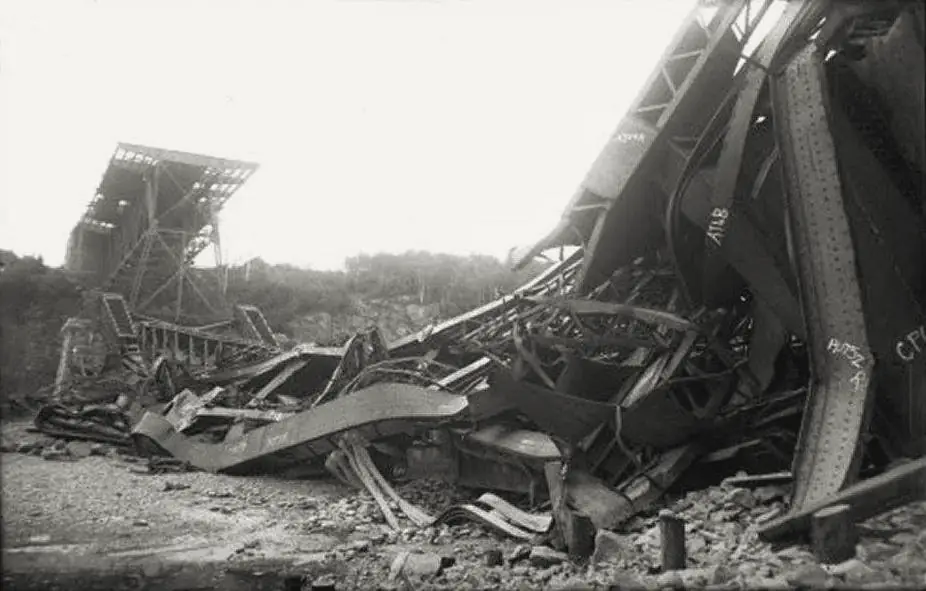
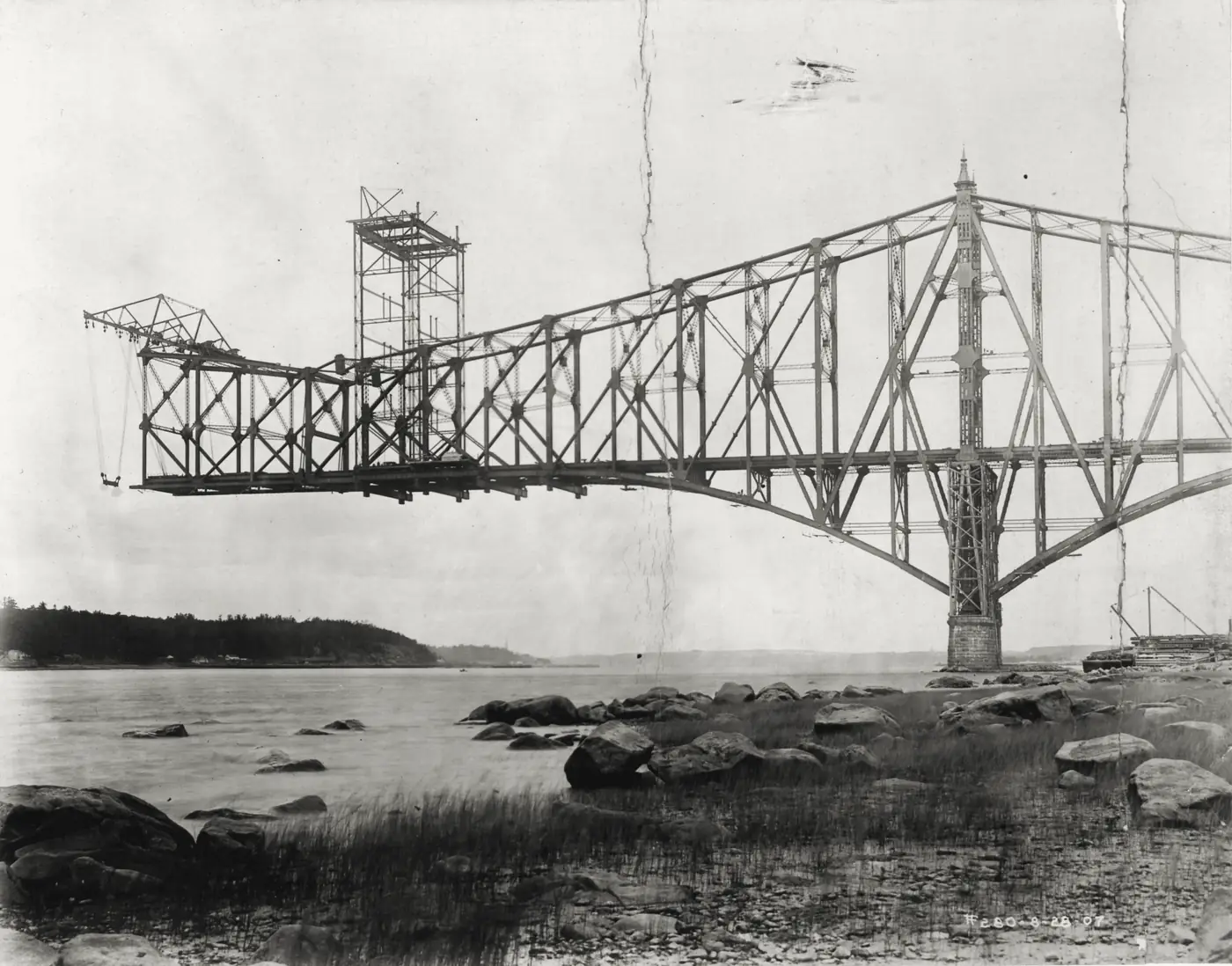
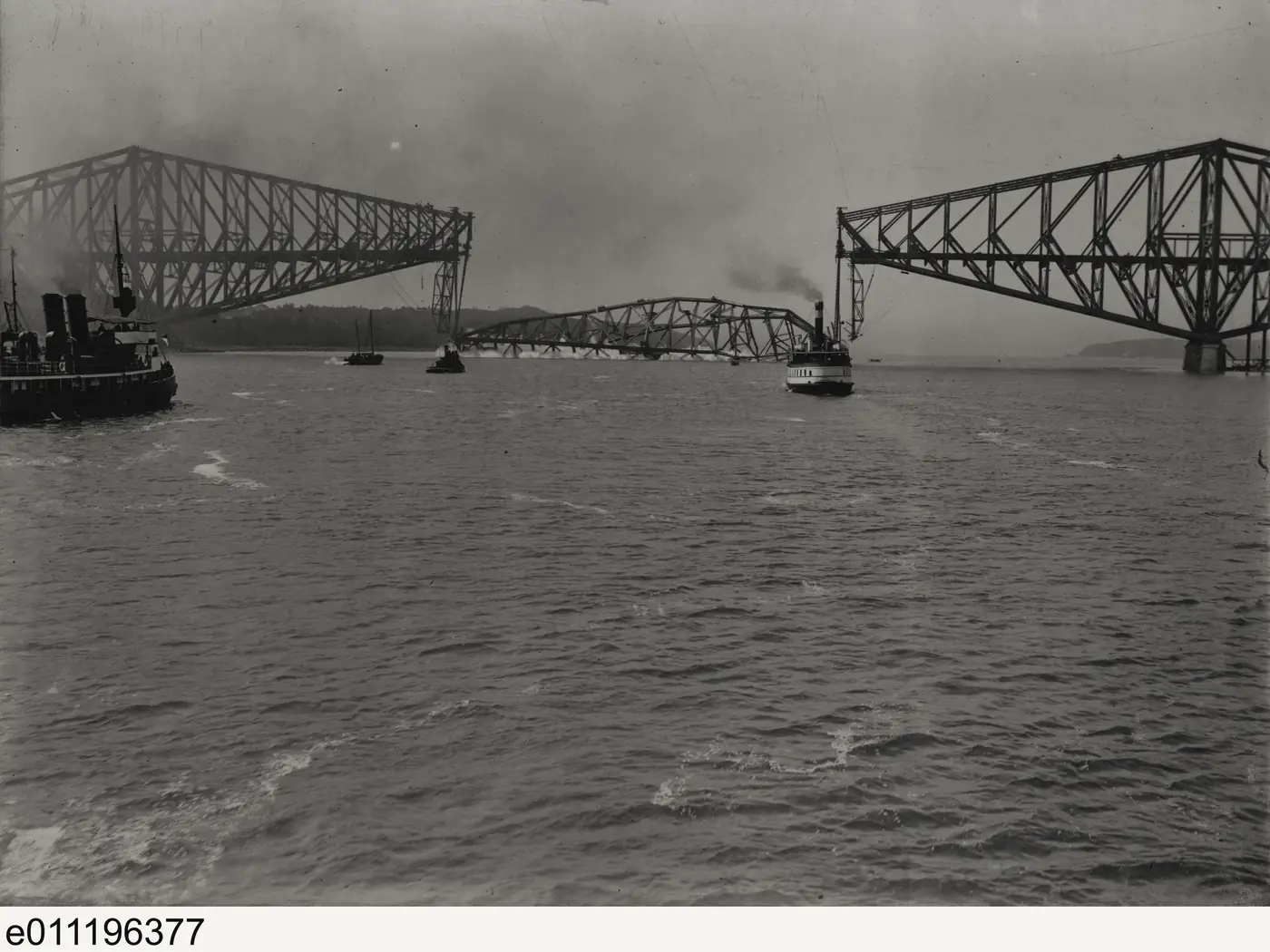
The Quebec Bridge was under construction across the St. Lawrence River near Quebec City, a long cantilever structure whose main span had been changed from 1,600 feet to 1,800 feet during design. On 29 August 1907, during erection, the anchor arm and the lower chords near the main pier failed, and the structure fell into the river with loss of life. A royal commission was appointed the next day to determine the cause. Three explanations can be separated from the outside. One blames unusual weather or an accident on the site. A second blames a single defective piece or casting. A third focuses on the workmen or on how the structure was being handled during erection. The investigation has to separate what was observed in the field before the collapse, what the design calculations assumed, and what the built members actually weighed. Each source answers a different question, and the record should not be used to assign blame beyond what the commission found. The commission took evidence in Quebec and Ottawa over several weeks, and its findings name the engineering roles of the companies involved.
The timeline
The designing engineer sends the consulting engineer dead-load figures for the cantilever arms, as recorded in the Commission's chronology of design work.
Design work is far advanced, and preliminary dead-load estimates could have been revised; the Commission finds they were not revisited.
Deflection is noted at a joint in a cantilever-arm chord; the Commission discusses whether it followed the removal of a cover plate.
Bending in the most heavily stressed compression chords near the main pier is measured in detail and reported to both headquarters.
The lower chords in the anchor arm near the main pier fail; the structure falls, with loss of life.
The royal commission is appointed the day after the accident; evidence taking begins at Quebec on 9 September.
A second collapse occurs during the lifting of the suspended centre span, a separate accident with a different reported cause.
A researched reconstruction for learning. These reasoning steps simplify a complex record; no score can capture the full history.
02 · The evidence
What does the record show?
Read each exhibit before settling on an explanation. The source links below every exhibit lead to the record behind it.
Exhibits reviewed 0 of 5
The failed members
The Commission's findings state that the collapse resulted from the failure of the lower chords in the anchor arm near the main pier, and that the failure was due to defective design. The Commission describes these chords as the most heavily stressed compression members in the bridge. This identifies the failing members, not every detail of the design error.
Source record s1archive.org
A dead load set too low
The Commission finds that the dead load used in the calculations was assumed at too low a value and was not later revised. For the main chords near the centre posts, the error in assumed dead load raised the stresses by about 10 per cent. The Commission recomputed the stresses using the actual dead load obtained from the built members.
Source record s1archive.org
The span change and the weight estimate
During design the main span was changed from 1,600 feet to 1,800 feet. The Commission states that no information existed from which the bridge's weight could be predicted reliably, and that a cautious designer would have recognized the probability of a serious error in the first weight estimate. It criticizes fabrication that began before the weight was checked.
Source record s1archive.org
Field observations before the collapse
The Commission records deflection of joints and chords from 6 August onward, a workman's report of joint faults, and detailed measurement of bending in the chords on 27 August. It concludes that the structure was being closely watched, and that the loss of life on 29 August might have been prevented by better judgment on the part of those in responsible charge.
Source record s1archive.org
A second collapse, a separate cause
On 11 September 1916, while the suspended centre span was being lifted, the bridge failed again. Legion Magazine, summarizing the board of engineers' report of 19 October 1916, attributes that loss to the failure of a casting in the erection equipment that temporarily supported the span, a different mechanism from the 1907 chord failure.
Source record s3legionmagazine.com
03 · Your reasoning
Follow the strongest explanation.
Choose an interpretation, then compare it with the evidence. You can revise your choice. The goal is understanding, not a perfect score.
04 · The findings
The chain behind the outcome.
Your notebook
Case report
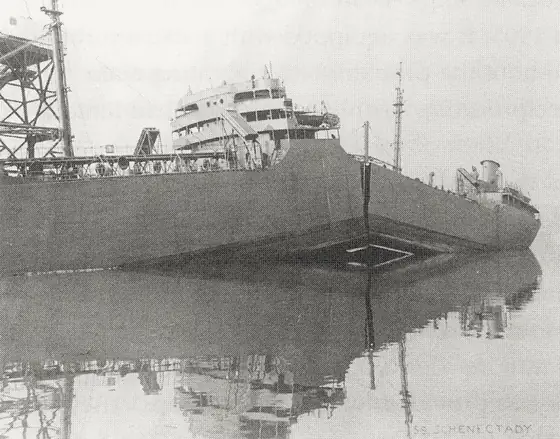
Next in engineering & technology: Hulls that broke in still water
The Commission's findings place the collapse in the failure of the lower chords in the anchor arm near the main pier, and attribute that failure to defective design rather than to weather or accident. The stresses that caused it arose in the regular course of erection. The most important design error was the assumed dead load, which was set too low and not revised later, even when design work had advanced far enough for better estimates. The Commission found that this error raised the stresses in the main chords near the centre posts by about ten per cent, and that the specified unit stresses were higher than established practice. The change of main span from 1,600 feet to 1,800 feet during design belongs to the same design history, and the Commission found that the absence of an experienced bridge engineer as chief engineer led to loose and inefficient supervision. Deflection and bending were observed from early August and measured on 27 August. The Commission judged that the fall could not be prevented by bracing or lowering the structure after that date, but it said the loss of life on 29 August might have been prevented by better judgment. Established findings are the failed members, the assumed dead load and the stress error. Interpretation covers how much weight to give each contributing condition. The 1916 collapse was a separate failure of erection equipment, not a repeat of the same mechanism.
Contributing causes and conditions
- The dead load was assumed too low in the original calculations and was not revised against the weight of the built members.
- The specifications allowed unit stresses above established practice, and the main span was increased to 1,800 feet.
- Fabrication proceeded before the weight estimate was checked against the plans.
- The lower compression chords in the anchor arm near the main pier had defective design details at their ends and joints.
- Deflection and bending in the chords were watched from early August, but the Commission judged that better judgment could have prevented the loss of life.
OutcomeQuebec Bridge collapse
Take the method with you
- An estimate that drives a design must be checked against the weight of the structure as it is actually built.
- Early deflection in a compression member is evidence to test the design assumptions, not only a nuisance to be measured.
- A later failure at the same site can have a different mechanism, so the 1907 and 1916 collapses should be assessed separately.
You can read findings at any time. Exploring every reasoning step marks this case as complete in your notebook.
The open record
Sources & further reading
Read the original record and its scope before relying on a conclusion. Source references support the exhibit summaries; Faultory’s reasoning prompts are editorial reconstructions.
- s1
- s2
- s3
Written and curated for Faultory by Yunus Emre Vurgun, with AI-assisted research and drafting. Sources and interpretations can need correction. Read our editorial standards or report an issue.
From the journal
Field notes that use this case
Keep investigating