Your browser cannot save progress right now. You can still investigate; keep this tab open or enable local storage to save.
This case has been updated. Compatible choices are kept; revisit the evidence before drawing your conclusion.
01 · The briefing
Begin with the question.
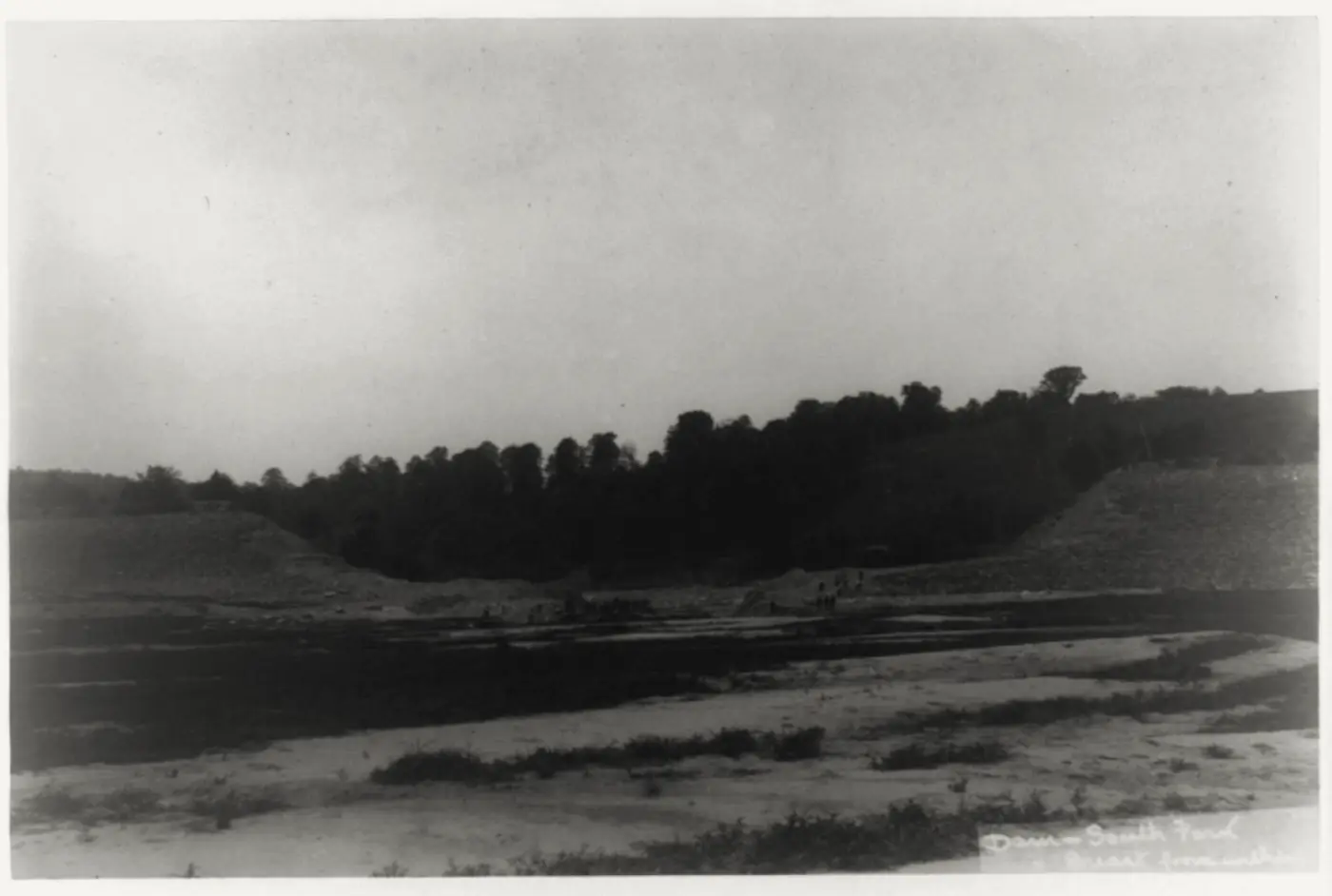
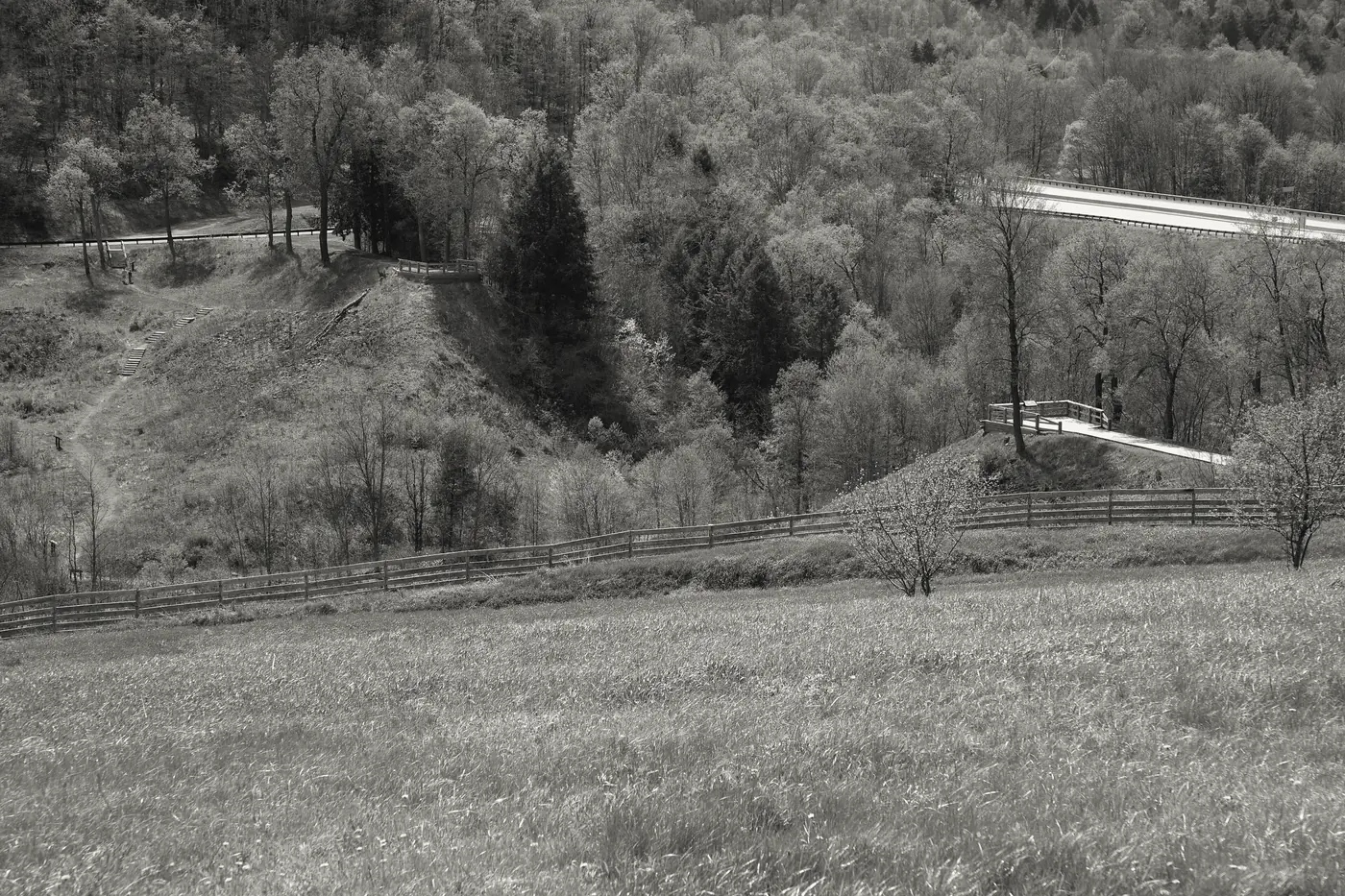
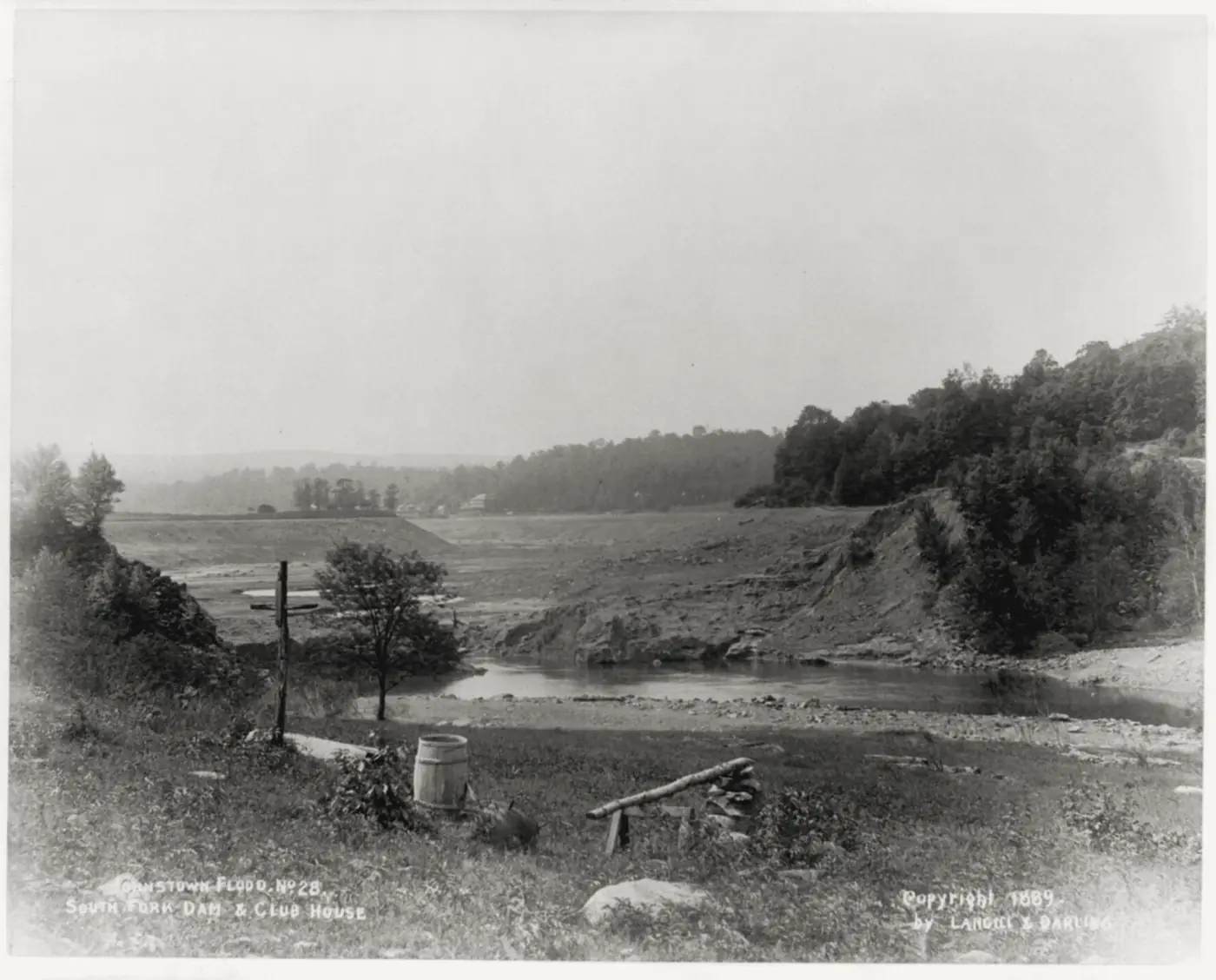
The South Fork Dam was an earth embankment begun in the early 1840s to supply water for a canal in the hills above Johnstown, Pennsylvania. It failed in 1847, and again after heavy rain in 1862, and it was patched rather than fully rebuilt. Later it passed to the South Fork Fishing and Hunting Club, a private group whose members included wealthy industrialists. The club lowered the top of the dam, never replaced the removed discharge pipes, and put fish screens over the spillway. On 31 May 1889, heavy rain filled the lake behind the dam. The screens clogged, so the water could leave only by overtopping the embankment, and the dam breached. The flood reached Johnstown about 14 miles downstream. Three explanations are commonly offered. The first is that the rain was simply too heavy for any dam. The second is that the club's modifications reduced the dam's capacity to pass water. The third is that the structure was already weak from its construction and earlier repairs. Your investigation separates the physical record from the conclusions drawn by the 1891 engineering committee and by later analysis. A finding about cause is not the same as a finding about responsibility, and the record supports only some of the claims made about either.
The timeline
Construction of the South Fork Dam begins as a feeder reservoir for a canal.
The half-completed dam fails in 1847, and fails again after heavy rain in 1862.
Congressman John Reilly buys the dam for $2,500; the National Park Service says its five sluice pipes were removed while he owned it.
Heavy rain fills the lake; the fish screens over the spillway clog, and water overtops and breaches the embankment.
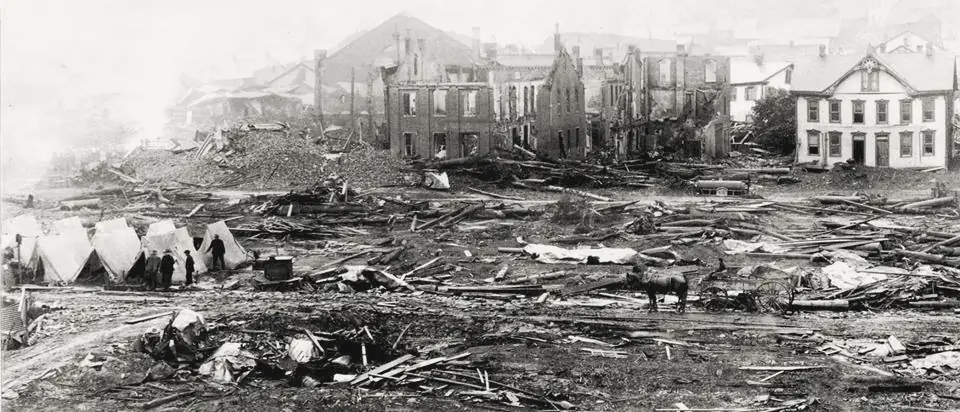
The flood reaches Johnstown, about 14 miles downstream; about 2,209 people die.
An ASCE committee report concludes that the club's changes did not cause the disaster.
Coleman, Kaktins and Wojno publish a hydraulic reanalysis that disputes the 1891 conclusion.
A researched reconstruction for learning. These reasoning steps simplify a complex record; no score can capture the full history.
02 · The evidence
What does the record show?
Read each exhibit before settling on an explanation. The source links below every exhibit lead to the record behind it.
Exhibits reviewed 0 of 5
Pipes removed, crest lowered, spillway screened
The National Park Service's history of the dam says that the sluice pipes removed in 1875 were never replaced, that the club lowered the top of the dam, and that it placed fish screens over the spillway. The screens clogged on 31 May 1889, so overtopping became the only way for the water to leave. The page records these changes, but it does not by itself measure how much each one mattered to the outcome.
Source record s1nps.gov
Ownership and scale
The Johnstown Flood Museum records 2,209 deaths and says the dam was owned by the South Fork Fishing and Hunting Club, an exclusive club whose members included Andrew Carnegie and Henry Clay Frick. It gives the distance from the dam to Johnstown as 14 miles, and says the reservoir held about 20 million tons of water. Membership describes who owned the dam, not how it behaved in flood.
Source record s2jaha.org
The 1891 finding
The 2016 paper by Coleman, Kaktins and Wojno summarises the 1891 report of an ASCE committee, which concluded that the club's changes did not cause the disaster, because the embankment would have overflowed and breached without them. The authors say the 1891 committee's work represented the state of the art for its time. They then challenge several of its observations and assumptions.
Source record s3doi.org
The original design
Using a LiDAR-based estimate of the lake volume and reconstructed flood hydrographs, the authors argue that the original dam, with a crest about 0.9 metres higher, an auxiliary spillway and five discharge pipes, had more than twice the discharge capacity at overtopping of the reconstructed dam. They conclude that a properly rebuilt dam would not have overtopped and would likely have survived the runoff. That is a counterfactual reconstruction built on modelled flows, not a direct measurement.
Source record s3doi.org
Competing flow estimates
The same paper argues that more than 65 minutes would have been needed to drain most of the lake, rather than the 45 minutes cited by most sources, and estimates peak flood discharges of roughly 7,200 to 8,970 cubic metres per second. Those figures depend on the lake volume, the breach geometry and time estimates, so they are model results that other analysts can contest.
Source record s3doi.org
03 · Your reasoning
Follow the strongest explanation.
Choose an interpretation, then compare it with the evidence. You can revise your choice. The goal is understanding, not a perfect score.
04 · The findings
The chain behind the outcome.
Your notebook
Case report
Next in history & systems: A warning that pointed elsewhere
The physical sequence is well documented. The South Fork Dam had been built as a feeder reservoir, had failed before, and had been patched rather than fully rebuilt. Its sluice pipes were removed, in 1875 according to the National Park Service, although the 2016 analysis says the date is unclear and notes that the 1891 committee attributed the removal to the club. The club lowered the top of the dam, never replaced the pipes, and placed fish screens over the spillway. When heavy rain filled the lake on 31 May 1889, the screens clogged, leaving the only outflow over the top of the embankment. The dam was overtopped and breached, and the released water reached Johnstown about 14 miles downstream. The Johnstown Flood Museum records 2,209 deaths. What is disputed is how much the modifications mattered. The 1891 ASCE committee concluded that the club's changes did not cause the disaster, because the embankment would have overflowed and breached regardless. Coleman, Kaktins and Wojno (2016) argue the opposite. Using a LiDAR-based lake volume, hydrographs and a reconstruction of the original design, they report that the original dam, with a crest about 0.9 metres higher and five discharge pipes, had more than twice the discharge capacity at overtopping of the reconstructed dam, and that a properly rebuilt dam would likely have survived. Their peak flow estimates of roughly 7,200 to 8,970 cubic metres per second, and their drainage times, depend on modelling assumptions that other analysts could contest. The careful conclusion is that the physical changes reduced the dam's capacity to pass floodwater, that the failure ran through overtopping at a blocked outflow, and that engineers still disagree about the size of the club's contribution. Legal and moral responsibility is a different question, and this case does not answer it.
Contributing causes and conditions
- Earlier construction stoppage and the 1862 breach left the embankment damaged, according to the National Park Service account.
- The discharge pipes were removed (when, and by whom, is disputed) and never replaced, reducing the outlets available for high water.
- The crest was lowered, which reduced the margin before water could pass over the top.
- Fish screens over the spillway clogged, so the lake could drain only by overtopping.
- Heavy rain filled the lake on 31 May 1889, and the embankment was overtopped and breached.
OutcomeJohnstown Flood
Take the method with you
- A structure's capacity depends on its outlets as well as its height, so a change that looks minor can alter how the structure fails.
- When two careful analyses share the same facts but differ on assumptions, identify which assumptions carry the conclusion.
- A finding about cause is not the same as a finding about responsibility, and a case file should keep the two separate.
You can read findings at any time. Exploring every reasoning step marks this case as complete in your notebook.
The open record
Sources & further reading
Read the original record and its scope before relying on a conclusion. Source references support the exhibit summaries; Faultory’s reasoning prompts are editorial reconstructions.
- s1
- s2
- s3
Written and curated for Faultory by Yunus Emre Vurgun, with AI-assisted research and drafting. Sources and interpretations can need correction. Read our editorial standards or report an issue.
From the journal
Field notes that use this case
Keep investigating