Your browser cannot save progress right now. You can still investigate; keep this tab open or enable local storage to save.
This case has been updated. Compatible choices are kept; revisit the evidence before drawing your conclusion.
01 · The briefing
Begin with the question.
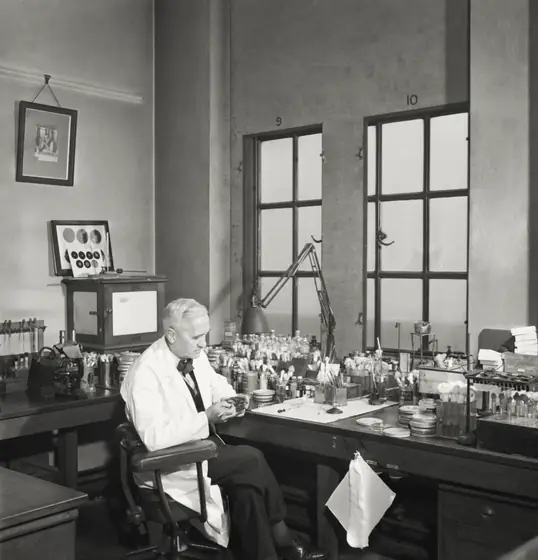
Thalidomide was a sedative that had been sold in several European countries before its American sponsor, Richardson-Merrell, applied for approval in the United States. The application was reviewed by the Food and Drug Administration, and the medical officer Frances Oldham Kelsey was the reviewer who kept asking for more data. Her oral history recalls that the company's clinical material was largely testimonials rather than well-designed studies.
The review was already contentious. A report of peripheral neuritis in long-term users led Kelsey to ask the sponsor for more information. Later in 1961, a German pediatrician, Widukind Lenz, linked the drug to a wave of birth defects in Europe. Before that link was widely understood, the narrower question in the American file was whether the drug had been shown safe for pregnant women at all.
Critics argued that the FDA was obstructing a drug already sold abroad. Kelsey's account is that the criticism faded once the question of pregnancy safety came up at a company conference and it became clear that the data were not there. This investigation separates what the record documents from what was later recalled, and asks what the evidence did and did not establish.

The timeline
Kelsey recalls receiving the thalidomide application for review in early September 1960, when she found deficiencies in the clinical material.
Merrell holds a conference with its clinical investigators, where the question 'Is thalidomide safe in pregnancy?' is raised and, according to Kelsey, the data to answer it are not available.
By November 1961, Widukind Lenz determines that thalidomide is the cause of the malformations he is seeing and finds that 50 percent of the mothers of deformed children had taken it in the first trimester.
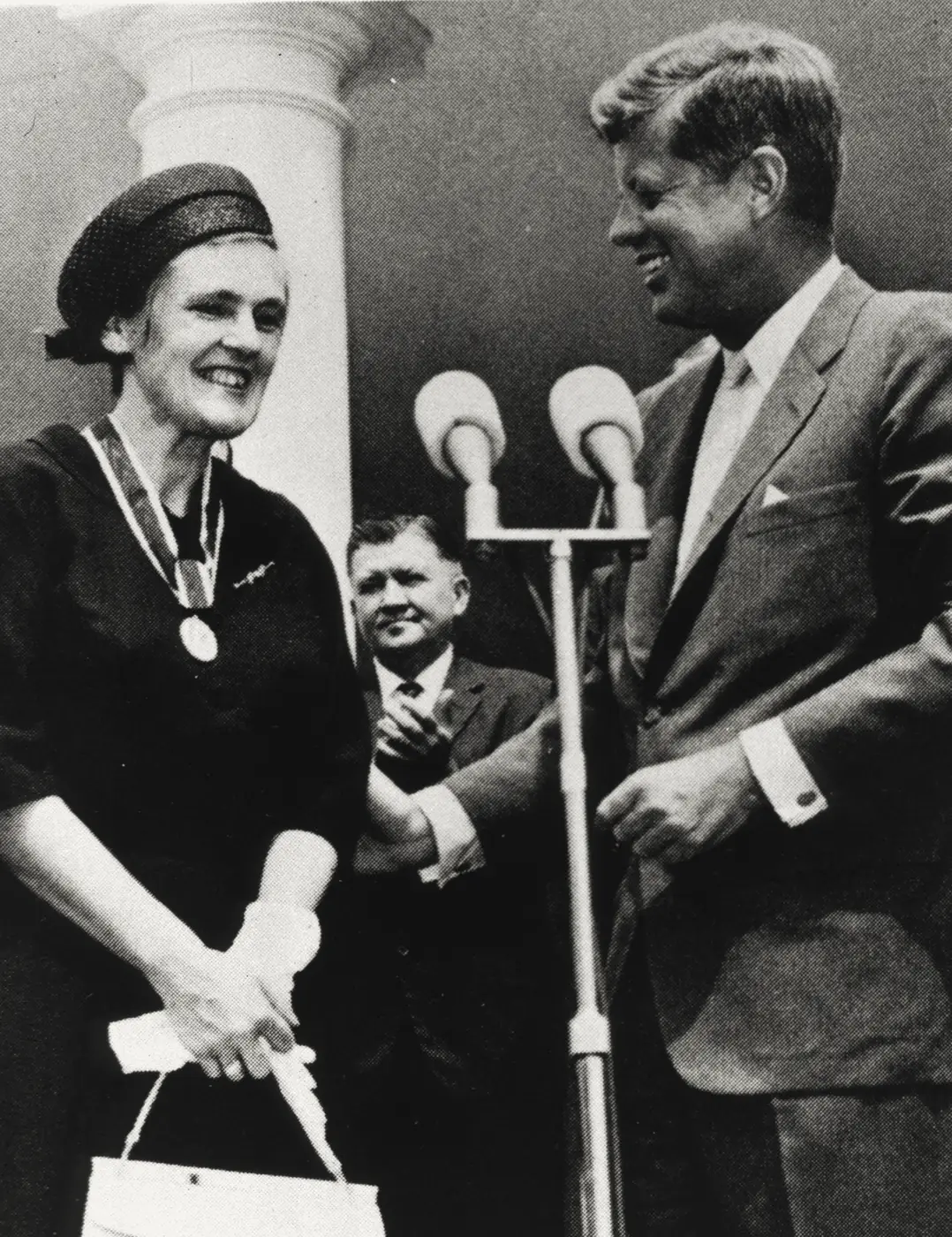
President Kennedy presents Kelsey with the medal for Distinguished Federal Civilian Service.
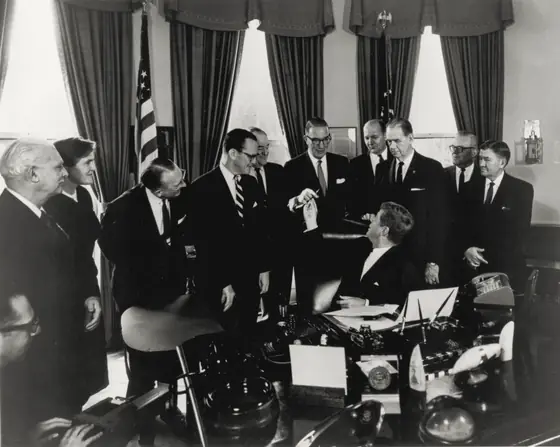
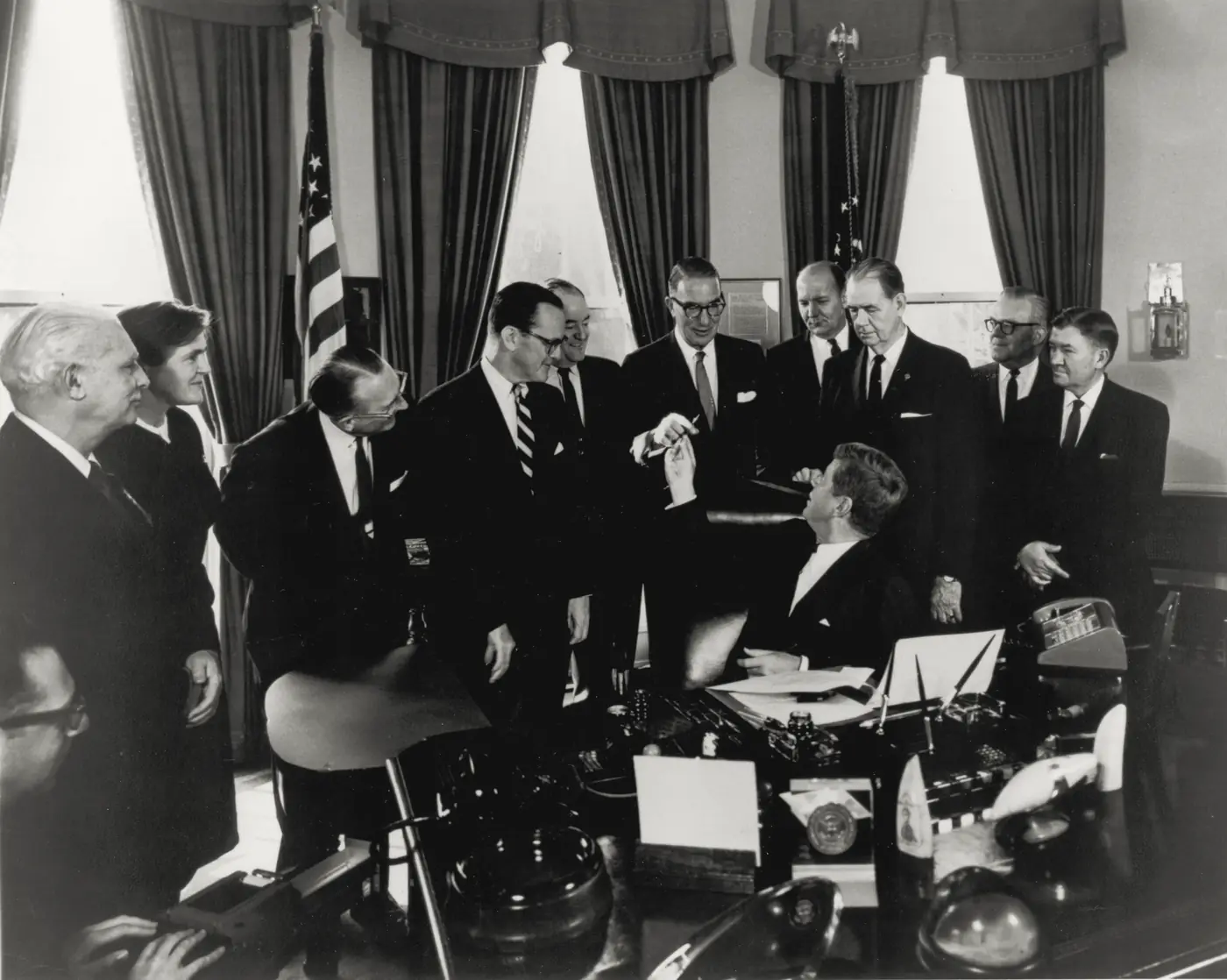
President Kennedy signs the 1962 drug amendments, Public Law 87-781, which require substantial evidence of effectiveness and add effectiveness to the safety requirements for new drugs.
The FDA publishes a feature on Kelsey's review, describing her request for further information after the neuritis report.
A researched reconstruction for learning. These reasoning steps simplify a complex record; no score can capture the full history.
02 · The evidence
What does the record show?
Read each exhibit before settling on an explanation. The source links below every exhibit lead to the record behind it.
Exhibits reviewed 0 of 5
The request after the neuritis report
The FDA's 2001 feature on Kelsey's review states that after a journal report of peripheral neuritis in patients who had taken the drug over a long period, she immediately contacted Richardson-Merrell and requested further information on this serious side effect. The feature is a retrospective agency account. It establishes what Kelsey asked for at that stage. It does not establish any link between thalidomide and birth defects, which came later from other evidence.
Source record s1web.archive.org
The pregnancy question in Kelsey's oral history
In her FDA oral history, Kelsey recalls that Merrell's application was weak, that its clinical reports were more like testimonials than well-designed studies, and that when the question of safety in pregnancy arose at Merrell's conference, the criticism of the FDA ended because the data were not there. She describes asking for case histories of use throughout pregnancy. The transcript establishes her account of the request and the gap. It is a recollection given decades later, so it shows her view of the file rather than the drug's effects.
Source record s2web.archive.org
Lenz's first-trimester finding
The same FDA feature reports that Widukind Lenz, by November 1961, determined that thalidomide was the cause of the deformities, and that 50 percent of the mothers with deformed children had taken the drug in the first trimester of pregnancy. This establishes the association Lenz reported from clinical questioning of families. It does not give a rate of harm among all women who took the drug, because the figure is a share of affected mothers.
Source record s1web.archive.org
Public and legislative context in 1981
Wallace Janssen's 1981 FDA Consumer history states that the births of thousands of deformed infants whose mothers had taken the sedative thalidomide focused public attention on pending U.S. legislation, and it ties the case to Kelsey's review. It establishes the public and legislative context. It is a historical summary written by an agency historian and does not give the number of affected children in the United States.
Source record s3fda.gov
The 1962 statute's evidence standard
Public Law 87-781, dated 10 October 1962, states its purpose to assure the safety, effectiveness and reliability of drugs. Its text refers to a lack of substantial evidence that a drug will have the effect it purports to have. This establishes the legal standard that followed the thalidomide episode. It does not mention thalidomide or pregnancy, and it does not show how the FDA applied the standard in any particular case.
Source record s4govinfo.gov
03 · Your reasoning
Follow the strongest explanation.
Choose an interpretation, then compare it with the evidence. You can revise your choice. The goal is understanding, not a perfect score.
04 · The findings
The chain behind the outcome.
Your notebook
Case report
Next in science & discovery: The Missing Pull
The documented core of this case is narrow. Kelsey asked the sponsor for evidence of safety in pregnancy, and according to her oral history the evidence was not available. The FDA's 2001 feature records her earlier request about a serious neuritis report, and the 1981 FDA Consumer history places the case within the public and legislative response to the births of thousands of deformed infants in Europe.
Lenz's finding is a warning sign, not a rate. By November 1961 he had linked the malformations to thalidomide, and he found that half of the mothers of deformed children had taken the drug in the first trimester. That shows an association and a window of exposure among affected families. It does not give the chance of harm for a woman who takes the drug, and it does not measure how many children were affected in the United States.
The FDA did not approve the application. Its objections rested on missing evidence of safety, not on a proven teratogenic effect, and Merrell withdrew the application in March 1962. The sources describe deficiencies and a withdrawal, not a formal refusal order. The 1962 amendments turned the standard into law: Public Law 87-781 required substantial evidence and added effectiveness to the safety requirements. The case is often told as a victory for caution, but the record supports a narrower lesson, that a regulator can withhold approval on missing evidence, and the gap in the evidence is itself the finding to examine.
Contributing causes and conditions
- Thalidomide was used in several countries, including for sedation and for morning sickness, before its American application was reviewed.
- Reports of peripheral neuritis from long-term use led the FDA reviewer to request more information from the sponsor.
- The sponsor's clinical material was weak and did not include case histories of use throughout pregnancy, so the pregnancy-safety gap stayed open.
- German clinicians, led by Lenz, linked the drug to malformations, with half of the mothers of deformed children reporting first-trimester use.
- Public and legislative attention to the European births carried the 1962 amendments, which required substantial evidence of effectiveness and added it to the existing safety requirements.
OutcomeThalidomide and the FDA review (1961)
Take the method with you
- When a safety claim rests on missing data, name the population the data must cover, here pregnant women.
- A case-based association can justify action without giving a rate, so keep the association and the risk for an individual separate in your reasoning.
- Withholding approval for missing evidence is different from proof of harm, and a decision rule should say which one applies.
You can read findings at any time. Exploring every reasoning step marks this case as complete in your notebook.
The open record
Sources & further reading
Read the original record and its scope before relying on a conclusion. Source references support the exhibit summaries; Faultory’s reasoning prompts are editorial reconstructions.
- s1
- s2
- s3
- s4
Written and curated for Faultory by Yunus Emre Vurgun, with AI-assisted research and drafting. Sources and interpretations can need correction. Read our editorial standards or report an issue.
Keep investigating