Your browser cannot save progress right now. You can still investigate; keep this tab open or enable local storage to save.
This case has been updated. Compatible choices are kept; revisit the evidence before drawing your conclusion.
01 · The briefing
Begin with the question.
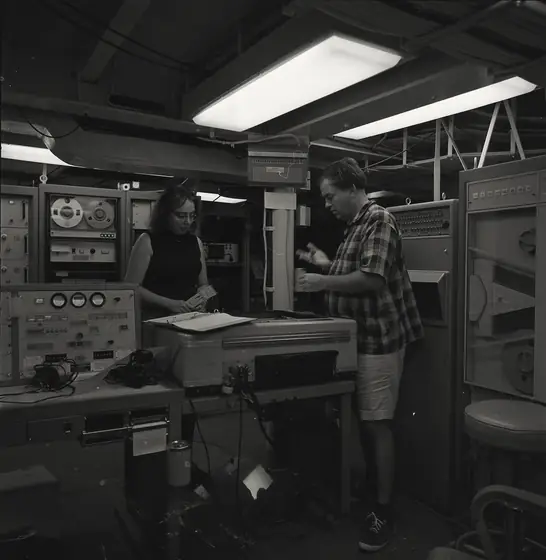
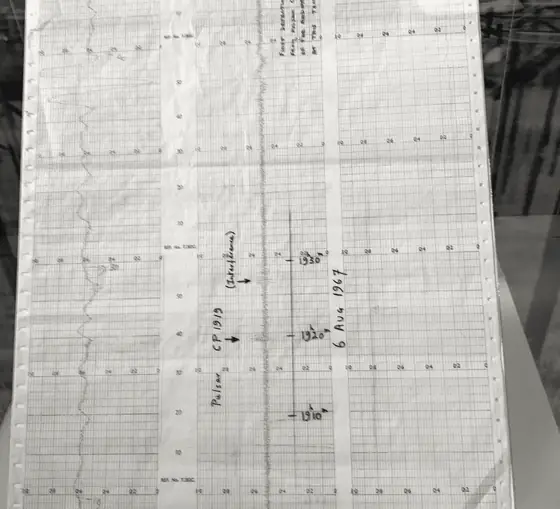
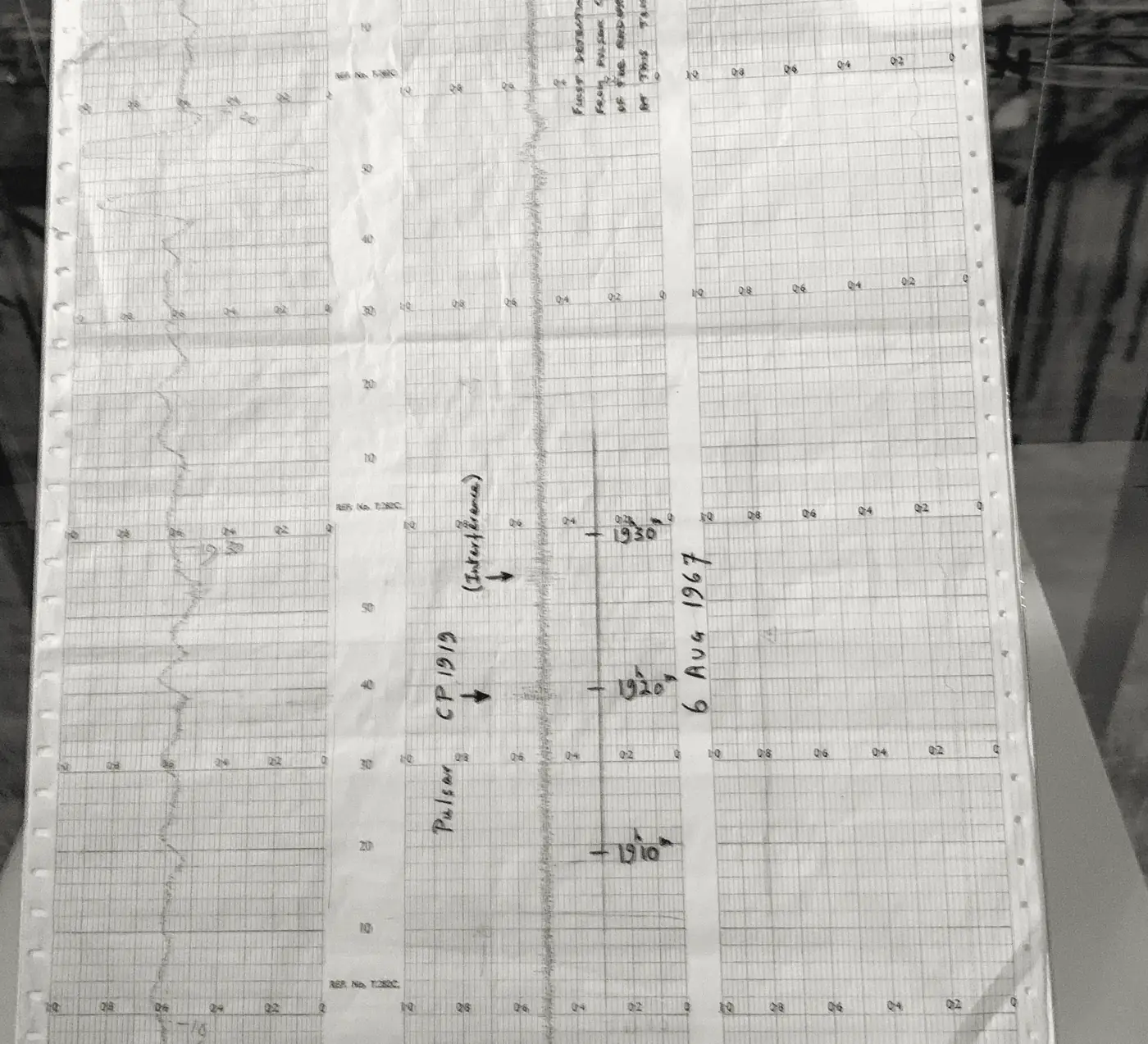
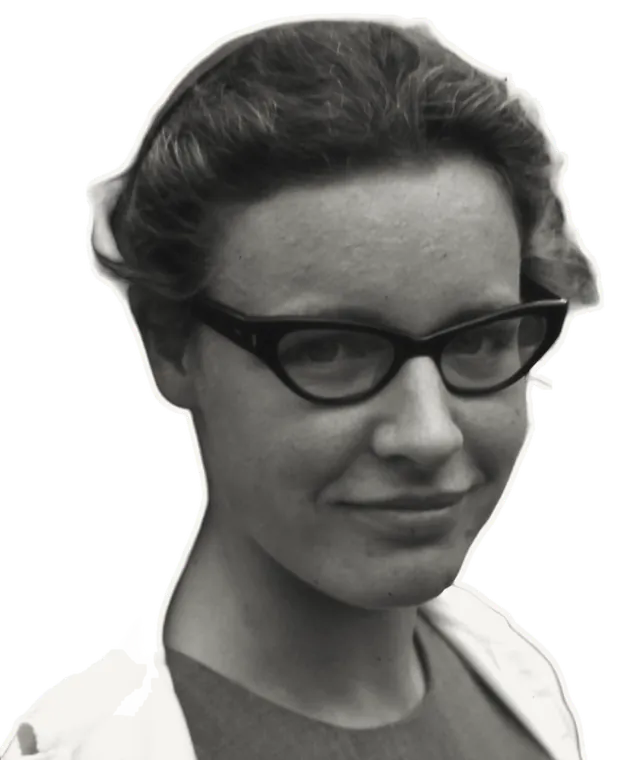
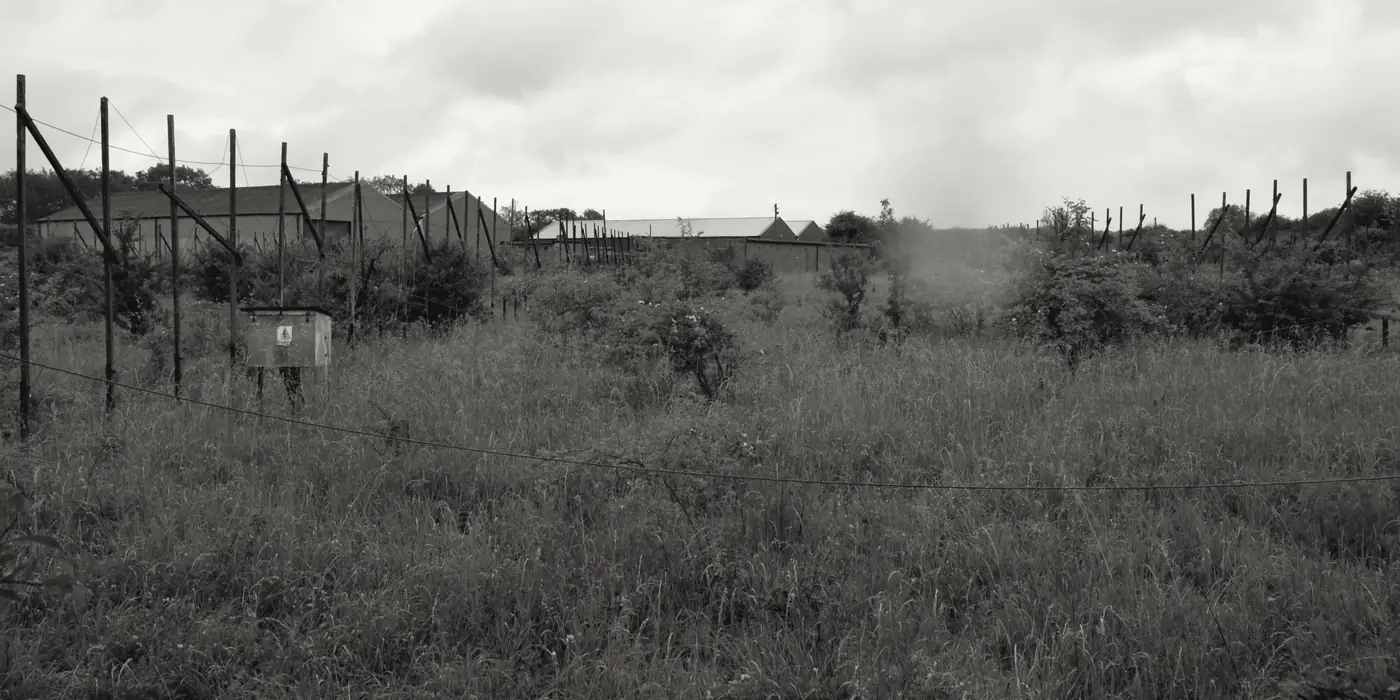
Jocelyn Bell Burnell was examining radio-telescope chart records at Cambridge in 1967 when she noticed a recurring feature that deserved closer attention. The telescope had been built for a different investigation, so a new class of astronomical object was not the default explanation. Interference and equipment behavior were practical possibilities. Bell Burnell’s follow-up work revealed rapid, regular pulses, and further sources complicated any explanation based on one faulty component or one unique emitter. This case asks you to decide which observations discriminate among those possibilities. It also separates the first detection from the later rotating-neutron-star interpretation. Do not read later certainty back into the discovery paper: its authors still considered more than one kind of compact star. The choices below are modern reasoning prompts, not quotations from the research team.
The timeline
Bell Burnell identifies unusual recurring chart features while working as a Cambridge postgraduate researcher.
Fast recording resolves the first source into a train of pulses.
Hewish, Bell, Pilkington, Scott, and Collins publish the discovery paper.
Rotating neutron-star interpretations develop as further observations establish the new source class.
A researched reconstruction for learning. These reasoning steps simplify a complex record; no score can capture the full history.
02 · The evidence
What does the record show?
Read each exhibit before settling on an explanation. The numbered source links below every exhibit lead to the record behind it.
A celestial address
Bell Burnell recognized that the unusual feature recurred from a particular part of the sky. That made its observing geometry worth testing rather than dismissing the feature as generic noise.
Source record [s1]
Resolve the timescale
Faster recording revealed pulses about 1.3 seconds apart. A slow display can hide structure that becomes obvious when the measurement has sufficient time resolution.
Source record [s1]
Propagation matters
The discovery paper reports frequency-dependent arrival behavior. Dispersion is relevant evidence about propagation through ionized material; pulse regularity alone does not locate an emitter.
Source record [s2]
Not an instant solved mechanism
The 1968 paper discussed compact stellar possibilities, including white dwarfs and neutron stars. The discovery of periodic radio emission was firmer than an immediate, complete account of its engine.
Source record [s2]
03 · Your reasoning
Follow the strongest explanation.
Choose an interpretation, then compare it with the evidence. You can revise your choice. The goal is understanding, not a perfect score.
04 · The findings
The chain behind the outcome.
The small chart feature became a new astronomical source class through persistence, improved time resolution, and tests of where the signal came from. Bell Burnell’s recognition and follow-up were central; the published work also involved Hewish, Pilkington, Scott, and Collins. A responsible account does not replace this process with an alien-message story. Extremely regular pulses prompted questions, but regularity was not evidence of intelligence. The accepted pulsar picture is a rotating neutron star whose radiation beam periodically crosses Earth’s direction. It explains a clock-like observed signal without demanding that the whole star repeatedly vanish or explode. Importantly, the detection and this mechanism were not one instantaneous conclusion. The early paper retained alternatives. The investigative lesson is to preserve that sequence: notice structure, establish that it is real and celestial, then compare physical models capable of producing it.
Take the method with you
- Recording resolution can determine whether a pattern is visible.
- Regularity is not evidence of intention.
- A secure discovery can precede a secure explanation.
You can read findings at any time. Exploring every reasoning step marks this case as complete in your notebook.
The open record
Sources & further reading
Read the original record and its scope before relying on a conclusion. Source references support the exhibit summaries; Faultory’s reasoning prompts are editorial reconstructions.
- s1University of Cambridge: Bell Burnell and pulsars
www.cam.ac.uk
- s2Hewish, Bell et al.: Original 1968 paper, Cornell-hosted copy
hosting.astro.cornell.edu
- s3
Written and curated for Faultory by Yunus Emre Vurgun, with AI-assisted research and drafting. Sources and interpretations can need correction. Read our editorial standards or report an issue.
Keep investigating