Your browser cannot save progress right now. You can still investigate; keep this tab open or enable local storage to save.
This case has been updated. Compatible choices are kept; revisit the evidence before drawing your conclusion.
01 · The briefing
Begin with the question.
During the 1930s, dust storms swept across the southern Great Plains, including Oklahoma and Texas. The drought of the period was among the most severe on record for many parts of the region. Two stories compete. The first is climatic: a long drought dried the surface, and high winds lifted it. The second concerns land use: from 1909 to 1929 farmers broke out about 32 million acres of Great Plains sod, removing the native grassland that had held the soil in place. Neither story is complete alone.
The sharpest single event was Black Sunday, 14 April 1935, when a large dust storm struck the Oklahoma panhandle and then towns farther east. Popular accounts treat that storm as the Dust Bowl itself. That invites a different mistake: taking one dramatic day as the cause of a decade of damage. A third thread concerns the response. In 1935 Congress established a Soil Conservation Service, with Hugh Hammond Bennett, a campaigner against soil erosion, as its first chief.
This investigation asks three things: whether drought or land use better explains the scale of the dust, what distinguishes a storm event from a long process, and what the 1935 response assumed about the cause.
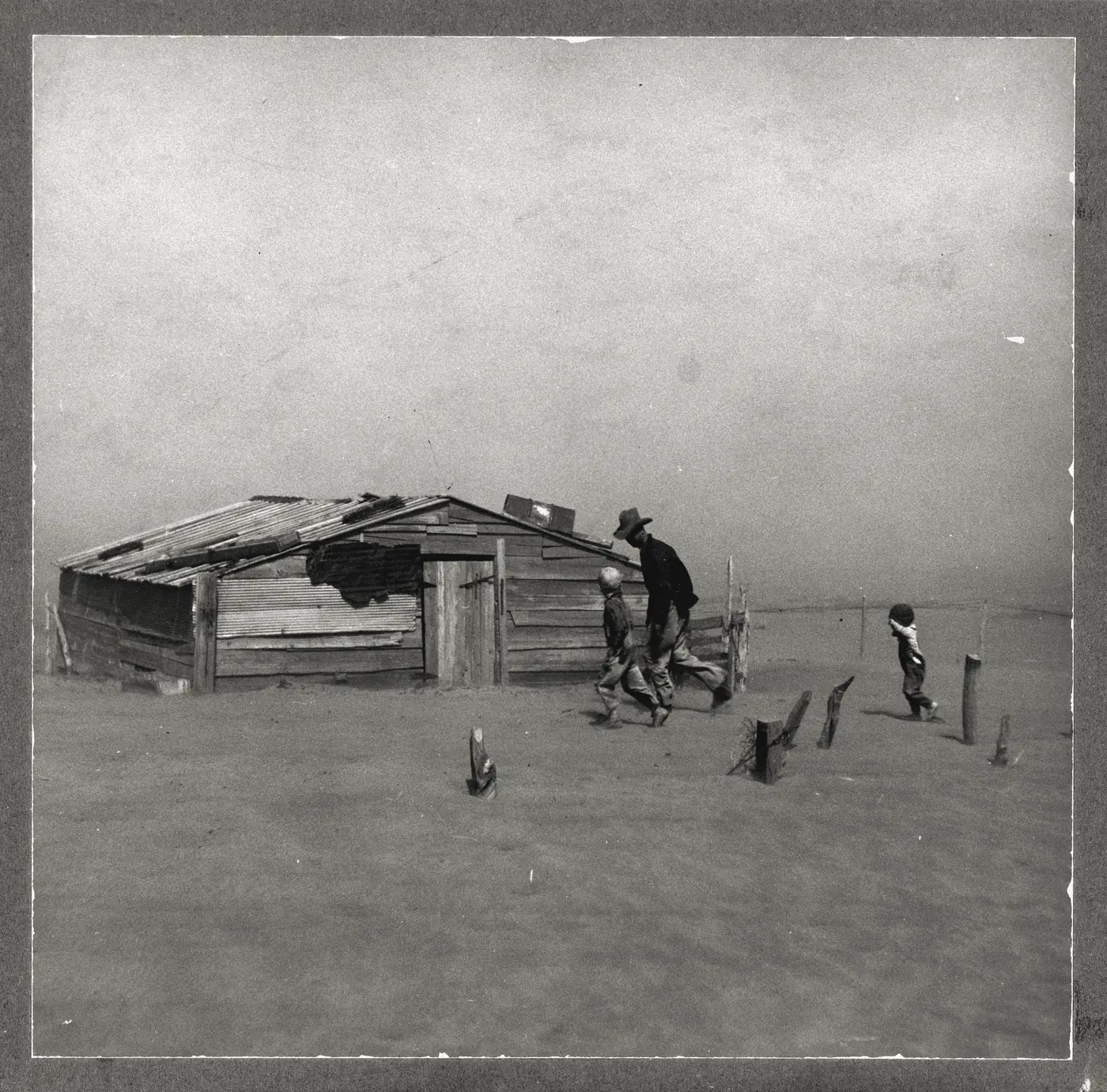

The timeline
Farmers break out about 32 million acres of sod in the Great Plains.
Dry weather begins; the drought is later described as the most severe on record for many parts of the Great Plains.
Black Sunday: a large dust storm reaches the Oklahoma panhandle around 4 p.m., Boise City at about 5:15 p.m. and Amarillo at 7:20 p.m.
The Soil Conservation Act is approved, directing the Secretary of Agriculture to establish a Soil Conservation Service.
Hugh Hammond Bennett becomes the first chief of the Soil Conservation Service.
A researched reconstruction for learning. These reasoning steps simplify a complex record; no score can capture the full history.
02 · The evidence
What does the record show?
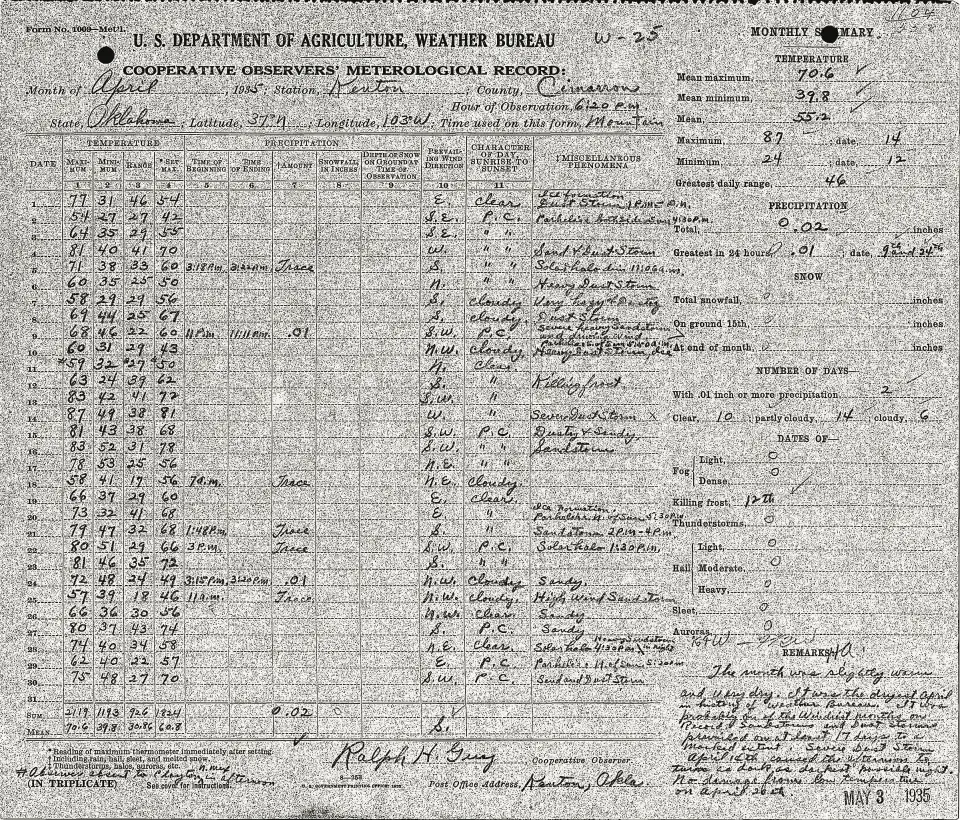
Read each exhibit before settling on an explanation. The source links below every exhibit lead to the record behind it.
Exhibits reviewed 0 of 5
Land cover removed
The Oklahoma Historical Society describes farmers breaking out about 32 million acres of Great Plains sod between 1909 and 1929. Once the native grassland was gone, dry conditions and high winds made the topsoil more susceptible to wind erosion. The entry establishes a change in land cover. It does not measure how much of the dust each factor produced.
Source record s2okhistory.org
A drought of record
The same Oklahoma Historical Society entry calls the 1930s drought the most severe on record for many parts of the Great Plains. The dry weather began in the early 1930s and persisted into the early 1940s in some areas. Duration and severity are documented, but drought alone does not explain why the topsoil moved.
Source record s2okhistory.org
Black Sunday as one event
The National Weather Service office in Norman describes the Black Sunday dust storm of 14 April 1935 as a wall of blowing dust, with winds in the panhandle upward of 60 miles per hour. It gives arrival times at Beaver, Boise City and Amarillo, and notes that some reports differ. The storm documents an event. It does not show the cause of years of erosion.
Source record s1weather.gov
A statute, not a storm
The Soil Conservation Act, approved 27 April 1935, directs the Secretary of Agriculture to establish a Soil Conservation Service, and allows it to use the organisation already administering the soil-erosion provisions of the National Industrial Recovery Act. The statute sets the agency's purpose as erosion prevention. It does not itself state a theory of why the storms happened.
Source record s3govinfo.gov
The person behind the policy
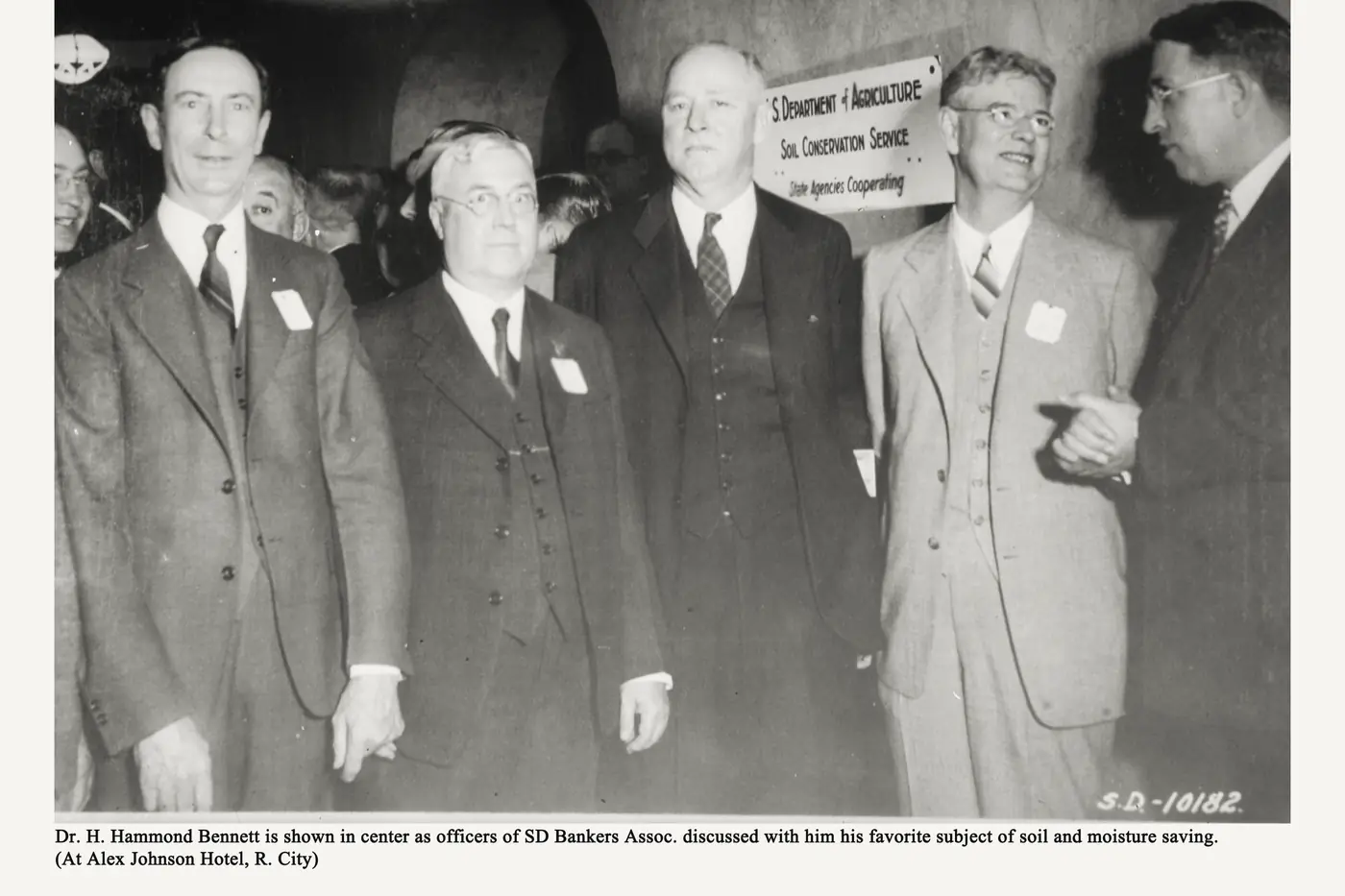
A Virginia historical marker, listed in the Historical Marker Database, says Bennett joined the Bureau of Soils in 1903, came to link erosion with soil quality after a 1905 survey, campaigned nationally, and was the first chief of the Soil Conservation Service. A marker is a secondary summary, so its claims are checked against the statute rather than taken as proof of his influence.
Source record s4hmdb.org
03 · Your reasoning
Follow the strongest explanation.
Choose an interpretation, then compare it with the evidence. You can revise your choice. The goal is understanding, not a perfect score.
04 · The findings
The chain behind the outcome.
Your notebook
Case report
Next in history & systems: What the film could show
The sources support a combined mechanism rather than a single trigger. A long drought of record dried the surface, and high winds could then move soil that was no longer held by grass. Before the drought, the native grassland had been widely broken for cultivation: the Oklahoma Historical Society describes about 32 million acres of Great Plains sod broken between 1909 and 1929. Once that cover was removed, the same winds could lift soil that the grassland had once anchored. This sequence is a reconstruction supported by the sources, though they do not measure the share of dust produced by each factor.
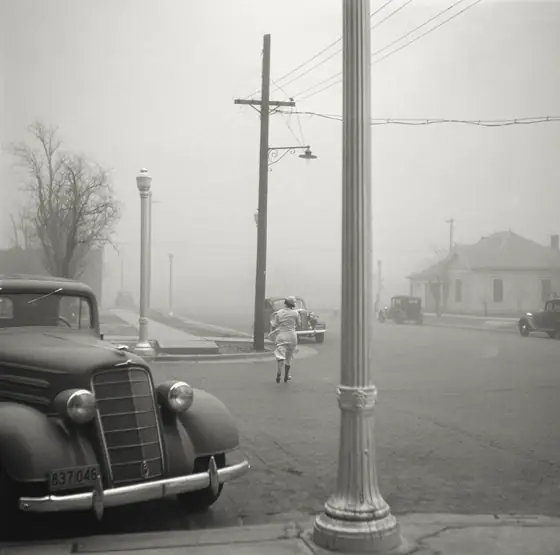
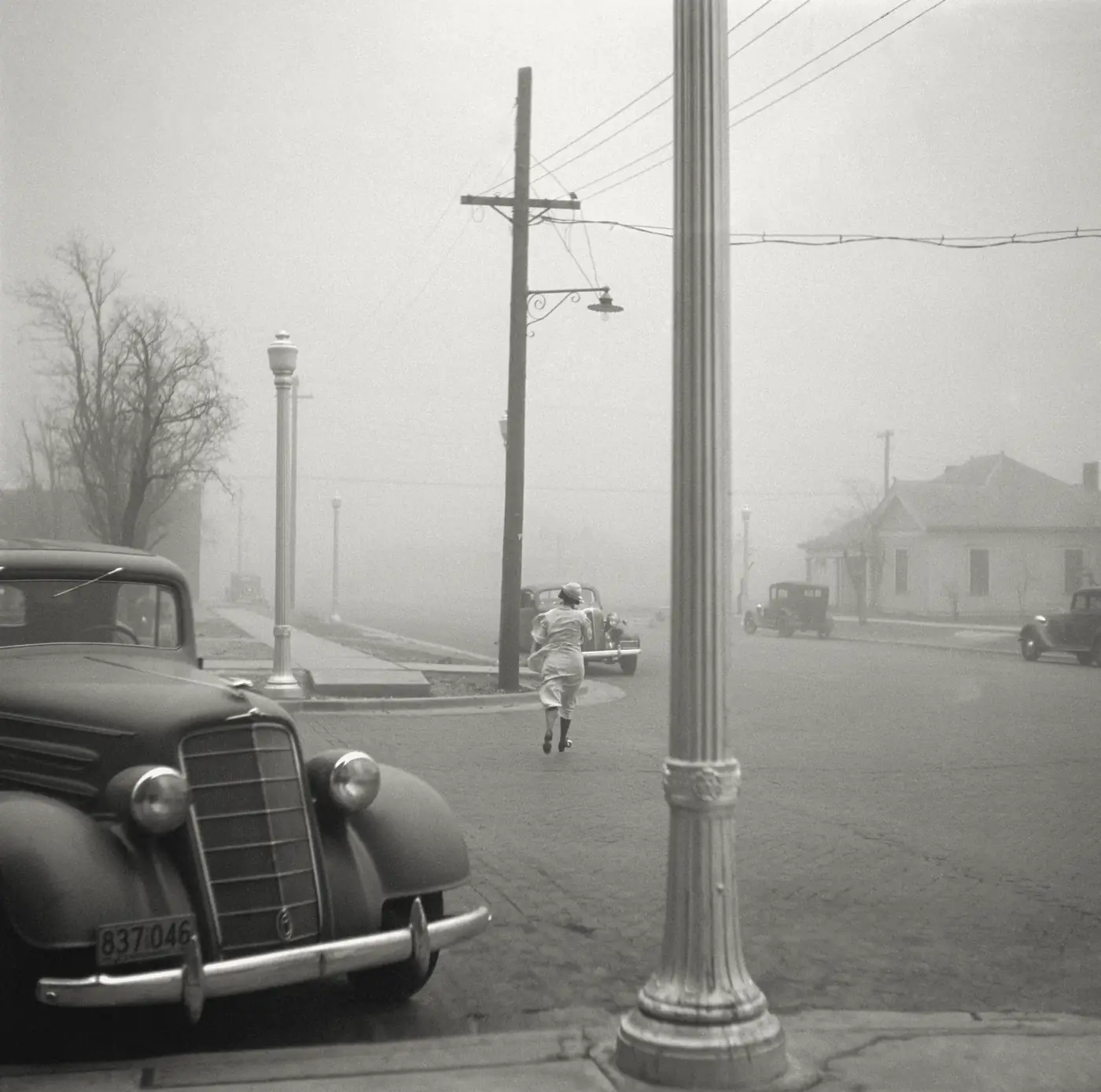
Black Sunday, 14 April 1935, dramatised the problem. The National Weather Service describes a wall of blowing dust with winds upwards of 60 miles per hour, moving through towns in the afternoon and evening. It is a vivid event but not the whole story. The Dust Bowl was a sequence of many storms over years, and a record of one storm cannot establish its cause.
The federal response reflected the land-use reading. The Soil Conservation Act of 27 April 1935 established a service to prevent soil erosion, and Hugh Hammond Bennett became its first chief. The policy frames erosion as something that land practice and federal programmes can manage, rather than something to be waited out with the next rainfall.
The lesson is that a hazard is seldom a single cause. The reasoning implies, but the sources do not test, that the same drought would have done less damage under grass cover. That is why the response targeted land management as well as weather.
Contributing causes and conditions
- A long drought of record dried the surface of the southern Plains.
- Large-scale breaking of native grassland between 1909 and 1929 removed the protective cover.
- High winds, including the storm of 14 April 1935, moved the exposed topsoil.
- Repeated storms over several years, not one event, produced the decade of damage.
- The 1935 response treated erosion as a land-management problem for a Soil Conservation Service.
OutcomeDust Bowl
Take the method with you
- A single dramatic event is evidence of a condition, not necessarily its cause.
- Two factors can each be necessary without either being sufficient on its own.
- A policy response reveals the causal model its designers held, so check what they assumed.
You can read findings at any time. Exploring every reasoning step marks this case as complete in your notebook.
The open record
Sources & further reading
Read the original record and its scope before relying on a conclusion. Source references support the exhibit summaries; Faultory’s reasoning prompts are editorial reconstructions.
- s1
- s2
- s3
- s4
Written and curated for Faultory by Yunus Emre Vurgun, with AI-assisted research and drafting. Sources and interpretations can need correction. Read our editorial standards or report an issue.
Keep investigating