Your browser cannot save progress right now. You can still investigate; keep this tab open or enable local storage to save.
This case has been updated. Compatible choices are kept; revisit the evidence before drawing your conclusion.
01 · The briefing
Begin with the question.
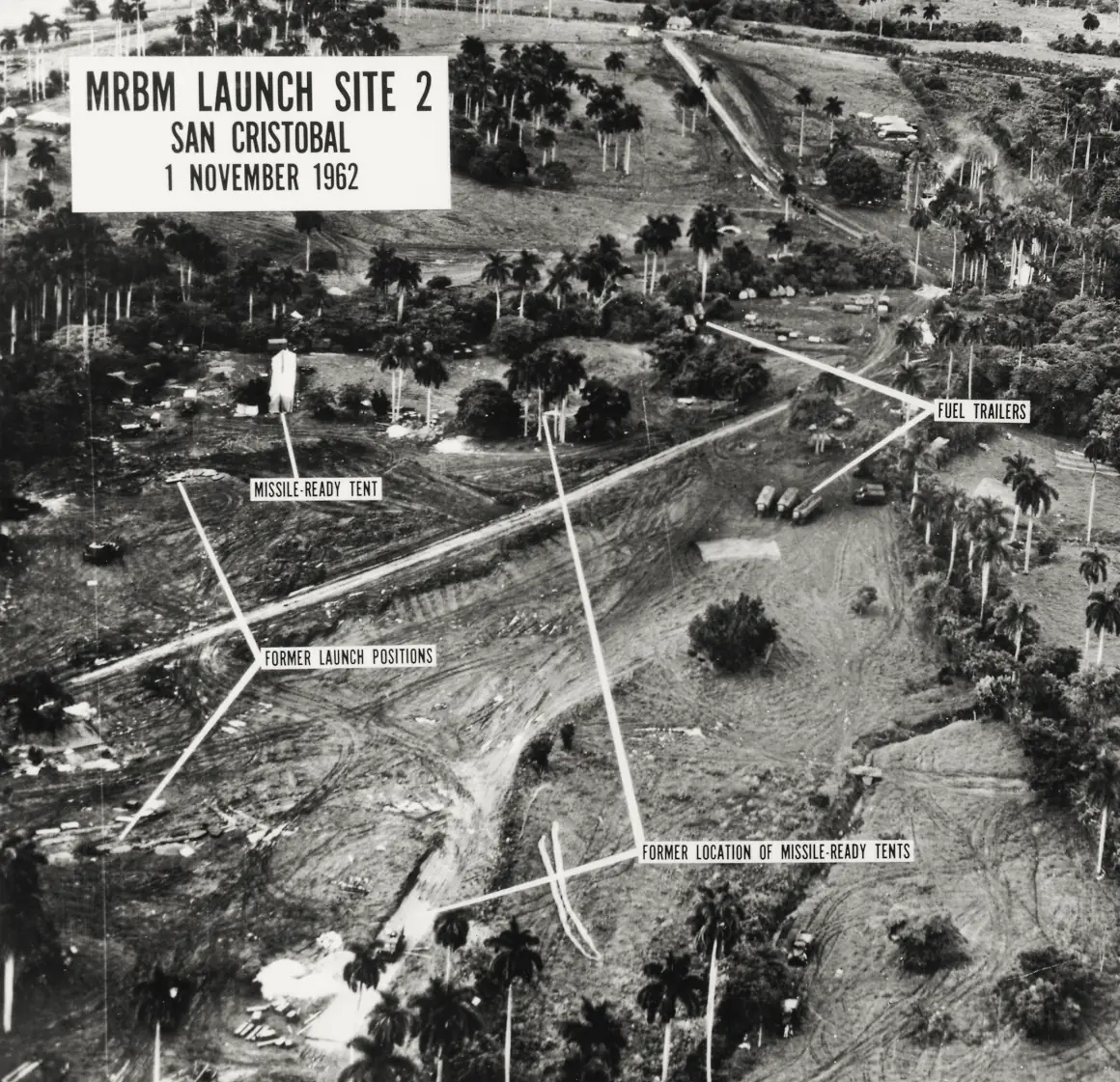
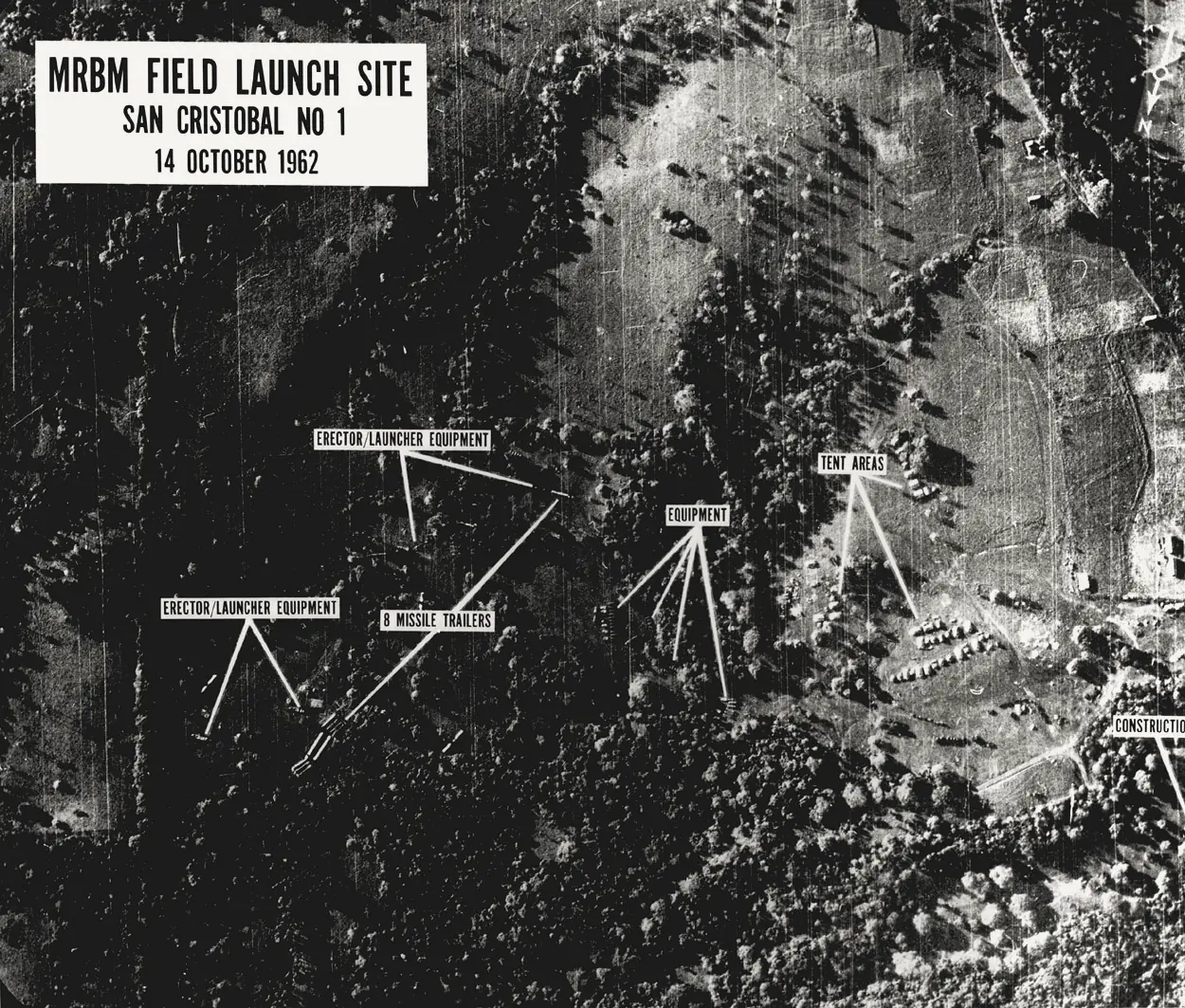
On 14 October 1962, a U-2 reconnaissance aircraft flew over western Cuba and photographed areas where Soviet equipment had been arriving for months. Photographic analysts at the CIA's National Photographic Interpretation Center, led by Arthur Lundahl, had to read the film quickly. The question was not simply whether something was being built. It was what the structures were: air defence, ordinary encampments, or sites for medium-range ballistic missiles whose range was itself a matter of judgement. A reasonable observer could read the images in three ways. The first treats the layouts as routine military construction. The second treats them as missile sites, but only if the equipment can be matched to missiles. The third treats the photographs as proof that nuclear weapons were already on the island. Your investigation separates what the film recorded directly, the judgements analysts reached by comparison with known Soviet hardware, and the conclusions no photograph could establish by itself. Pay attention to the dates, because the sources do not agree on every step between flight, processing and presentation to the president.
The timeline
A key reconnaissance mission finds surface-to-air missile sites on the island, according to Dino Brugioni's recollection.
A U-2 flight photographs sites for medium- and intermediate-range ballistic missiles under construction in Cuba.
The film is processed, and by that afternoon analysts have identified the first launch site.
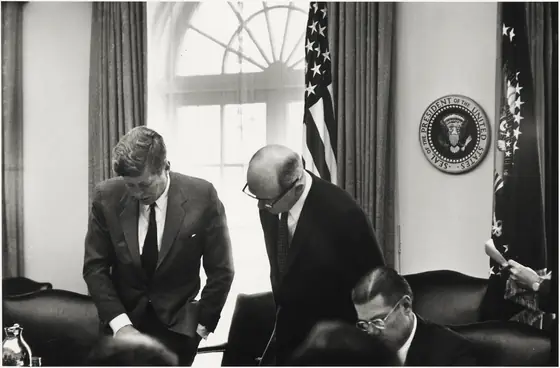
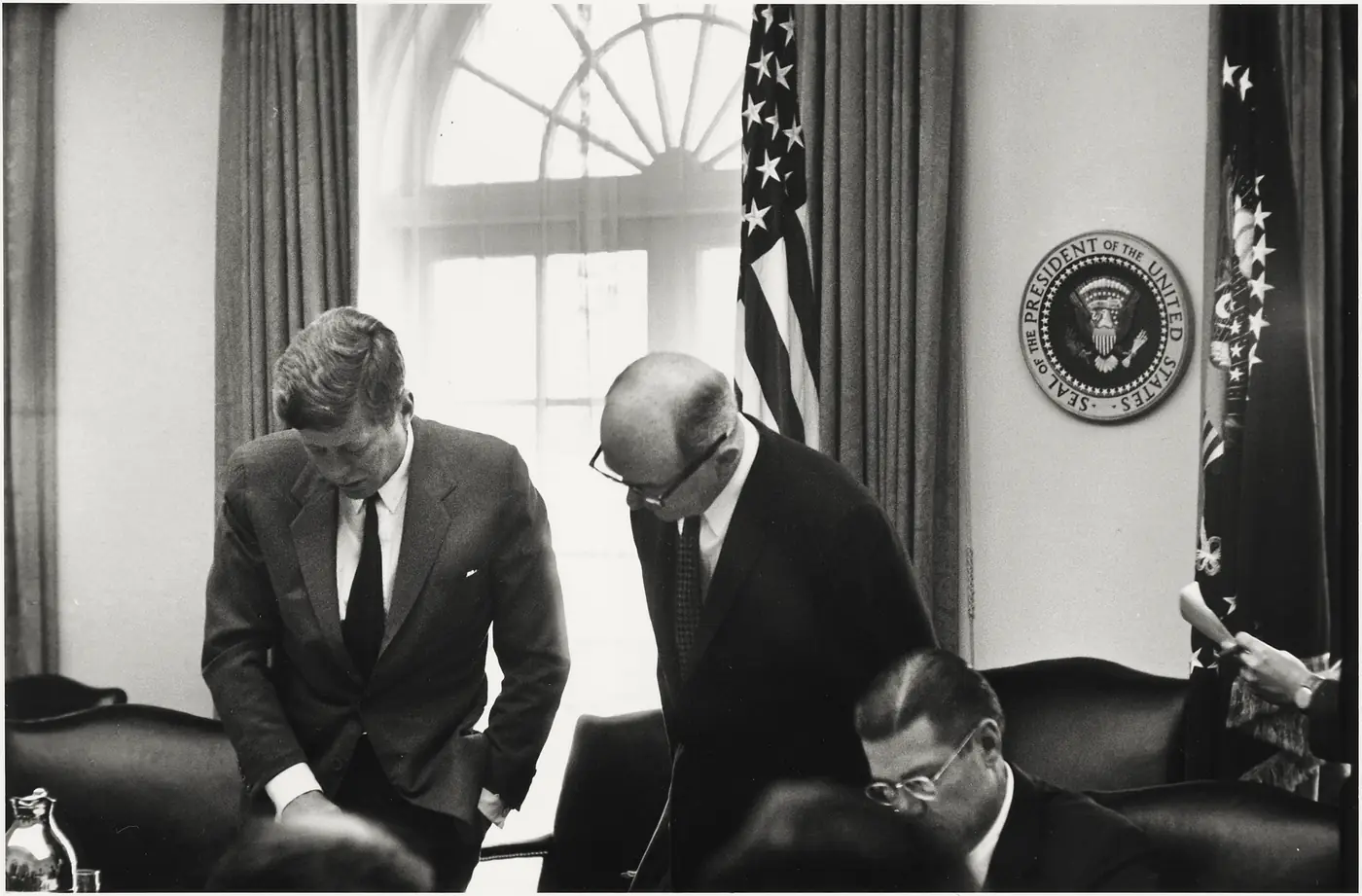
The photographs are shown to President Kennedy; the Library's transcript records an evening meeting on Cuba from 6:30 to 7:55 p.m., at which the photographic read-out is discussed.
Kennedy publicly announces the missile sites and orders a naval 'quarantine' of Cuba.
A researched reconstruction for learning. These reasoning steps simplify a complex record; no score can capture the full history.
02 · The evidence
What does the record show?
Read each exhibit before settling on an explanation. The source links below every exhibit lead to the record behind it.
Exhibits reviewed 0 of 5
A dated reconnaissance flight
The State Department's summary says that on 14 October a U-2 took several pictures clearly showing sites for medium- and intermediate-range ballistic missiles under construction, and that the images reached the White House the next day. That fixes the flight and the subject of the photographs. It does not settle every later step, and the NSA's briefing book dates one San Cristobal photograph to 15 October.
Source record s1history.state.gov
Equipment matched to Soviet hardware
At the 16 October meeting, the official giving the read-out, Carter (called General Carter elsewhere in the transcript), reported back-up missiles for each of the four launchers at each of the three sites. He said the signatures were identical with Soviet missile hardware that had been fully verified. He also said there was no evidence whatsoever of nuclear warhead storage near the field launchers, which is a statement about what was seen, not about what was absent elsewhere.
Source record s2microsites.jfklibrary.org
Range came from comparison
Bundy asked how anyone knew what the missiles were and what their range was. Carter answered that the judgement rested on Soviet range firings reviewed over two years and on comparison of size, length and diameter with American missiles and a family of Soviet missiles. McNamara said he had tried to prove the sites were not medium-range missiles and could not. The photographs themselves carried no range figure; the range was an inference from reference data.
Source record s2microsites.jfklibrary.org
Reproduction and measurement
Sherman Kent, writing a decade later about the photographic briefings, said the analysts had excellent reproductions and used multi-power stereoscopic viewers to measure objects in feet and fractions of feet. That allowed them to estimate the size of equipment, but a measured object still had to be matched to a reference before it could be named. The account is a retrospective excerpt published by the National Security Archive, not a contemporary log of each judgement.
Source record s3nsarchive.gwu.edu
A recollection of the work
Dino Brugioni, a photo interpreter who worked with Lundahl, recalled that the 14 October mission was processed by the Navy and read on the 15th, that by the afternoon analysts had found one site, and that two sites were later judged to be SS-4 sites. He described Lundahl telling the team to work through the night. The interview was recorded decades later, so its vivid detail should be weighed as memory rather than as a contemporary record.
Source record s4nsarchive.gwu.edu
03 · Your reasoning
Follow the strongest explanation.
Choose an interpretation, then compare it with the evidence. You can revise your choice. The goal is understanding, not a perfect score.
04 · The findings
The chain behind the outcome.
Your notebook
Case report
Next in history & systems: The tent under the shoulder
The central lesson is that the photographs recorded things that could be seen, and the missile judgement came from matching those things to reference data. A U-2 flight on 14 October produced images of launch-related equipment (erector-launchers, missile trailers, tents and support vehicles) at sites under construction. Analysts counted and measured these features with stereoscopic viewers and compared them with known Soviet systems. The read-out reported back-up missiles for each launcher at each of three sites, while the range came from a different kind of evidence: Soviet firing records and the size of known missile families. The judgement was built on a comparison set, not read from the film. The film could not show what lay outside the frame or inside a crate or building. The meeting on 16 October recorded that there was no evidence of nuclear warhead storage near the field launchers, which is a limit on the evidence, not proof that warheads were absent from the island. Operational timing was also an estimate, ranging from six hours to about two weeks depending on assumed set-up times. Some points are well documented: the 14 October flight, the 16 October meeting and the quarantine announced on 22 October. Others depend on recollection or on dates that differ between accounts, including the day of processing and when images reached the White House. The defensible version is narrow. Photo interpretation identified missile-related equipment, and the sources describe that identification as checked against Soviet hardware, while range, readiness and warheads depended on other evidence.
Contributing causes and conditions
- A U-2 flight on 14 October photographed launch-related equipment and tents at sites under construction.
- Analysts matched the layouts and equipment against reference data on known Soviet missiles.
- Range was inferred from Soviet firing records and dimensional comparisons, not read directly from the film.
- The film recorded hardware and layout, but not warheads, storage or operational readiness.
- Briefings required judgements under time pressure, with competing estimates of how quickly the sites could be made operational.
OutcomeCuban Missile Crisis
Take the method with you
- An identification from recognisable equipment is a judgement built on reference data, and its strength depends on the comparison set.
- What a photograph does not show is a separate question, and an absence in the frame is not proof that something is absent.
- Keep each date tied to its event, because a briefing that merges processing, presentation and decision can blur what was actually known.
You can read findings at any time. Exploring every reasoning step marks this case as complete in your notebook.
The open record
Sources & further reading
Read the original record and its scope before relying on a conclusion. Source references support the exhibit summaries; Faultory’s reasoning prompts are editorial reconstructions.
- s1
- s2John F. Kennedy Presidential Library — Off the Record Meeting on Cuba, 16 October 1962 (transcript)
microsites.jfklibrary.org
- s3
- s4
Written and curated for Faultory by Yunus Emre Vurgun, with AI-assisted research and drafting. Sources and interpretations can need correction. Read our editorial standards or report an issue.
Keep investigating