Your browser cannot save progress right now. You can still investigate; keep this tab open or enable local storage to save.
This case has been updated. Compatible choices are kept; revisit the evidence before drawing your conclusion.
01 · The briefing
Begin with the question.
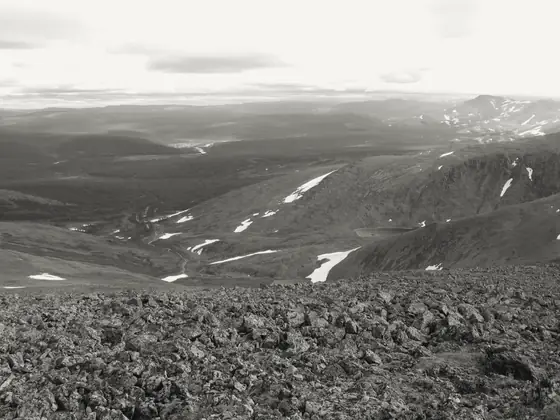
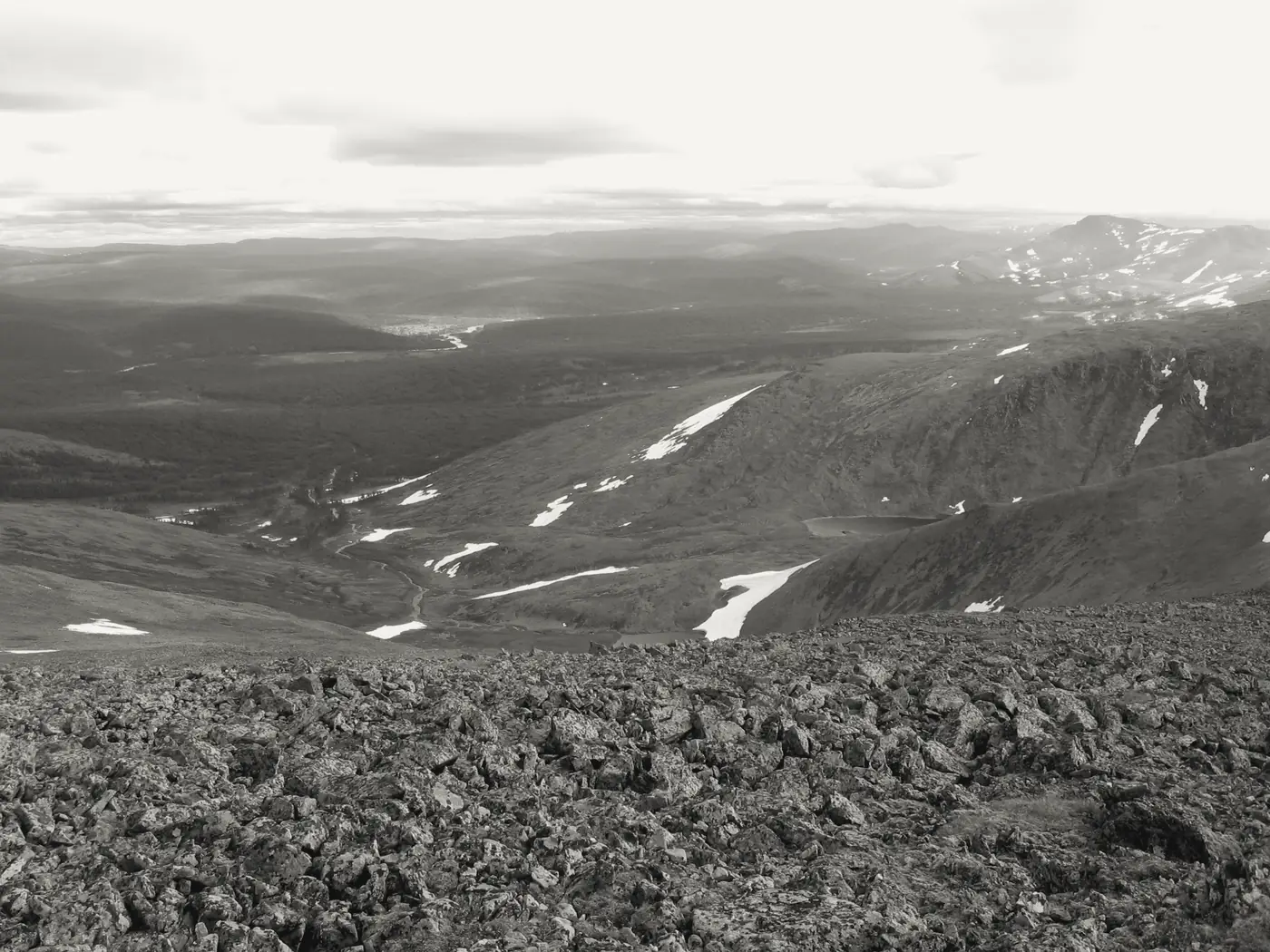
In late January 1959, a group of ten skiers led by Igor Dyatlov set out on a winter route into the northern Ural Mountains. One member turned back on 28 January. The other nine camped on the slope of Kholat Syakhl, a mountain whose name is often translated as Dead Mountain. The group died during the night of 1 February. Searchers found the tent on 26 February, badly damaged, and some of the dead had serious chest and skull injuries.
The official criminal case was closed in May 1959, citing a spontaneous force. For six decades, explanations have ranged from an avalanche to hypotheses that no official record supports. In 2020, Russian prosecutors announced that an avalanche had caused the deaths, and in 2021 a physical study proposed a specific slab mechanism. This investigation asks what that mechanism can reproduce, what it cannot, and how the official conclusion should be weighed against the physical evidence.
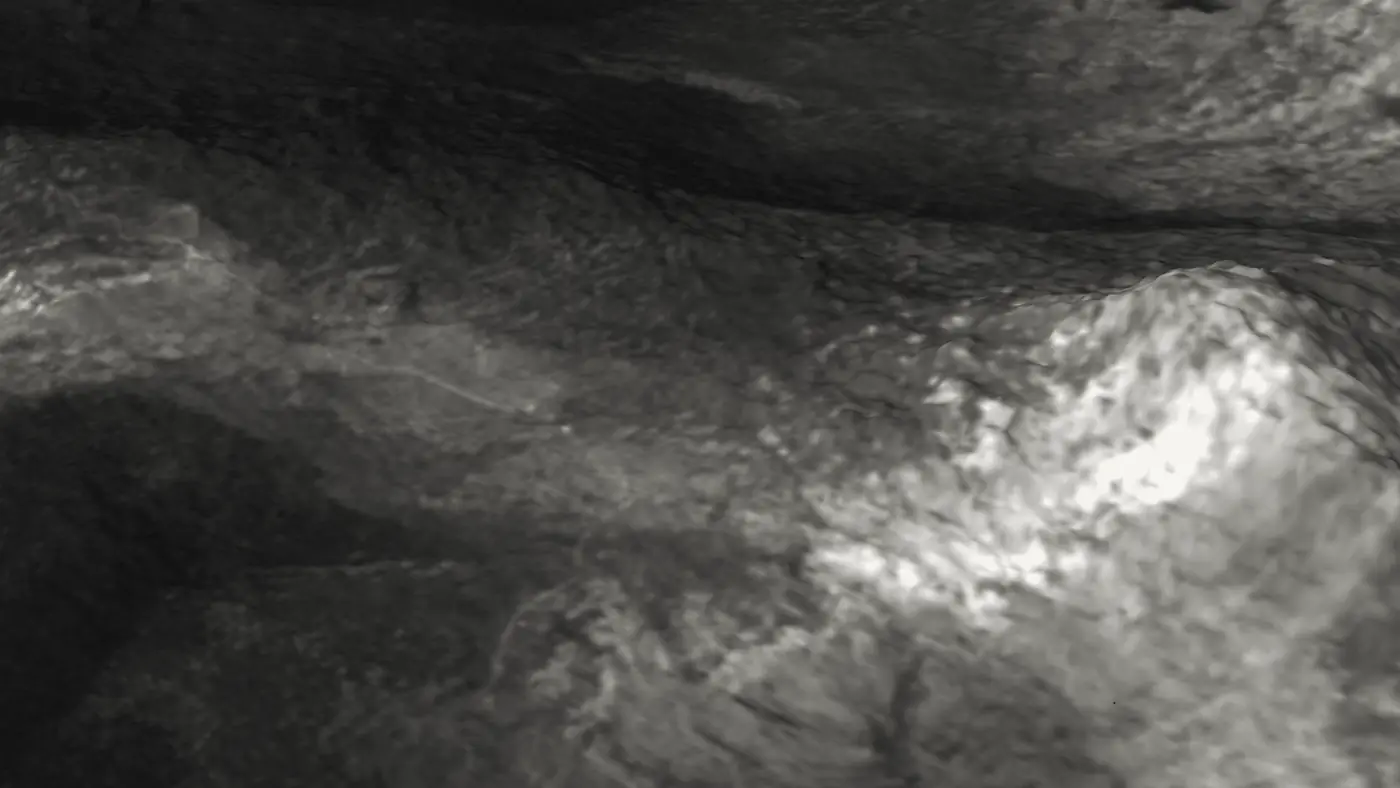

The timeline
A group of ten sets out on a winter route in the northern Urals; one member turns back on 28 January.
The remaining nine die during the night of 1 February on the slope of Kholat Syakhl.
The search team finds the group's tent, badly damaged, on the slope.
The criminal case is closed, citing a spontaneous force.
Russian prosecutors announce that an avalanche triggered by a sudden weather change caused the deaths.
Gaume and Puzrin publish a slab avalanche model for the tent site in Communications Earth & Environment.
A researched reconstruction for learning. These reasoning steps simplify a complex record; no score can capture the full history.
02 · The evidence
What does the record show?
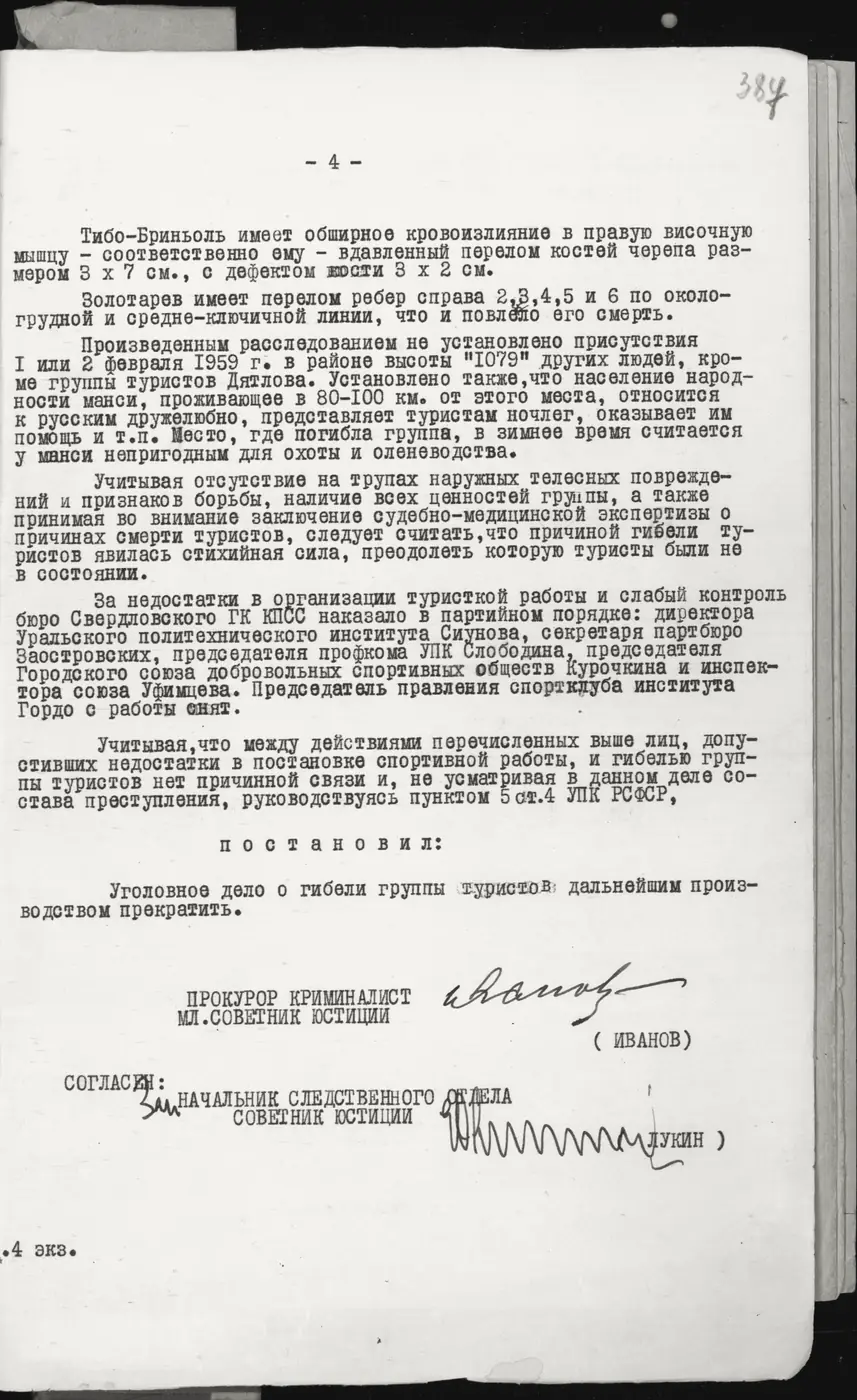
Read each exhibit before settling on an explanation. The source links below every exhibit lead to the record behind it.
Exhibits reviewed 0 of 5
The objections an avalanche must meet
The EPFL press release of 28 January 2021 reports that the search team found no obvious evidence of an avalanche or debris, and that the average slope above the tent site was less than 30 degrees, not steep enough for an avalanche. It also says that the chest and skull injuries seen on some victims were not typical of avalanche victims. This establishes the main objections any avalanche explanation has to meet. It does not establish that no avalanche occurred, because the release presents the modelling as a plausible explanation rather than a verdict.
Source record s2actu.epfl.ch
A local slope and a delayed release
Gaume and Puzrin model a tent placed under a shoulder on a locally steeper slope, where a buried weak layer under a thin slab could be cut when the group installed the tent. Wind-carried snow then adds load over hours, and the model back-calculates the wind deposition needed to reproduce a delay of 9.5 to 13.5 hours derived from forensic data. This establishes that a delayed release is physically possible under the stated assumptions. It does not establish what happened inside the tent or after the group left it.
Source record s1nature.com
A simulated impact on the chest
For the injuries, Gaume and Puzrin simulate a slab reaching a velocity of about 2 m/s on impact. Their simulated thorax deforms by 28 to 34 per cent, which they compare with the lower range of crash-test values, and they describe the result as severe but non-fatal injuries in agreement with the autopsy. This establishes that the modelled impact is within a plausible range for thoracic injuries. It does not show that a slab reached the victims, and the model addresses the thorax only, not the skull.
Source record s1nature.com
The 2020 official conclusion
A Reuters report, preserved in a January 2021 web-archive copy, says Russia blamed an avalanche for the 1959 deaths, citing the RIA news agency and Andrey Kuryakov, deputy head of the regional prosecutor's office. It says that lack of visibility then prevented the group's return. This establishes the official 2020 explanation as reported. It does not establish that the physical evidence was reviewed in public, and it reflects the official account rather than independent analysis.
Source record s3web.archive.org
What the official account says, and who rejects it
Russia Beyond reports that Andrey Kuryakov announced on 11 July 2020 that an avalanche triggered by a sudden weather change caused the deaths, that the hikers died of frostbite and of fractures caused by the weight of the snow. It quotes a lawyer for the Dyatlov group memorial fund saying that relatives will not accept the conclusion, and it notes that the case was closed in May 1959 citing a spontaneous force that humans were unable to overcome. This establishes the 2020 position and the memorial fund's objection. It does not establish the physical mechanism of the avalanche.
Source record s4rbth.com
03 · Your reasoning
Follow the strongest explanation.
Choose an interpretation, then compare it with the evidence. You can revise your choice. The goal is understanding, not a perfect score.
04 · The findings
The chain behind the outcome.
Your notebook
Case report
Next in history & systems: Gears inside the rust
The best-supported reading is that a slab avalanche could have been part of what happened on the slope, but that it does not explain everything. Gaume and Puzrin's 2021 model shows how a tent placed under a shoulder on a locally steep slope could cut a snow slab that fails hours later, as wind-deposited snow adds load. Their back-calculation uses a delay of 9.5 to 13.5 hours derived from forensic data, and their simulated impact reproduces a thorax deformation in a plausible range. Against this stand the objections that the EPFL release raises: no obvious debris was found, the average slope above the tent was less than 30 degrees, and the chest and skull injuries were not typical of avalanche victims. The model does not address the skull injuries, the radioactivity traces, the group's behaviour after leaving the tent, or the locations and states of the bodies, and the authors say so. Russian prosecutors announced an avalanche verdict in July 2020, which the memorial fund disputes. That verdict is a stated official position rather than a reconstruction of the physical evidence, and the questions above remain open.
Contributing causes and conditions
- A tent placed under a shoulder on a locally steeper slope, where the shoulder above controlled how snow was deposited
- A buried weak snow layer beneath a thin slab, which the group's cut could expose
- Wind-deposited snow loading the slab gradually over hours after the cut
- A release after a delay, with the slab not failing immediately
- A slab impact that can produce thoracic injuries in a simulation
- Unmodelled factors, including the skull injuries and events after the group left the tent
OutcomeDyatlov Pass deaths (1959)
Take the method with you
- Test a proposed mechanism against every observation it must explain, not only the headline one.
- A model that reproduces one feature is physically possible without being the only explanation.
- An official conclusion is a claim with a date and a basis, so check whether it answers the objections raised against it.
You can read findings at any time. Exploring every reasoning step marks this case as complete in your notebook.
The open record
Sources & further reading
Read the original record and its scope before relying on a conclusion. Source references support the exhibit summaries; Faultory’s reasoning prompts are editorial reconstructions.
- s1
- s2
- s3
- s4
Written and curated for Faultory by Yunus Emre Vurgun, with AI-assisted research and drafting. Sources and interpretations can need correction. Read our editorial standards or report an issue.
Keep investigating