Your browser cannot save progress right now. You can still investigate; keep this tab open or enable local storage to save.
This case has been updated. Compatible choices are kept; revisit the evidence before drawing your conclusion.
01 · The briefing
Begin with the question.
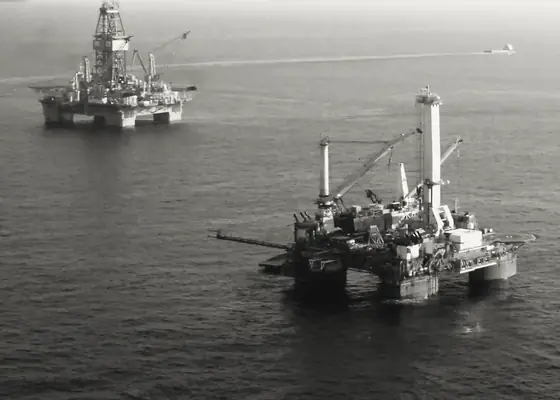
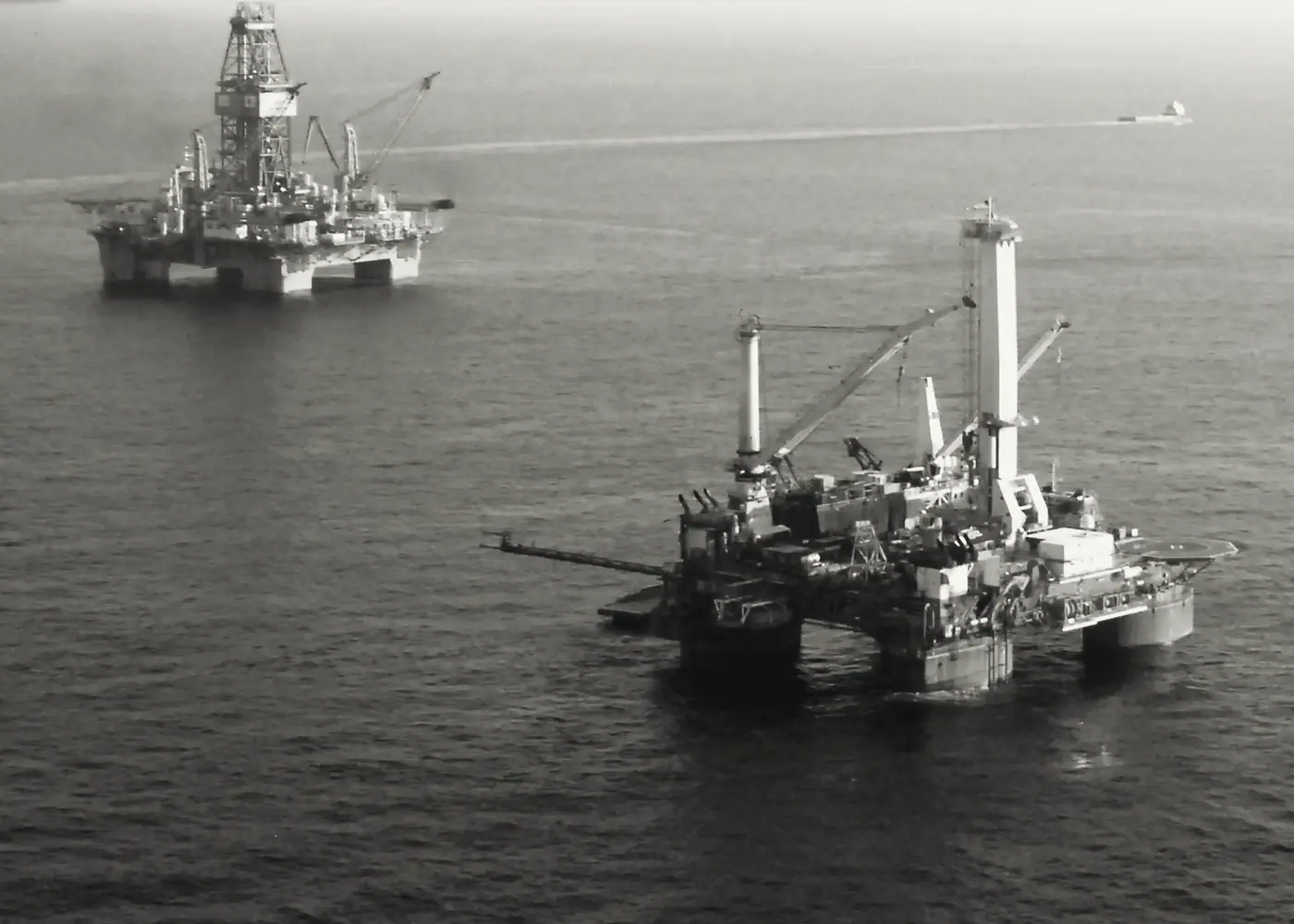
On 20 April 2010 the Deepwater Horizon, a drilling rig owned and operated by Transocean for BP in the Gulf of Mexico, was finishing the temporary abandonment of the Macondo well. Temporary abandonment means sealing a well so that it can be left safe until production returns. Before the crew could remove the heavy drilling mud that held back the reservoir's pressure, they had to confirm that the cement barrier at the bottom of the well was holding.
That night an explosion and fire killed 11 people, and the rig sank two days later, on 22 April. Afterwards several explanations were offered: that the cement had failed, that the blowout preventer had not closed, that the crew had misread a test, or that the wider system of rules and training had left the test without guidance. Two detailed reports exist. One is from the National Commission on the BP Deepwater Horizon Oil Spill and Offshore Drilling, published in January 2011. The other is the US Chemical Safety Board's investigation summary of 2016.
This investigation separates which of these explanations the evidence supports, and at which point in the sequence each one applies.
The timeline
At about 5 p.m. the crew begins a negative pressure test on the Macondo well, according to the National Commission.
At about 8 p.m. BP's well site leaders declare the second test a success, although the drill-pipe pressure had not been reconciled.
After the mud is removed, hydrocarbons flow past the failed cement barrier. The open blowout preventer is the only barrier, and its automatic controls do not close it for almost an hour.
An explosion and fire kill 11 people, according to the CSB summary.
The rig sinks, according to the National Commission.
The National Commission publishes its report on the Deepwater Horizon oil spill.
The CSB publishes the executive summary of its Macondo investigation report.
A researched reconstruction for learning. These reasoning steps simplify a complex record; no score can capture the full history.
02 · The evidence
What does the record show?
Read each exhibit before settling on an explanation. The source links below every exhibit lead to the record behind it.
Exhibits reviewed 0 of 4
Two readings from the same test
The National Commission's account describes two negative tests on the same night. On the drill pipe, the pressure stayed at 1,400 psi. On the kill line, a small amount of fluid flowed and stopped, and the crew then saw no flow for 30 minutes, which met the criteria for a successful test. The Commission says the 1,400 psi drill-pipe reading was never reconciled with this result and that, based on available information, it could only have been caused by a leak into the well. A footnote lists other possible explanations for the mismatch. The report establishes what the readings were, but not every step of the crew's reasoning.
Source record s1govinfo.gov
Factors the Commission identified
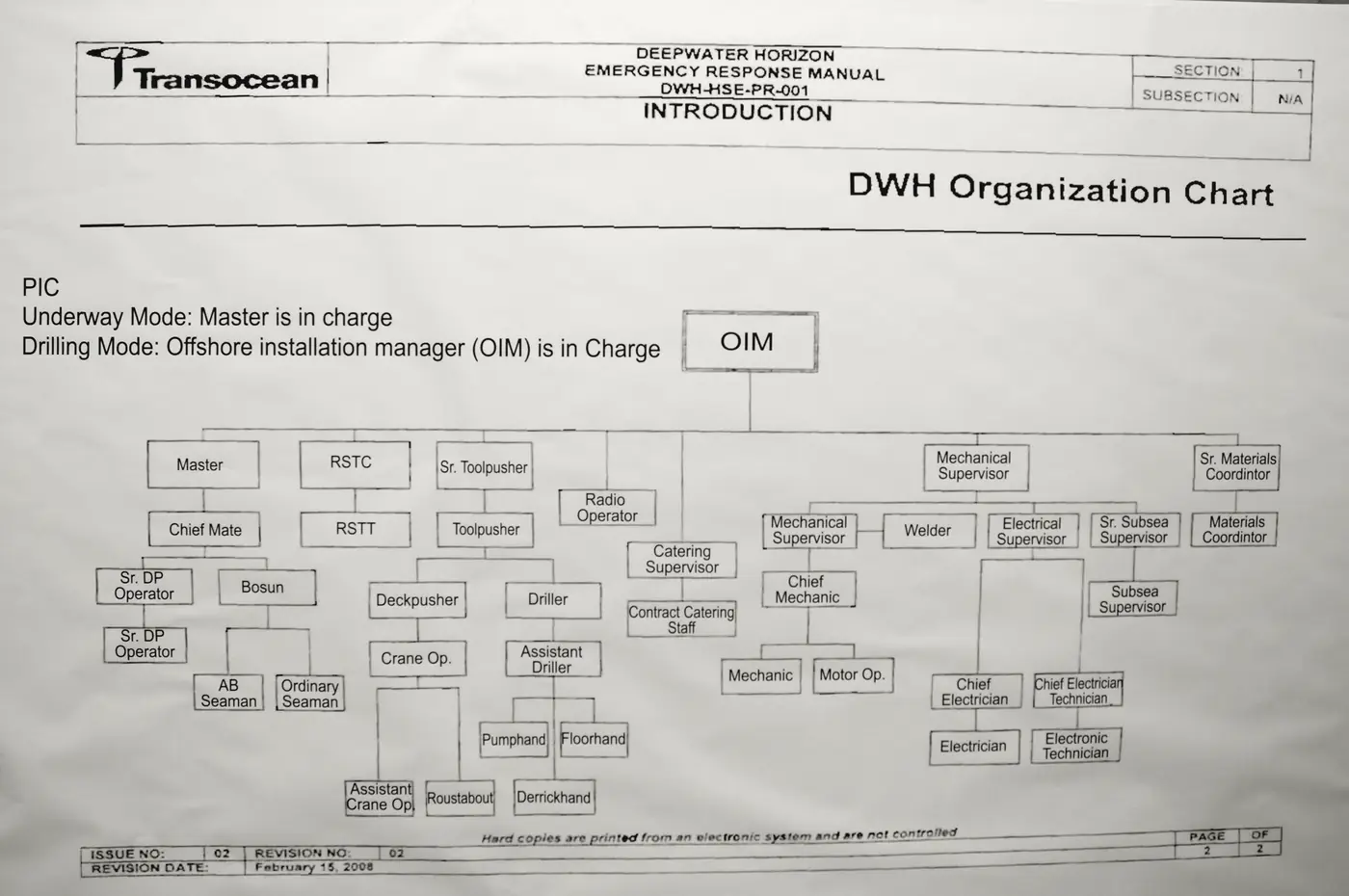
The Commission lists potential factors behind the failure to run and interpret the test properly. There was no standard procedure for running or interpreting it in the regulations or in industry protocols, and the regulations did not require a negative pressure test at all. BP and Transocean had no internal procedures for the test and had not formally trained personnel in it. The BP Macondo team did not give the well site leaders and crew specific procedures. These are potential contributing factors, not a single proven chain of cause.
Source record s1govinfo.gov
The CSB's account of the misread test
The CSB executive summary says a cement barrier meant to keep hydrocarbons below the seafloor was not effectively installed at the bottom of the well. It says BP and Transocean personnel misinterpreted the test, and so believed the zone had been sealed. When the mud was removed, the open blowout preventer was the only physical barrier, and its ability to act depended primarily on human detection of the kick and timely closure. Flow continued for almost an hour without detection or automatic closure.
Source record s2csb.gov
The reported consequences
The CSB summary gives the toll as 11 deaths, 17 physical injuries, 115 people evacuated and the sinking of the rig. It also gives a reported figure of 4 million barrels of hydrocarbons released. The injury counts match those reported to the US Coast Guard. The barrel figure is presented as reported, not as a measured total. The summary establishes these consequences as the CSB states them, and it does not explain how the release volume was estimated.
Source record s2csb.gov
03 · Your reasoning
Follow the strongest explanation.
Choose an interpretation, then compare it with the evidence. You can revise your choice. The goal is understanding, not a perfect score.
04 · The findings
The chain behind the outcome.
Your notebook
Case report
Next in engineering & technology: The speed readings that could not be trusted
The record supports a sequence in which the cement barrier at the bottom of the well had not been effectively installed, the crew ran a negative pressure test, and the readings from two lines did not agree. The drill-pipe pressure held at 1,400 psi while the kill line showed zero flow, and the Commission says that, based on available information, the drill-pipe reading could only have been caused by a leak into the well. The crew nevertheless declared the test a success at about 8 p.m. and went on to displace mud from the riser. With the mud removed, hydrocarbons flowed past the failed barrier. The open blowout preventer was the only physical barrier, and its closure depended on human detection and timely action, so the automatic controls did not stop the flow for almost an hour. Explosions and a fire followed, and 11 people died. The Commission identified potential contributing factors, including the lack of a standard procedure, of internal procedures or formal training at BP and Transocean, and of Macondo-specific instructions, and noted that the regulations did not require the test. The CSB found that BP and Transocean personnel misinterpreted the test. Taken together, the reports place the failure across companies and rules rather than in one person's decision, while still naming the decisions made on the rig.
Contributing causes and conditions
- The cement barrier at the bottom of the well was not effectively installed.
- The negative pressure test was run without a standard procedure, formal training or Macondo-specific written instructions.
- The crew accepted the kill-line result and did not reconcile the 1,400 psi drill-pipe reading.
- With the mud removed, hydrocarbons flowed past the failed barrier, and the open blowout preventer depended on human detection and timely closure.
- Flow continued for almost an hour without detection or automatic closure of the blowout preventer.
OutcomeDeepwater Horizon blowout (2010)
Take the method with you
- Treat a test result as valid only when every reading in the test is explained, including the readings that disagree.
- Separate what a procedure requires from what the people running it need to know, because missing instructions can leave a gap nobody owns.
- Do not rely on a single barrier when the other barriers are known to be weak, and check how much that barrier depends on human action.
You can read findings at any time. Exploring every reasoning step marks this case as complete in your notebook.
The open record
Sources & further reading
Read the original record and its scope before relying on a conclusion. Source references support the exhibit summaries; Faultory’s reasoning prompts are editorial reconstructions.
- s1
- s2
Written and curated for Faultory by Yunus Emre Vurgun, with AI-assisted research and drafting. Sources and interpretations can need correction. Read our editorial standards or report an issue.
Keep investigating