Your browser cannot save progress right now. You can still investigate; keep this tab open or enable local storage to save.
This case has been updated. Compatible choices are kept; revisit the evidence before drawing your conclusion.
01 · The briefing
Begin with the question.
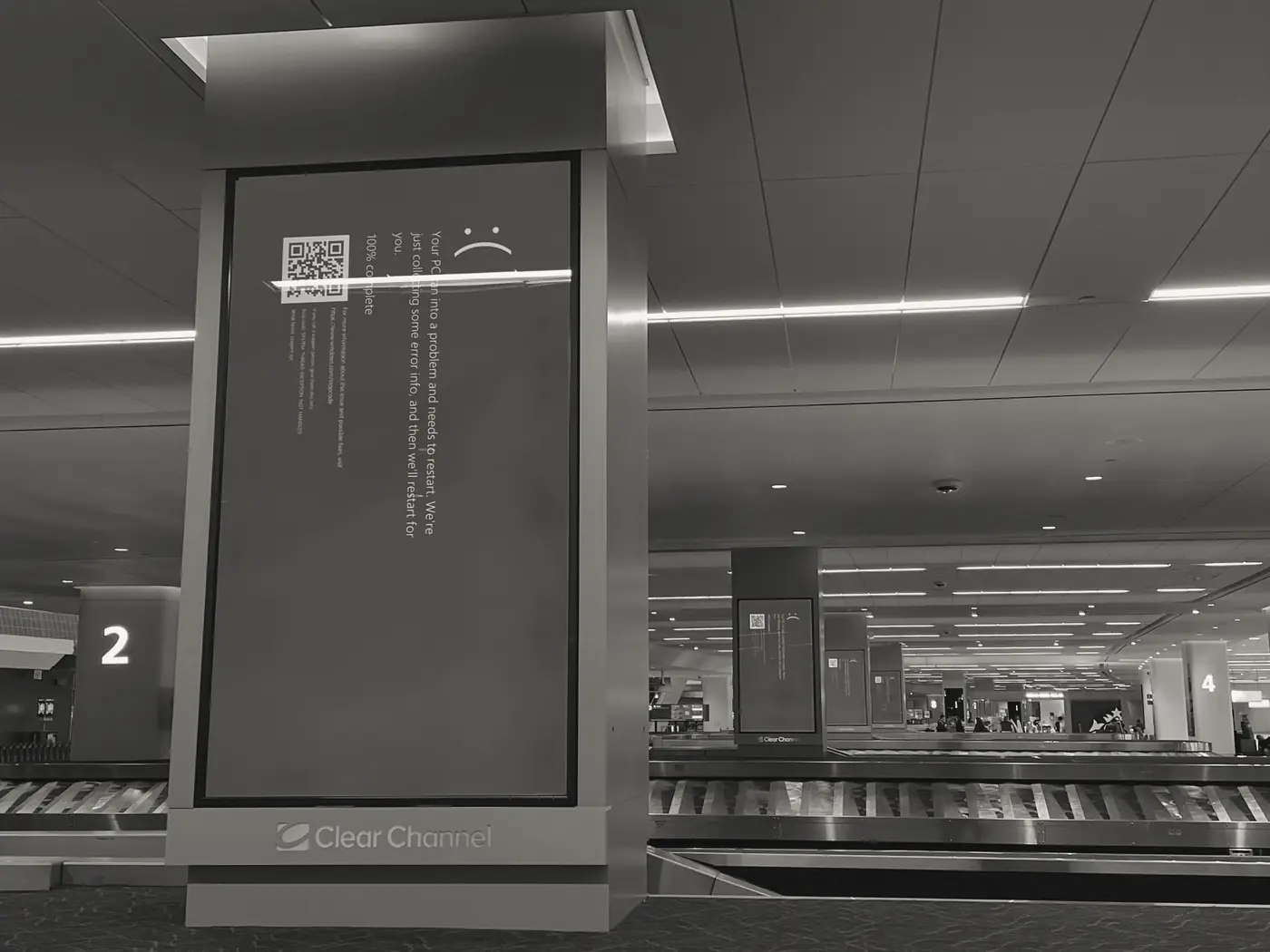
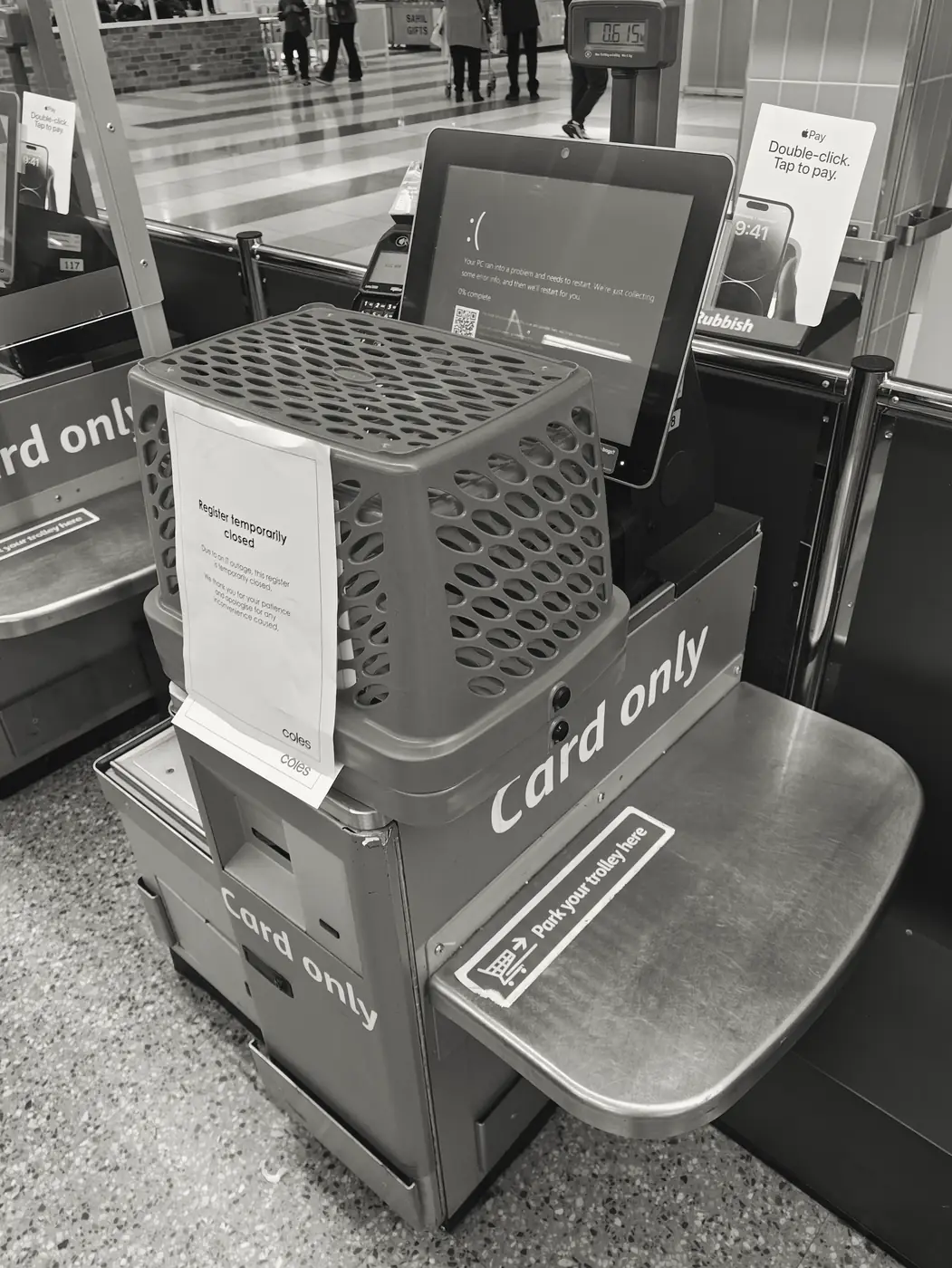
On 19 July 2024 (UTC), CrowdStrike released a content configuration update for its Falcon sensor on Windows. Hosts in scope that were online between 04:09 and 05:27 UTC and received the update crashed with a Blue Screen of Death. The update was not a new sensor release, and the content was not a program. It was Rapid Response Content, data that existing sensor code interprets to decide what to detect. Microsoft later estimated that the update affected 8.5 million Windows devices, less than one percent of Windows machines, and described the wider impact as economic and societal. The question for engineers was whether the fault lay in a new sensor release, in Windows, or in the content itself. This investigation separates three things: the mismatch in the data, the validation and testing gaps that let it through, and the deployment model that sent the change to online hosts at once. CrowdStrike's preliminary review was dated 24 July 2024 and updated on 25 July, and its root cause analysis followed on 6 August. Keep the question concrete: what changed on 19 July, what was already on the machines, and which control would have stopped the update before customers received it?

The timeline
Sensor 7.11 becomes generally available with a new IPC Template Type for detecting abuse of named pipes.
The Template Type passes a stress test in staging, and the first IPC Template Instance reaches production through Channel File 291.
Two more IPC Template Instances are deployed, and one contains a non-wildcard match on the 21st input. Hosts in scope that were online between 04:09 and 05:27 UTC crash, and the update is reverted at 05:27 UTC.
Microsoft publishes its estimate of 8.5 million affected Windows devices.
CrowdStrike adds runtime bounds checks to the Content Interpreter for Channel File 291.
CrowdStrike publishes its external root cause analysis.
A researched reconstruction for learning. These reasoning steps simplify a complex record; no score can capture the full history.
02 · The evidence
What does the record show?
Read each exhibit before settling on an explanation. The source links below every exhibit lead to the record behind it.
Exhibits reviewed 0 of 5
A 78-minute window in the preliminary review
The preliminary Post Incident Review says the Rapid Response Content update was released at 04:09 UTC on 19 July 2024 and reverted at 05:27 UTC. It applied to Windows hosts running sensor 7.11 or later that were online during that window, and it says Mac and Linux hosts were not affected. The document also states that the update was not Sensor Content, which ships only with a sensor release. It establishes the window and the scope. It does not give a host count, and it does not show which individual machines crashed.
Source record s2crowdstrike.com
Twenty-one fields expected, twenty supplied
The root cause analysis says the new Interprocess Communication Template Type defined 21 input fields, while the integration code that invoked the Content Interpreter supplied 20 values. Channel File 291 then carried a Template Instance with a non-wildcard match on the 21st input, and the interpreter read past the end of the input array. The analysis calls this an out-of-bounds read and says it was not an arbitrary memory write. It establishes the mismatch and the read. The analysis includes a crash dump excerpt, and it does not count affected hosts.
Source record s1crowdstrike.com
A validator that checked the wrong number
The root cause analysis says the Content Validator evaluated the new Template Instances against the expectation that the IPC Template Type would supply 21 inputs, so the problematic instance passed. The automated functional tests, a static set of 12 test cases, used a wildcard match on the 21st input, so they did not expose the fault, and a separate stress test passed without observing the crash. The analysis lists related findings and mitigations: a compile-time check on the number of inputs, and wider testing of matching criteria. It establishes these as findings and mitigations. It does not measure how much each gap contributed on its own.
Source record s1crowdstrike.com
No staged rollout for Rapid Response Content
The root cause analysis lists as a finding that each Template Instance should be deployed in a staged rollout, in which a canary group receives updates before wider groups do. The preliminary review of 24 July proposed a staggered deployment that starts with a canary, and customer control over when updates arrive, as future steps; the root cause analysis of 6 August reports both as already put in place. They establish that the update reached in-scope online hosts within a short window. They do not show how many crashes a canary ring would have prevented.
Source record s1crowdstrike.com
Eight and a half million devices, under one percent
Microsoft's blog post of 20 July 2024 says that CrowdStrike's update affected an estimated 8.5 million Windows devices, or less than one percent of all Windows machines. The post calls this an estimate and gives no method or denominator. The root cause analysis reports a related but different measure: as of 29 July 2024, about 99 percent of Windows sensors were online compared with before the update. The figure establishes scale. It does not establish how many devices crashed, or for how long each one stayed down.
Source record s3blogs.microsoft.com
03 · Your reasoning
Follow the strongest explanation.
Choose an interpretation, then compare it with the evidence. You can revise your choice. The goal is understanding, not a perfect score.
04 · The findings
The chain behind the outcome.
Your notebook
Case report
Next in engineering & technology: The half-second login
The 19 July 2024 crash did not come from a new sensor release. It came from Channel File 291, a Rapid Response Content update whose Template Instances used a 21st matching input for an inter-process activity template. That template had shipped in sensor 7.11 in February 2024 and passed a stress test in March, but its automated tests used a wildcard match on the 21st input, while the integration code supplied only 20 values. When a non-wildcard criterion reached hosts, the Content Interpreter read past the end of the input array. The exception could not be handled gracefully, so Windows crashed. The Content Validator had checked the content against the expected 21 inputs and passed it. The update was reverted 78 minutes after it was released, at 05:27 UTC. CrowdStrike's responses include a runtime bounds check added on 25 July, a compile-time input-count check in production from 27 July, a validator change due by 19 August, and a hotfix for supported sensor versions due by 9 August. Microsoft's estimate of 8.5 million devices gives the scale on Windows, and the root cause analysis reports that about 99 percent of Windows sensors were online as of 29 July, compared with before the update. The episode shows how a small mismatch between a data format and the code that reads it can become a global outage.
Contributing causes and conditions
- A detection template for named-pipe and other inter-process activity was defined with 21 input fields, but the integration code supplied 20 values.
- Testing used a wildcard match on the 21st field, so the mismatch and the unsafe read were not exercised before release.
- The Content Validator checked new content against the expected 21 inputs and passed a Template Instance that the sensor could not read safely.
- On 19 July 2024 a Template Instance with a non-wildcard match on the 21st input reached Windows hosts, and the Content Interpreter read past the end of the array.
- The update reached in-scope hosts that were online during a 78-minute window, without the staged rollout that the analysis says Template Instances should have had.
- The exception could not be handled gracefully, so affected hosts raised a Windows bug check and crashed.
OutcomeCrowdStrike outage (2024)
Take the method with you
- Configuration data that a program interprets is part of its behaviour, so it needs the same input checks and tests as code.
- A test that uses the same convenient value every time, such as a wildcard, can pass while the dangerous path stays unexercised.
- Delivering a change to every machine at once removes the chance to see a failure on a few first, so staged rollout is a safety control and not only a courtesy.
You can read findings at any time. Exploring every reasoning step marks this case as complete in your notebook.
The open record
Sources & further reading
Read the original record and its scope before relying on a conclusion. Source references support the exhibit summaries; Faultory’s reasoning prompts are editorial reconstructions.
- s1
- s2
- s3
Written and curated for Faultory by Yunus Emre Vurgun, with AI-assisted research and drafting. Sources and interpretations can need correction. Read our editorial standards or report an issue.
From the journal
Field notes that use this case
 Trust in the update pipeline: why one file reaches everyoneSoftware reaches users through tests, staging and review. Four cases show what those steps assume, and why one bad update can spread at once.
 Reading a post-incident review and what it leaves outA company's own post-incident review can be accurate and still incomplete. Learn to check who wrote it, when, in which time zone, and what it cannot show.
Keep investigating