Your browser cannot save progress right now. You can still investigate; keep this tab open or enable local storage to save.
This case has been updated. Compatible choices are kept; revisit the evidence before drawing your conclusion.
01 · The briefing
Begin with the question.
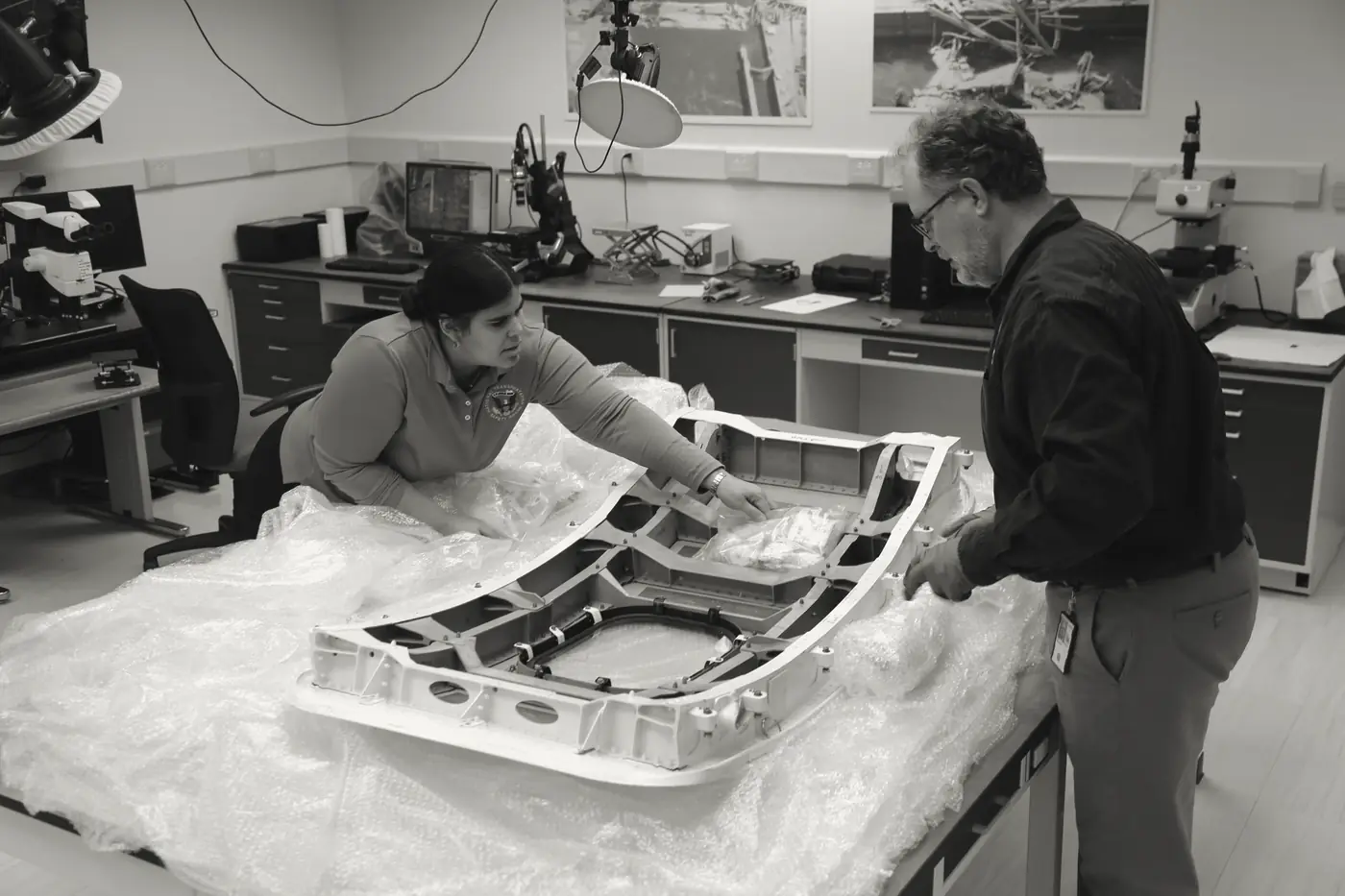
On 5 January 2024, Alaska Airlines flight 1282, a Boeing 737-9 MAX carrying 171 passengers and six crew, climbed through about 14,830 feet after leaving Portland, Oregon, when its left mid exit door plug separated. The cabin lost pressure rapidly, and the crew returned to Portland. One flight attendant and seven passengers had minor injuries, and no one died. The mid exit door plug is a lighter, less complex option that fills the opening where an emergency exit door would go, on seating layouts that do not need an exit there, as this airplane's did not. It is held in place by four bolts. The question for the investigation was whether the plug or its hardware had failed in service, or whether the airplane left the factory without them. The airplane was delivered to Alaska Airlines on 31 October 2023 and entered service on 11 November 2023. The National Transportation Safety Board examined the airplane’s manufacturing records, the rework history and the regulatory oversight. Its final report, adopted in June 2025, reconstructs what happened at Boeing’s Renton factory before the airplane was delivered. Work through the four exhibits to see which answer the records support.
The timeline
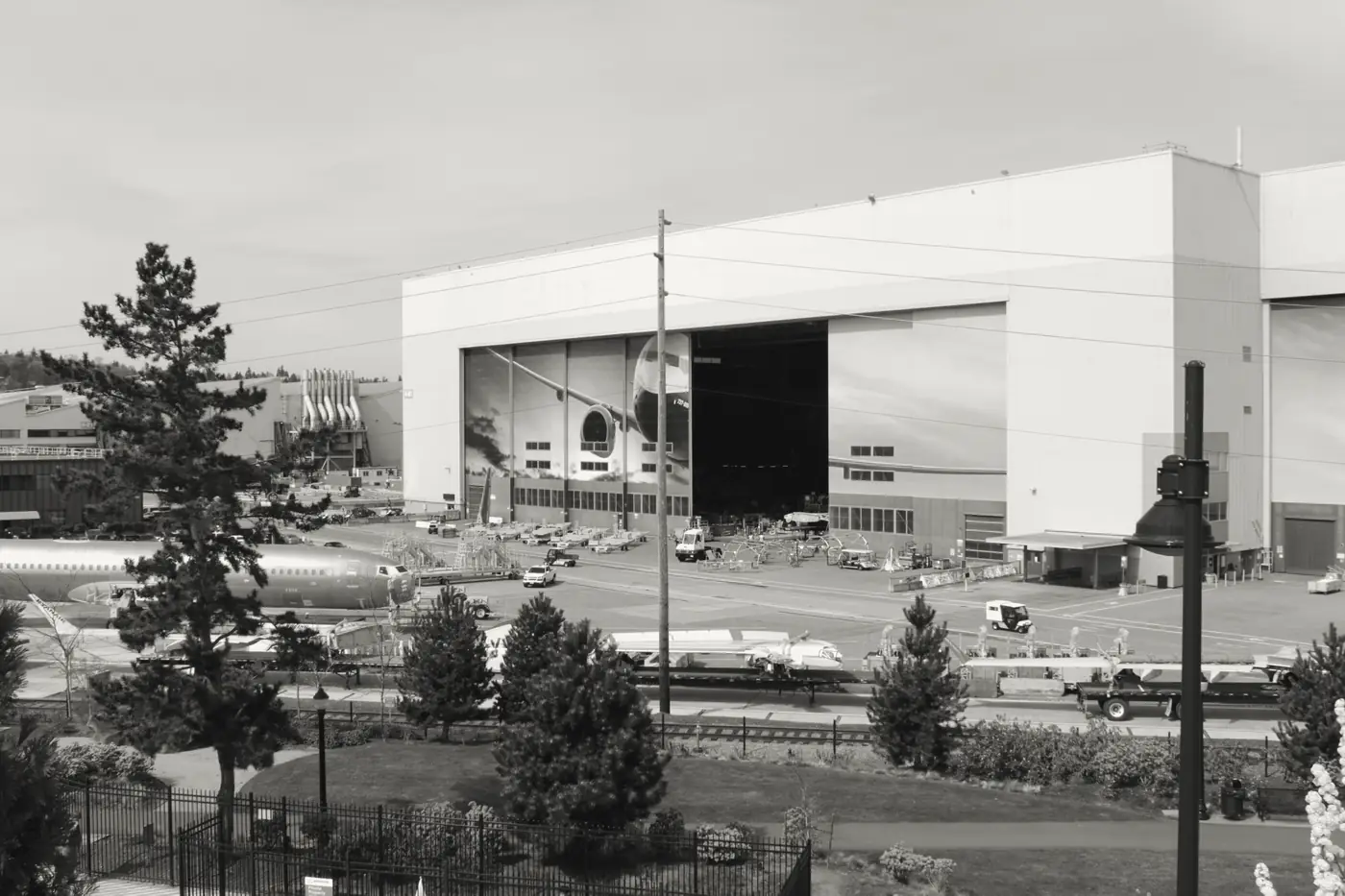
The fuselage section containing the left mid exit door plug is shipped to Boeing and arrives at its factory in Renton, Washington.
Boeing personnel open a tracking record for rivet rework on the frame around the plug. Opening the plug is needed for that access.
The plug is partly closed on 18 September, then closed during second-shift work on 19 September, when no door team members are on duty. No removal record is generated.
Alaska Airlines takes delivery of the airplane from Boeing. It enters service on 11 November 2023.
The left mid exit door plug separates from flight 1282 during the climb after takeoff from Portland, and the crew returns to the airport.
The NTSB adopts its final report, AIR-25-04, at a public board meeting. It finds the probable cause in Boeing's failure to provide adequate training, guidance and oversight for its parts removal process, with the FAA's ineffective oversight as a contributing factor.
A researched reconstruction for learning. These reasoning steps simplify a complex record; no score can capture the full history.
02 · The evidence
What does the record show?
Read each exhibit before settling on an explanation. The source links below every exhibit lead to the record behind it.
Exhibits reviewed 0 of 5
Four bolts missing before delivery
The NTSB found that the four bolts securing the left mid exit door plug were missing before the newly manufactured airplane was delivered to Alaska Airlines. Without them, the plug could move upward by fractions of an inch during earlier flights until it disengaged during the accident flight. The NTSB says this upward displacement would not have been detectable during a routine preflight inspection, and it found no evidence linking it to earlier pressurization AUTO FAIL light events. This establishes the missing hardware and the mechanism. It does not establish how many flights the plug moved on before the accident.
Source record s1ntsb.gov
The removal record that was never generated
Boeing’s business process instruction for parts removals required a removal record when a previously accepted installation was disturbed, including opening a mid exit door plug. The NTSB found that no removal record was generated, that the plug was closed without its bolts and hardware, and that no quality assurance inspection of the closure was performed. It also found that Boeing’s short-stamp process was not correctly applied, and that had it been, it might have given workers an opportunity to see the missing bolts. This establishes what the procedure required and what did not happen. It does not establish who opened or closed the plug.
Source record s1ntsb.gov
A timeline reconstructed from records, not witnesses
The NTSB reconstructed when the plug was opened and closed from production tracking records, rework records, barge logs, emails, text messages and interviews. The rivet rework was requested on 1 September 2023. The plug was partly closed on 18 September and its position was undetermined on 19 September, when it was closed during second-shift operations with no door team members on duty. Numerous production line personnel gave statements, and none of those who provided information knew who opened the plug, why no removal record existed, or who closed it. This establishes the sequence as far as the records allow. It does not identify the individuals involved.
Source record s1ntsb.gov
A procedure with a documented history of problems
The NTSB’s summary of its findings says the parts removal instruction had a documented history of compliance issues for at least 10 years before the accident, and that corrective actions Boeing took, which the FAA had accepted, were ineffective. It also says the FAA’s compliance and enforcement surveillance and records lacked the functions needed to identify repetitive and systemic discrepancies. The NTSB’s probable cause names Boeing’s failure to provide adequate training, guidance and oversight, with the FAA’s oversight as a contributing factor. This establishes the findings as summarised, not the full analysis behind them, which is in the report body.
Source record s1ntsb.gov
The plug’s route from manufacture to delivery
The NTSB’s preliminary report says the plug was manufactured by Spirit AeroSystems in Malaysia on 24 March 2023, installed and rigged on the fuselage in Wichita, and shipped to Boeing on 20 August 2023. The airplane was delivered to Alaska Airlines on 31 October 2023. The preliminary report describes the plug as secured from moving vertically by four bolts, one through each upper guide fitting and each lower hinge guide fitting. This establishes the route and the design of the fastening. It does not establish the rework decisions, which the final report treats in detail.
Source record s3ntsb.gov
03 · Your reasoning
Follow the strongest explanation.
Choose an interpretation, then compare it with the evidence. You can revise your choice. The goal is understanding, not a perfect score.
04 · The findings
The chain behind the outcome.
Your notebook
Case report
Next in engineering & technology: Readings from a hull under strain
Alaska Airlines flight 1282 lost a mid exit door plug because the plug was opened during manufacturing rework at Boeing’s Renton factory and closed without the four bolts and hardware that held it. The NTSB found that the bolts were missing before the airplane was delivered on 31 October 2023. Spirit AeroSystems personnel performed the rivet rework that required the plug to be opened. The NTSB reconstructs that the plug was partly closed on 18 September 2023, and that it was closed on 19 September during second-shift operations when no door team members were on duty. Opening the plug required a removal record, which was never generated, and no quality inspection of the closure was performed. In service, the plug could move upward by fractions of an inch over earlier flights until it disengaged in the climb. The NTSB’s probable cause is Boeing’s failure to provide adequate training, guidance and oversight for the parts removal process. The NTSB also found that FAA surveillance and audit planning did not identify the repeated problems with that process. The established facts are the missing bolts, the missing record and the documented history of the procedure. The NTSB’s judgments about the organisational causes rest on those records and on its interviews.
Contributing causes and conditions
- The left mid exit door plug was opened to access rivet rework, which required removing its four securing bolts and associated hardware.
- The removal record that should have tracked reinstallation was never generated, and the short-stamp process was not correctly applied.
- The plug was closed without its bolts, and no quality assurance inspection of the closure was performed.
- Without the bolts, the plug moved upward by fractions of an inch over earlier flights until it disengaged during the climb.
- Boeing’s removal procedure was hard to use and its training for infrequent tasks was insufficient, and FAA surveillance did not identify the recurring problems.
OutcomeAlaska Airlines Flight 1282 door plug (2024)
Take the method with you
- A safety-critical step that workers rarely perform needs its own training and an inspection gate, because infrequent tasks are where required records are most often skipped.
- A record that a procedure requires should be a precondition for closing the work, not an optional entry made afterwards.
- Oversight that counts closed findings can miss repeat failures, so regulators need data that show recurrence.
You can read findings at any time. Exploring every reasoning step marks this case as complete in your notebook.
The open record
Sources & further reading
Read the original record and its scope before relying on a conclusion. Source references support the exhibit summaries; Faultory’s reasoning prompts are editorial reconstructions.
- s1
- s2
- s3
Written and curated for Faultory by Yunus Emre Vurgun, with AI-assisted research and drafting. Sources and interpretations can need correction. Read our editorial standards or report an issue.
From the journal
Field notes that use this case
Keep investigating