Your browser cannot save progress right now. You can still investigate; keep this tab open or enable local storage to save.
This case has been updated. Compatible choices are kept; revisit the evidence before drawing your conclusion.
01 · The briefing
Begin with the question.
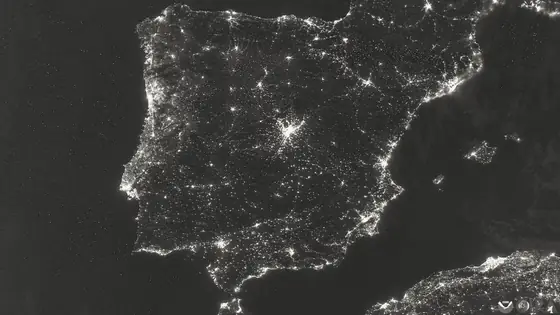
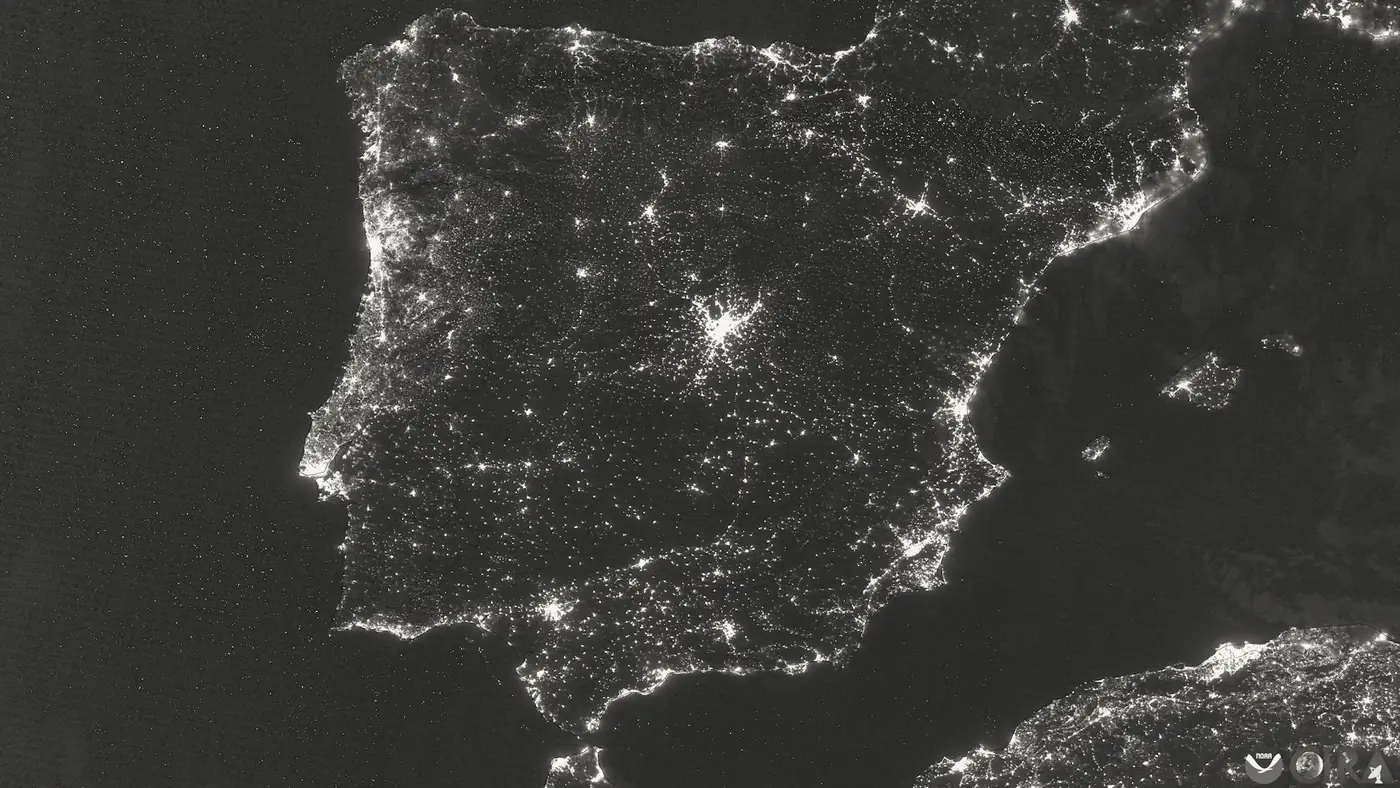
On the afternoon of 28 April 2025, the electricity systems of Spain and Portugal, which together form the Iberian Peninsula, were carrying a heavy load on a grid where a large share of the power came from solar and wind plants. The peninsula connects to the rest of continental Europe mainly through lines into France and an interconnection to Morocco, so it depends on those links to stay synchronized with the wider network. At about 12:33 Central European Summer Time, the two systems lost their connection to Europe and collapsed within seconds. Restoration took many hours.
Several explanations are possible for a collapse of this kind. One is a sudden loss of a large generator. Another is a fault on the link to France. A third is a failure of voltage control, in which voltage rises beyond what the plants and the network can absorb. A fourth is an oscillation between parts of the system. Each predicts a different sequence of trips and different voltage readings.
This investigation relies on the two reports published by the Expert Panel convened by the European network of transmission system operators. It separates the timing of events from the causes the panel identified, and it shows where the evidence is still incomplete.
The timeline
From about 12:32:20, a steep local voltage rise begins at a substation near Granada, according to the final report.
Between 12:33:17 and 12:33:18.020, several trips disconnect 928 MW of wind and solar generation, some of them on overvoltage protection.
At 12:33:19 the Spanish and Portuguese systems begin losing synchronism with the rest of the European system, according to the factual report.
By 12:33:23.960 the Iberian system is electrically separated after the HVDC lines from Spain to France trip.
Restoration is completed in about 12 hours in Portugal and about 16 hours in Spain, according to the final report.
The Expert Panel publishes its factual report on the sequence of events.
The Expert Panel publishes its final report, which adds the root cause analysis.
A researched reconstruction for learning. These reasoning steps simplify a complex record; no score can capture the full history.
02 · The evidence
What does the record show?
Read each exhibit before settling on an explanation. The source links below every exhibit lead to the record behind it.
Exhibits reviewed 0 of 4
The final report's summary of causes
The Expert Panel's final report, published 20 March 2026, concludes that the blackout is the result of multiple interacting factors. It describes voltage fluctuations and oscillatory phenomena that led to widespread disconnections of generation in Spain, particularly inverter-based resources, followed by a cascade of overvoltage disconnections and the loss of synchronism with Continental Europe. The report establishes the sequence and the panel's causal findings. It does not single out one component as the sole trigger.
Source record s1eepublicdownloads.blob.core.windows.net
Voltage control as the key phenomenon
Chapter 1 of the final report says the key phenomenon in the incident was the non-effectiveness of voltage control within the Spanish power system. The panel's simulations show that increased reactive power margins could have prevented the system collapse, by allowing the system to operate at lower voltage levels. This is a result from the panel's models. It is not a direct measurement of plant behaviour, and it does not show which generator or setting was decisive.
Source record s1eepublicdownloads.blob.core.windows.net
Overvoltage trips that were not fully explained
The final report describes wind and solar units disconnecting between 12:33:17 and 12:33:18.020, a total of 928 MW. Some trips were caused by overvoltage protection, but the panel says it could not establish the cause of most of them. Its analysis finds that overvoltage protection settings at some generation units were set below the voltage limits in the applicable requirements. This shows a setting problem at some units. It does not show how much of the total loss each setting caused.
Source record s1eepublicdownloads.blob.core.windows.net
The timing of the separation
The factual report of 3 October 2025 gives the timing. Between 12:33:18 and 12:33:21 voltage in the south of Spain rose sharply, and the overvoltage triggered a cascade of generation losses that lowered frequency. At 12:33:19 the systems began to lose synchronism. Automatic load shedding and the system defence plans activated between 12:33:19 and 12:33:22 but could not prevent the collapse. The final report later revised some data, so the factual report gives timings, not the final causal account.
Source record s2eepublicdownloads.blob.core.windows.net
03 · Your reasoning
Follow the strongest explanation.
Choose an interpretation, then compare it with the evidence. You can revise your choice. The goal is understanding, not a perfect score.
04 · The findings
The chain behind the outcome.
Your notebook
Case report
Next in engineering & technology: A test changed on the spot
The evidence supports a multi-factor account in which the central weakness was voltage control in the Spanish system. The final report describes voltage fluctuations and oscillations that led to widespread disconnections of generation in Spain, particularly inverter-based resources. Those disconnections were followed by a cascade of overvoltage trips. The systems then lost synchronism with Continental Europe and collapsed within seconds. Overvoltage protection at some generation units was set below the applicable limits, according to the panel, and its simulations indicate that larger reactive power margins could have prevented the collapse. Automatic load shedding and the system defence plans activated but could not stop the collapse. Restoration took about 12 hours in Portugal and 16 hours in Spain. The sequence is best described as interacting failures rather than one broken component. Less settled is how much each overvoltage trip contributed, because the panel could not establish the cause of most of them. The factual report supplies the timing that the final report builds on.
Contributing causes and conditions
- A steep local voltage rise began at a substation near Granada from about 12:32:20, voltage in southern Spain rose sharply between 12:33:18 and 12:33:21, and the panel found the system's voltage control was not effective
- Some generation units were set to trip on overvoltage at levels below the applicable limits.
- Wind and solar disconnections, including overvoltage trips, removed generation and fed a cascade of further overvoltage disconnections.
- Frequency fell as generation was lost, and automatic load shedding activated but could not stop the decline.
- Oscillatory phenomena were part of the sequence, and the Iberian systems lost synchronism with Continental Europe.
OutcomeIberian blackout (2025)
Take the method with you
- Ask which constraint was binding during recovery, because the quantity that limits a system may differ from the one that started the event.
- When several factors interact, test each candidate explanation against the timing of events, not only against how plausible it sounds.
- Keep a report's causal findings separate from its timing findings, and check which version of the data each one uses.
You can read findings at any time. Exploring every reasoning step marks this case as complete in your notebook.
The open record
Sources & further reading
Read the original record and its scope before relying on a conclusion. Source references support the exhibit summaries; Faultory’s reasoning prompts are editorial reconstructions.
- s1ENTSO-E Expert Panel — Final Report on the Grid Incident in Spain and Portugal on 28 April 2025 (20 March 2026)
eepublicdownloads.blob.core.windows.net
- s2ENTSO-E Expert Panel — Factual Report on the Grid Incident in Spain and Portugal on 28 April 2025 (3 October 2025)
eepublicdownloads.blob.core.windows.net
- s3
Written and curated for Faultory by Yunus Emre Vurgun, with AI-assisted research and drafting. Sources and interpretations can need correction. Read our editorial standards or report an issue.
From the journal
Field notes that use this case
Keep investigating